QUESTION IMAGE
Question
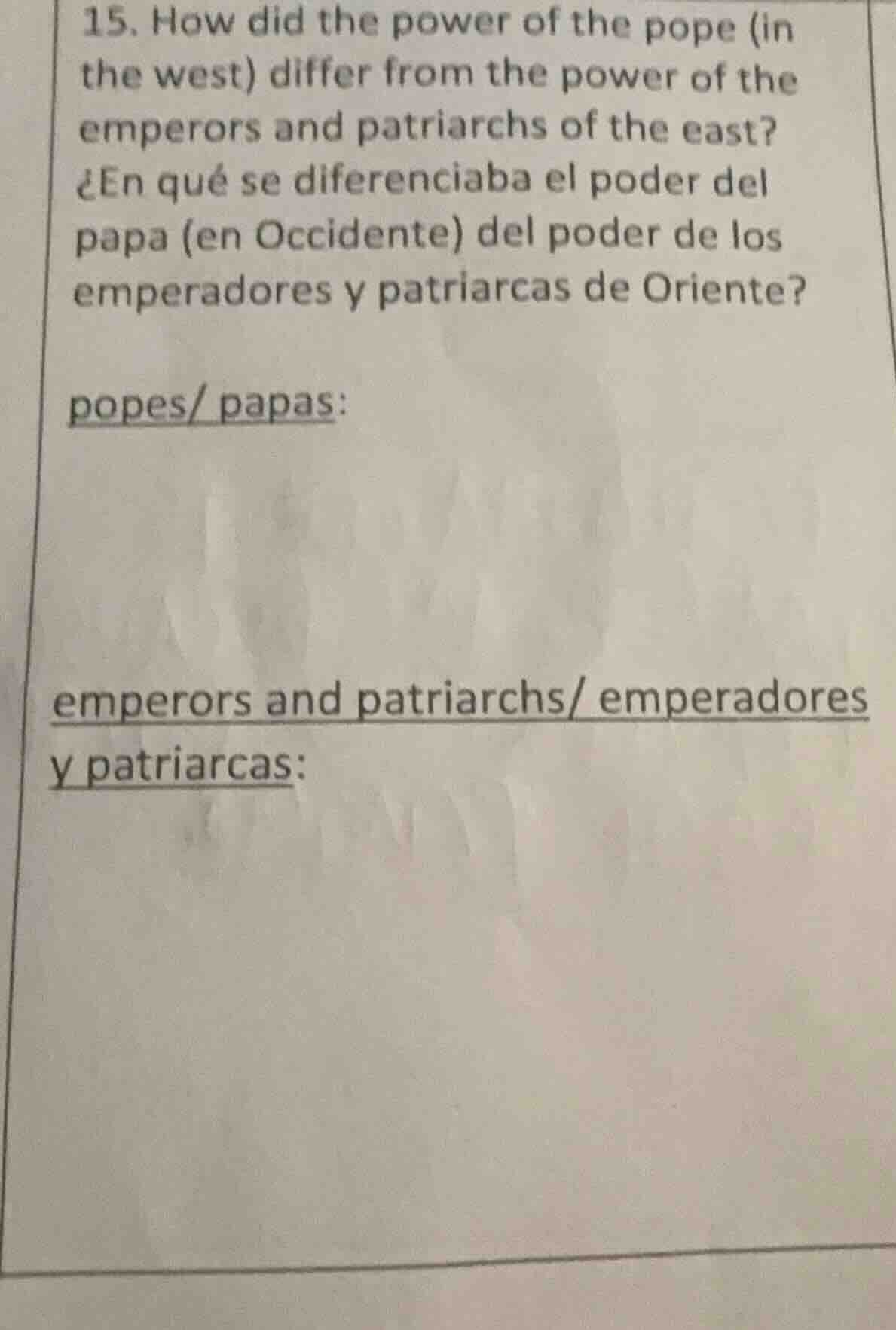
- how did the power of the pope (in the west) differ from the power of the emperors and patriarchs of the east?¿en qué se diferenciaba el poder del papa (en occidente) del poder de los emperadores y patriarcas de oriente?popes/ papas:emperors and patriarchs/ emperadores y patriarcas:
Brief Explanations
Western popes claimed supreme, independent authority over both religious and secular matters in Western Europe, often acting as political rivals to secular rulers. Eastern emperors held ultimate authority (caesaropapism), with patriarchs being religious leaders subordinate to the imperial state, lacking independent political power.

Snap & solve any problem in the app
Get step-by-step solutions on Sovi AI
Photo-based solutions with guided steps
Explore more problems and detailed explanations
popes/papas:
- Claimed supreme, independent religious and secular authority in Western Europe, often competing with secular rulers for political power, and served as both spiritual leaders and de facto political figures in some regions.
- Had no higher secular authority above them in the fragmented Western political landscape, allowing them to assert control over church affairs and influence secular governance.
emperors and patriarchs/emperadores y patriarcas:
- Eastern emperors held supreme authority over both state and church (a system called caesaropapism), with patriarchs acting as religious leaders subordinate to the emperor.
- Patriarchs had no independent political power; their roles were limited to religious administration under the emperor's oversight, and the emperor controlled key church decisions like appointments and doctrine.