QUESTION IMAGE
Question
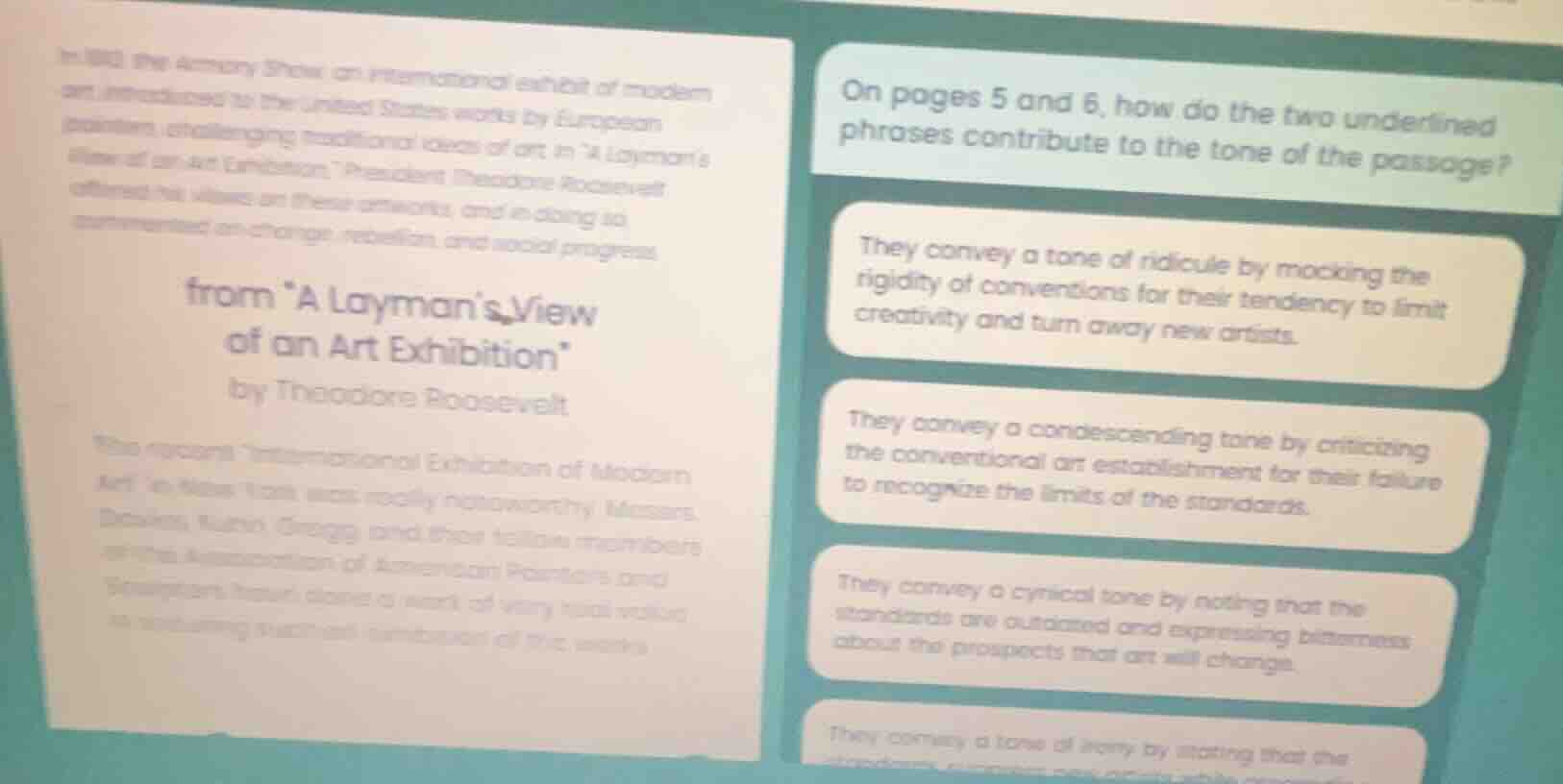
in 1913, the armory show, an international exhibit of modern art, introduced to the united states works by european painters, challenging traditional ideas of art. in “a layman’s view of an art exhibition,” president theodore roosevelt offered his views on these artworks and, in doing so, commented on change, rebellion, and social progress. from “a layman’s view of an art exhibition” by theodore roosevelt the recent “international exhibition of modern art” in new york was socially noteworthy. messrs. davies, kuhn, gregg, and their fellow members of the association of american painters and sculptors have done a work of very vital value in introducing to each and all members of the community on pages 5 and 6, how do the two underlined phrases contribute to the tone of the passage? they convey a tone of ridicule by mocking the rigidity of conventions for their tendency to limit creativity and turn away new artists. they convey a condescending tone by criticizing the conventional art establishment for their failure to recognize the limits of the standards. they convey a cynical tone by noting that the standards are outdated and expressing bitterness about the prospects that art will change. they convey a tone of irony by stating that the
To solve this, we analyze the context (from Theodore Roosevelt’s “A Layman’s View of an Art Exhibition” about modern art challenging traditions) and each option:
- Option 1 (ridicule, mocking conventions): The passage’s focus is on modern art’s challenge to tradition, not mocking conventions for limiting creativity (no clear mockery of conventions’ rigidity here). Eliminate.
- Option 2 (condescending, criticizing establishment): The “conventional art establishment” failing to recognize limits of standards aligns with the passage’s theme of modern art challenging traditional art norms. A condescending tone (implying the establishment is flawed/unaware) fits, as Roosevelt likely critiques traditional art’s resistance to new ideas.
- Option 3 (cynical, bitterness about art change): The passage is about modern art’s rebellion, not bitterness about change. The tone is critical of tradition, not cynical about art’s ability to change. Eliminate.
- Option 4 (irony, stating paradox): The underlined phrases don’t present a paradox (e.g., “accepting new art while rejecting it”); the focus is on critiquing the establishment, not irony. Eliminate.

Snap & solve any problem in the app
Get step-by-step solutions on Sovi AI
Photo-based solutions with guided steps
Explore more problems and detailed explanations
B. They convey a condescending tone by criticizing the conventional art establishment for their failure to recognize the limits of the standards.