QUESTION IMAGE
Question
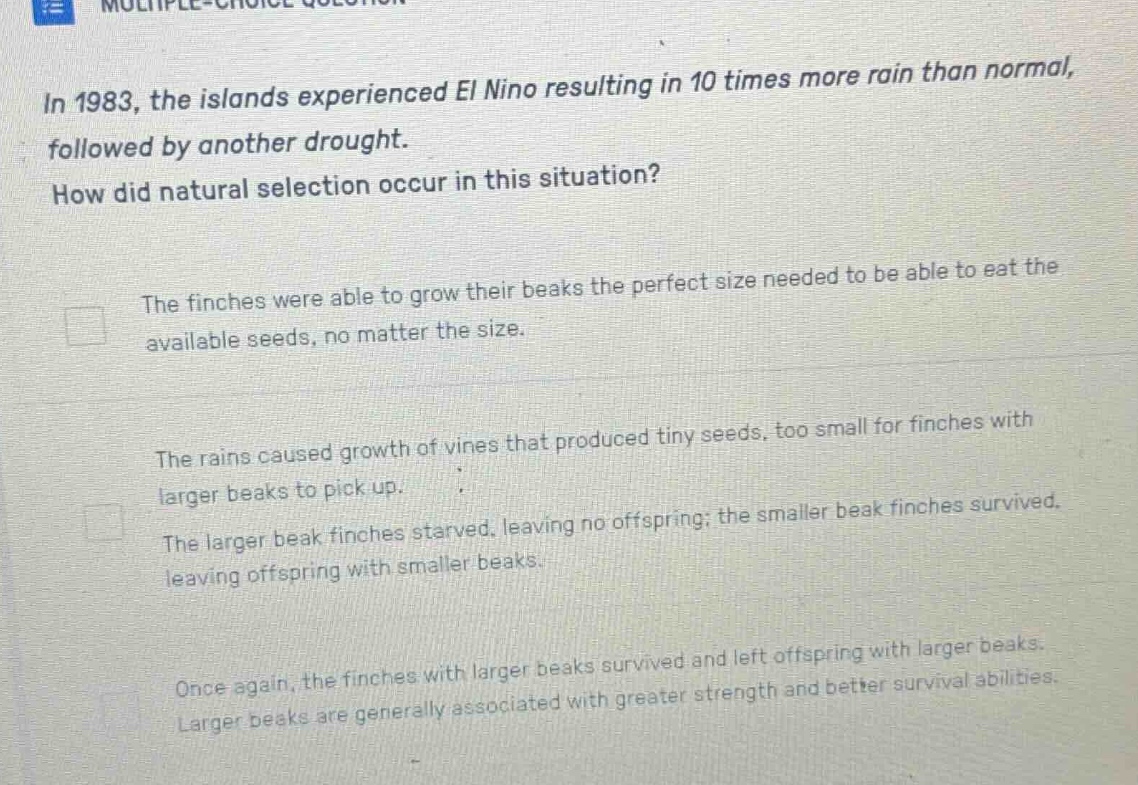
in 1983, the islands experienced el nino resulting in 10 times more rain than normal, followed by another drought. how did natural selection occur in this situation? the finches were able to grow their beaks the perfect size needed to be able to eat the available seeds, no matter the size. the rains caused growth of vines that produced tiny seeds, too small for finches with larger beaks to pick up. the larger beak finches starved, leaving no offspring; the smaller beak finches survived, leaving offspring with smaller beaks. once again, the finches with larger beaks survived and left offspring with larger beaks. larger beaks are generally associated with greater strength and better survival abilities.
- Analyze the first option: Finches can't "grow" beaks to perfect size on demand; beak size is heritable, not a flexible growth based on need. Eliminate this.
- Analyze the second and third combined (since they are related): El Niño rain causes vines with tiny seeds. Finches with larger beaks can't pick tiny seeds, so they starve (no offspring), while smaller - beak finches can eat the tiny seeds, survive, and pass on smaller - beak traits. This fits natural selection (differential survival/reproduction based on trait).
- Analyze the fourth option: After El Niño (tiny seeds), larger - beak finches would not be favored as they can't eat tiny seeds. So this is incorrect.

Snap & solve any problem in the app
Get step-by-step solutions on Sovi AI
Photo-based solutions with guided steps
Explore more problems and detailed explanations
The rains caused growth of vines that produced tiny seeds, too small for finches with larger beaks to pick up. The larger beak finches starved, leaving no offspring; the smaller beak finches survived, leaving offspring with smaller beaks.