QUESTION IMAGE
Question
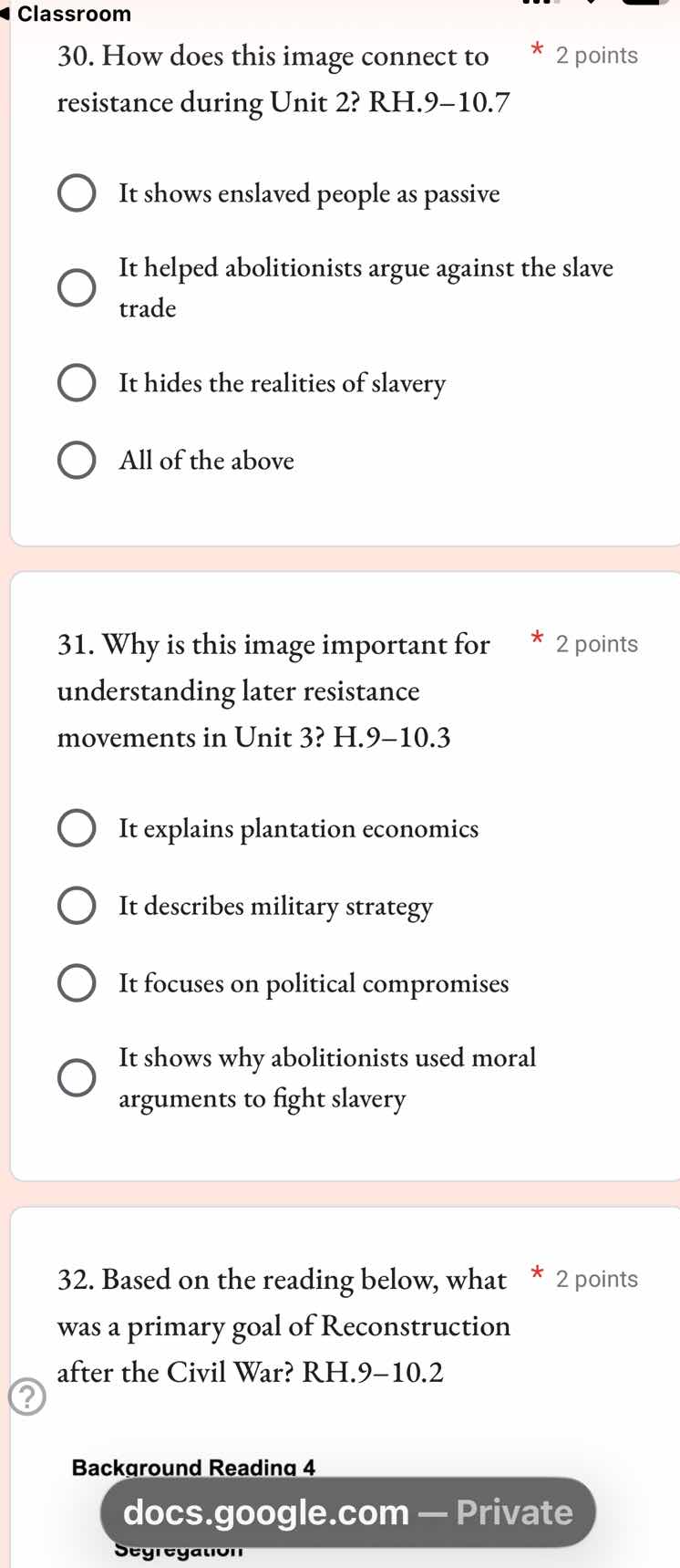
- how does this image connect to resistance during unit 2? rh.9–10.7
it shows enslaved people as passive
it helped abolitionists argue against the slave trade
it hides the realities of slavery
all of the above
- why is this image important for understanding later resistance movements in unit 3? h.9–10.3
it explains plantation economics
it describes military strategy
it focuses on political compromises
it shows why abolitionists used moral arguments to fight slavery
- based on the reading below, what was a primary goal of reconstruction after the civil war? rh.9–10.2
background reading 4
docs.google.com — private
segregation
Question 30
To determine the correct answer, we analyze each option:
- The first option ("It shows enslaved people as passive") is incorrect as resistance to slavery involved active efforts, and images related to resistance would not portray passivity.
- The second option ("It helped abolitionists argue against the slave trade") is correct. Images that revealed the harsh realities of slavery (likely the image in question, such as a depiction of slave conditions) were used by abolitionists to build moral arguments against the slave trade, connecting to resistance efforts.
- The third option ("It hides the realities of slavery") is incorrect; effective abolitionist imagery exposed, not hid, slavery’s realities.
- The fourth option ("All of the above") is incorrect as the first and third options are wrong.
We evaluate each option:
- "It explains plantation economics" is incorrect; the image’s relevance to later resistance is not about economic systems.
- "It describes military strategy" is incorrect; the image is about slavery and abolition, not military tactics.
- "It focuses on political compromises" is incorrect; the image relates to moral arguments against slavery, not political deals.
- "It shows why abolitionists used moral arguments to fight slavery" is correct. Images depicting slavery’s cruelties highlighted moral wrongs, influencing abolitionists to use moral appeals, which informed later resistance movements (e.g., civil rights) that also used moral arguments.
(based on historical context):
Reconstruction’s primary goals included reunifying the United States (readmitting Southern states), establishing legal and social rights for formerly enslaved people (e.g., ending slavery, granting citizenship, voting rights), and rebuilding the South’s economy and society. If the reading emphasizes civil rights, the goal might be securing freedom and equality for freed slaves; if it emphasizes national unity, reunifying the Union.

Snap & solve any problem in the app
Get step-by-step solutions on Sovi AI
Photo-based solutions with guided steps
Explore more problems and detailed explanations
B. It helped abolitionists argue against the slave trade