QUESTION IMAGE
Question
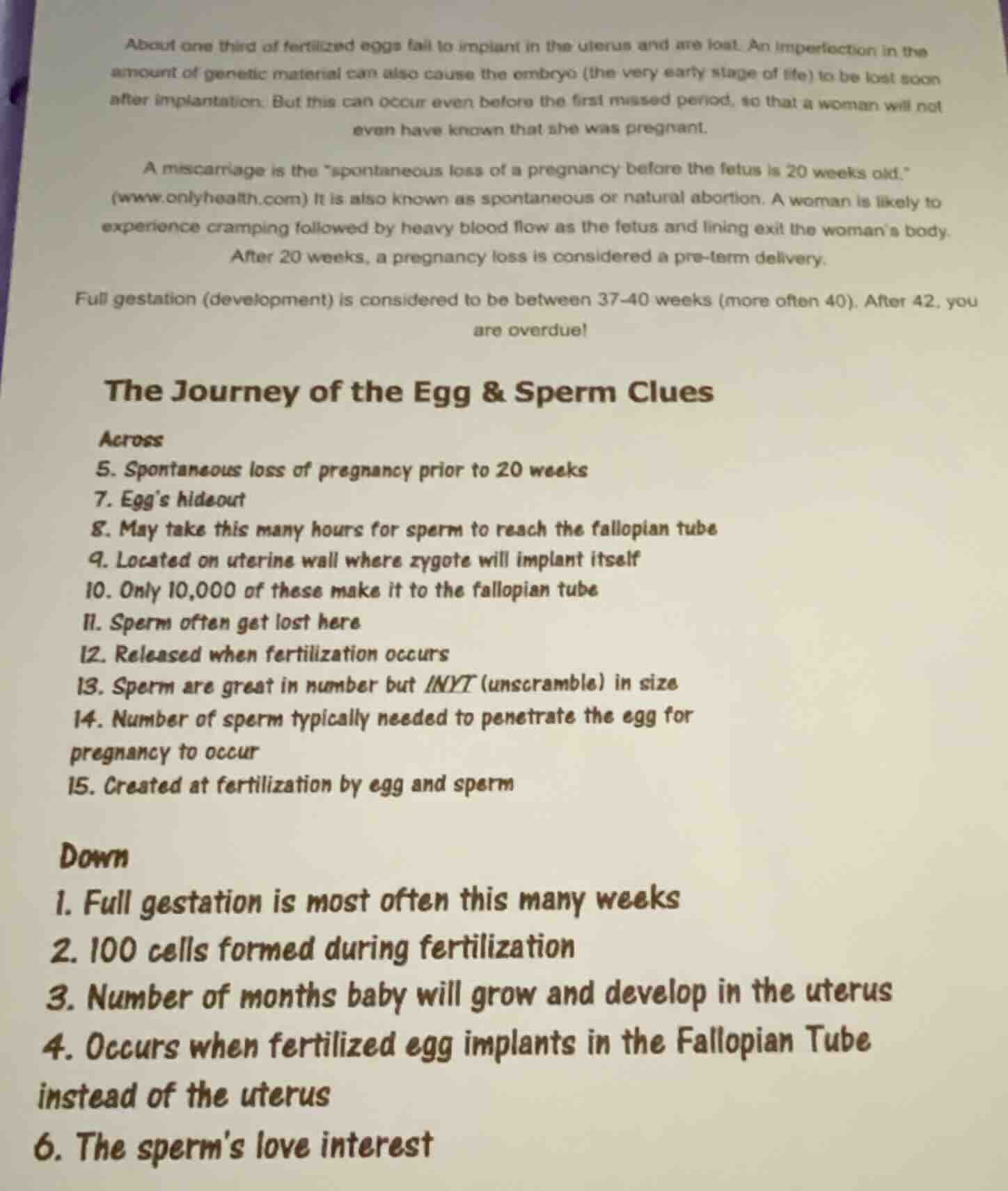
about one third of fertilized eggs fail to implant in the uterus and are lost. an imperfection in the amount of genetic material can also cause the embryo (the very early stage of life) to be lost soon after implantation. but this can occur even before the first missed period, so that a woman will not even have known that she was pregnant.
a miscarriage is the \spontaneous loss of a pregnancy before the fetus is 20 weeks old.\ (www.onlyhealth.com) it is also known as spontaneous or natural abortion. a woman is likely to experience cramping followed by heavy blood flow as the fetus and lining exit the woman’s body.
after 20 weeks, a pregnancy loss is considered a pre - term delivery.
full gestation (development) is considered to be between 37 - 40 weeks (more often 40). after 42, you are overdue!
the journey of the egg & sperm clues
across
- spontaneous loss of pregnancy prior to 20 weeks
- egg’s hideout
- may take this many hours for sperm to reach the fallopian tube
- located on uterine wall where zygote will implant itself
- only 10,000 of these make it to the fallopian tube
- sperm often get lost here
- released when fertilization occurs
- sperm are great in number but inyt (unscramble) in size
- number of sperm typically needed to penetrate the egg for pregnancy to occur
- created at fertilization by egg and sperm
down
- full gestation is most often this many weeks
- 100 cells formed during fertilization
- number of months baby will grow and develop in the uterus
- occurs when fertilized egg implants in the fallopian tube instead of the uterus
- the sperm’s love interest

Snap & solve any problem in the app
Get step-by-step solutions on Sovi AI
Photo-based solutions with guided steps
Explore more problems and detailed explanations
s are derived from the provided text and basic reproductive biology knowledge matching each clue.