QUESTION IMAGE
Question
act 3 macbeth
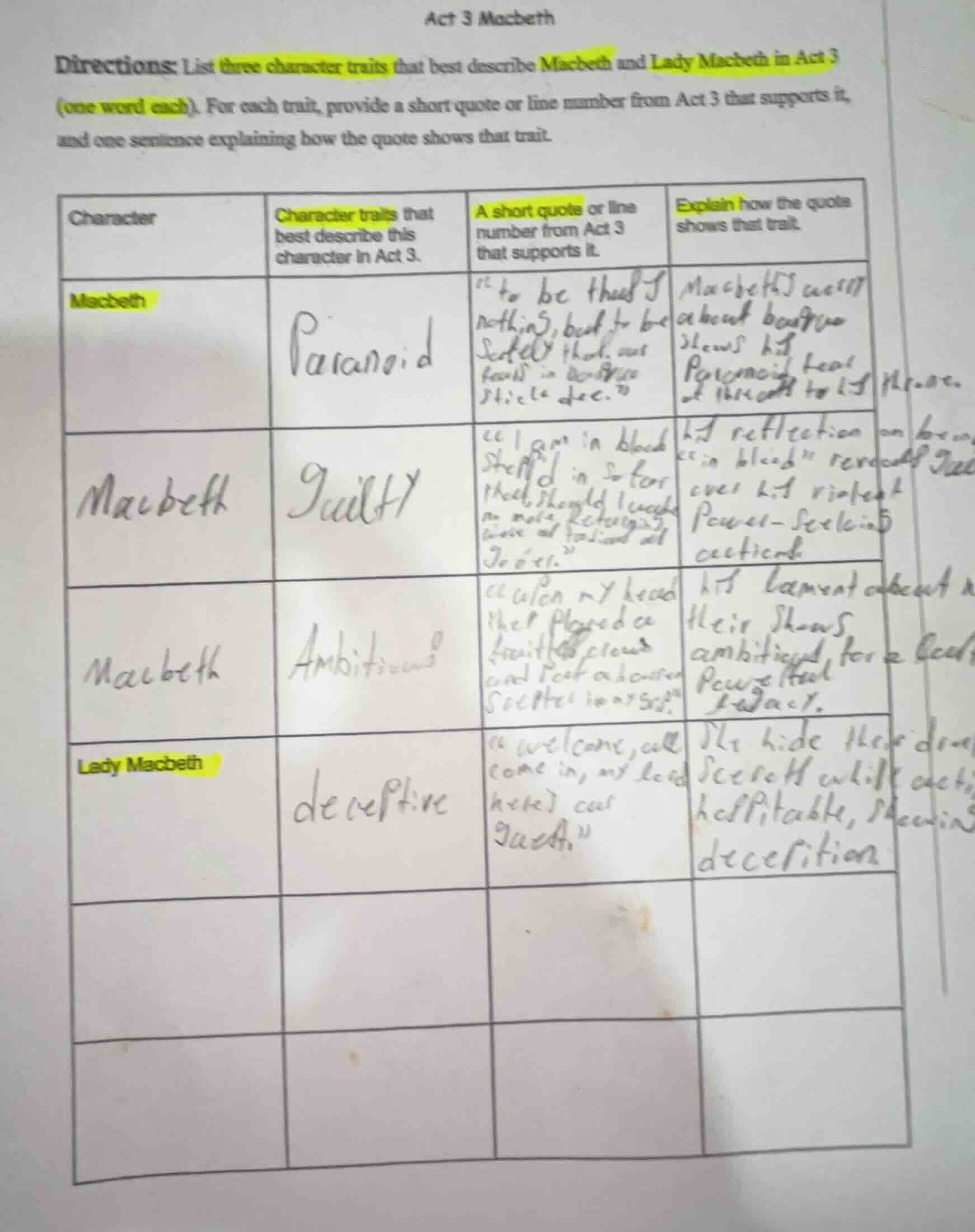
directions: list three character traits that best describe macbeth and lady macbeth in act 3
(one word each). for each trait, provide a short quote or line number from act 3 that supports it,
and one sentence explaining how the quote shows that trait.
| character | character traits that best describe this character in act 3. | a short quote or line number from act 3 that supports it. | explain how the quote shows that trait. |
|---|---|---|---|
| macbeth | guilty | “i am in blood stepped in so far that, should i wade no more, returning were as tedious as go o’er.” | his reflection on being “in blood” reveals his ever - present, power - seeking guilt. |
| macbeth | ambitious | “upon my head they placed a fruitless crown and put a barren scepter in my grip.” | his lament about a “fruitless crown” shows ambition for a real, powerful legacy. |
| lady macbeth | deceptive | “welcome, all! come in, my lord here’s our guest.” | her hide - the - deed secrecy while acting hospitable means deception. |
Brief Explanations
For Lady Macbeth, the remaining two traits are selected based on her actions and dialogue in Act 3 of Macbeth. Each trait is paired with a relevant quote and a concise explanation linking the quote to the trait.
- Anxious: Lady Macbeth's line reveals her growing worry about Macbeth's erratic behavior and the consequences of their crimes.
- Regretful: Her comment shows she is beginning to lament the violent path they have taken, recognizing it has brought them misery rather than happiness.

Snap & solve any problem in the app
Get step-by-step solutions on Sovi AI
Photo-based solutions with guided steps
Explore more problems and detailed explanations
| Character | Character traits that best describe this character in Act 3. | A short quote or line number from Act 3 that supports it. | Explain how the quote shows that trait. |
|---|---|---|---|
| Lady Macbeth | Anxious | "You have displaced the mirth, broke the good meeting, With most admired disorder." (Act 3, Scene 4) | Her sharp rebuke to Macbeth after his outburst at the feast exposes her anxiety about his unhinged behavior ruining their facade. |
| Lady Macbeth | Regretful | "'Tis safer to be that which we destroy, Than by destruction dwell in doubtful joy." (Act 3, Scene 2) | Her admission that death is better than living in guilty, uncertain happiness reveals her regret over their murderous rise to power. |