QUESTION IMAGE
Question
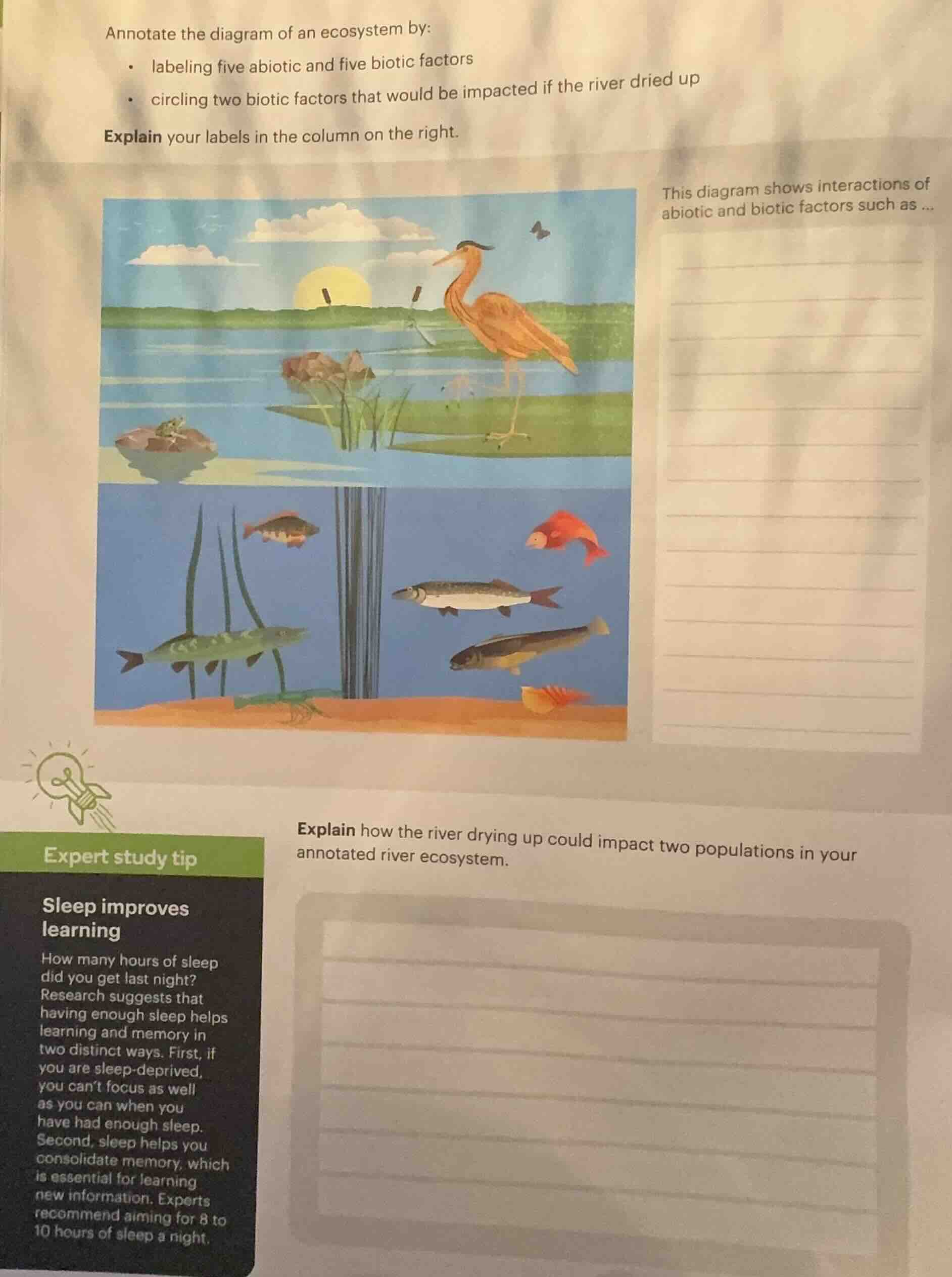
annotate the diagram of an ecosystem by:
- labeling five abiotic and five biotic factors
- circling two biotic factors that would be impacted if the river dried up
explain your labels in the column on the right.
this diagram shows interactions of abiotic and biotic factors such as ...
expert study tip
sleep improves learning
how many hours of sleep did you get last night? research suggests that having enough sleep helps learning and memory in two distinct ways. first, if you are sleep - deprived, you cant focus as well as you can when you have had enough sleep. second, sleep helps you consolidate memory, which is essential for learning new information. experts recommend aiming for 8 to 10 hours of sleep a night.
explain how the river drying up could impact two populations in your annotated river ecosystem.
Label Explanations:
Abiotic factors are non-living components of the ecosystem; biotic factors are living organisms.
- Abiotic 1: River Water: Non-living, critical habitat/resource.
- Abiotic 2: Sunlight: Non-living, fuels photosynthesis.
- Abiotic 3: Soil (riverbed): Non-living, anchors aquatic plants.
- Abiotic 4: Clouds: Non-living, affect temperature/precipitation.
- Abiotic 5: Air/Atmosphere: Non-living, provides oxygen for respiration.
- Biotic 1: Heron: Living, top predator in the ecosystem.
- Biotic 2: Fish (all species): Living, aquatic consumers.
- Biotic 3: Frog: Living, semi-aquatic consumer.
- Biotic 4: Aquatic Plants: Living, primary producers.
- Biotic 5: Butterfly: Living, terrestrial/aerial consumer.
Impact of Dried River:
The two circled biotic factors are fish and frogs, as they depend directly on the river's aquatic environment.
- Fish: They are fully aquatic, so a dried river removes their entire habitat and source of oxygen. Without water, fish populations would die out rapidly.
- Frogs: Frogs rely on water for breeding, larval development (tadpoles), and moisture for their skin. A dried river would eliminate their breeding grounds, reduce their food sources (aquatic insects), and cause dehydration, leading to a severe decline in their population.

Snap & solve any problem in the app
Get step-by-step solutions on Sovi AI
Photo-based solutions with guided steps
Explore more problems and detailed explanations
Annotated Factors:
| Label | Factor Type | Explanation |
|---|---|---|
| 2 | Abiotic: Sunlight | Non-living energy source |
| 3 | Abiotic: Riverbed Soil | Non-living plant anchor |
| 4 | Abiotic: Clouds | Non-living climate regulator |
| 5 | Abiotic: Atmosphere | Non-living oxygen source |
| 6 | Biotic: Heron | Living top predator |
| 7 | Biotic: Fish | Living aquatic consumers |
| 8 | Biotic: Frog | Living semi-aquatic consumer |
| 9 | Biotic: Aquatic Plants | Living primary producers |
| 10 | Biotic: Butterfly | Living aerial consumer |
Impact of Dried River:
- Fish Population: The dried river would eliminate their aquatic habitat, oxygen source, and food supply, leading to a total collapse of the fish population.
- Frog Population: The loss of water would remove their breeding grounds (required for tadpole development), reduce their aquatic food sources, and cause fatal dehydration, resulting in a sharp decline in the frog population.