QUESTION IMAGE
Question
apply it!
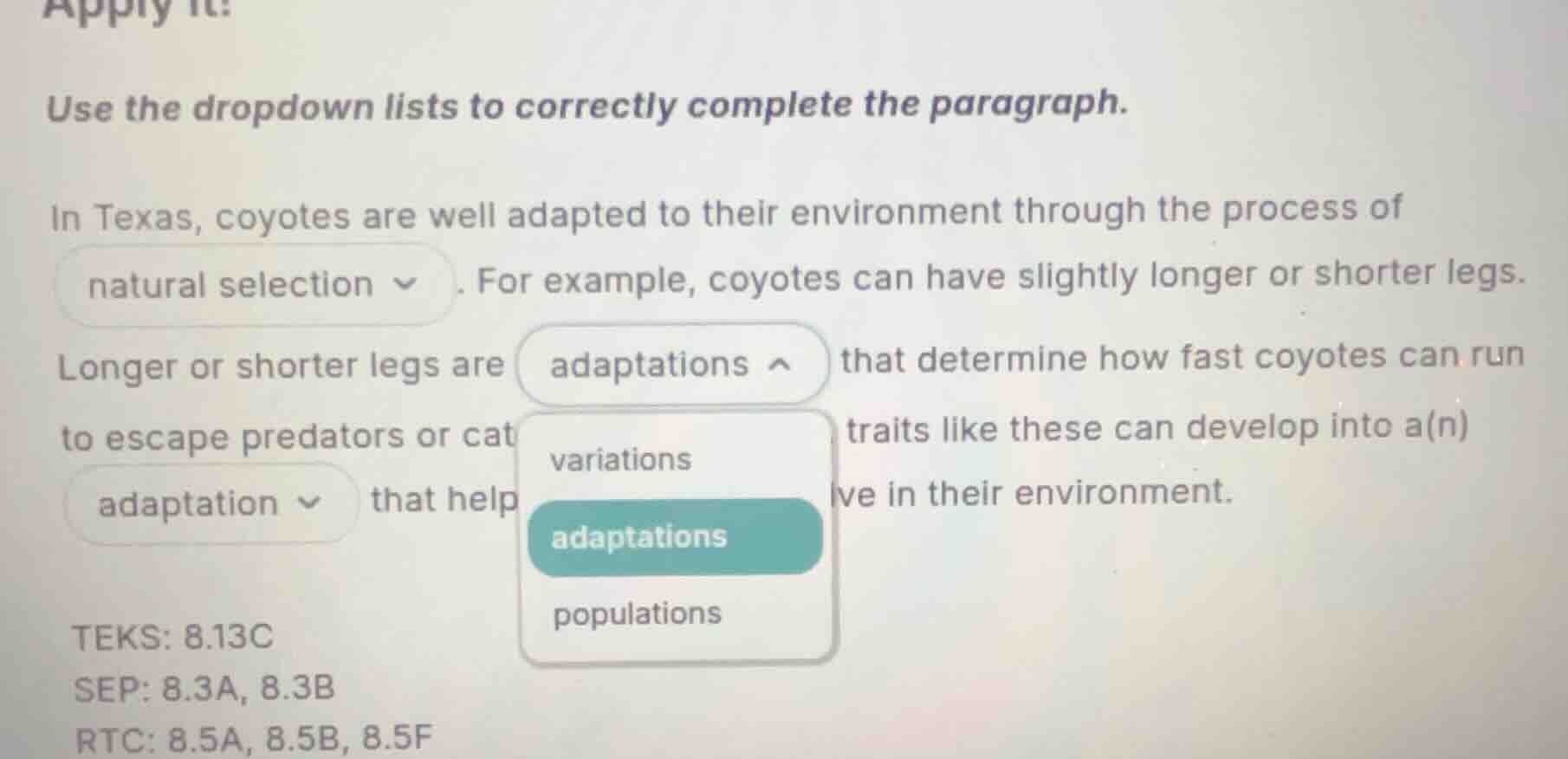
use the dropdown lists to correctly complete the paragraph.
in texas, coyotes are well adapted to their environment through the process of natural selection. for example, coyotes can have slightly longer or shorter legs.
longer or shorter legs are adaptations that determine how fast coyotes can run
to escape predators or cat traits like these can develop into a(n)
adaptation that help ve in their environment.
teks: 8.13c
sep: 8.3a, 8.3b
rtc: 8.5a, 8.5b, 8.5f
To determine the correct term, we analyze the context: the sentence is about different leg lengths in coyotes, which are differences in traits (variations), but the dropdown here is for what these leg length differences are. Wait, no—wait, the sentence is "Longer or shorter legs are [term] that determine...". Variations are differences in traits within a population. Adaptations are traits that help survival, but here we're talking about the different leg lengths as the raw differences. Wait, no, let's re-examine. The options are variations, adaptations, populations.
"Longer or shorter legs" are variations (differences in the trait of leg length) among coyotes. Adaptations are traits that are beneficial and result from natural selection, but here we're describing the different forms of the trait (leg length) as variations. Wait, but the original dropdown has "adaptations" selected, but that's incorrect. Wait, no—wait, the process is natural selection: individuals have variations (differences) in traits. Some variations are adaptations (help survival). So in the sentence: "Longer or shorter legs are [variations] that determine how fast...", because they are the different forms of the trait. Then, over time, traits like these (if beneficial) can become adaptations. Wait, but let's check the options. The dropdown options are variations, adaptations, populations.
So the correct term here should be "variations" because longer or shorter legs are different versions (variations) of the leg length trait. Populations are groups, so that's not it. Adaptations are traits that are beneficial, but here we're just talking about the different traits (variations) that exist. So the correct choice is "variations". Wait, but maybe I misread. Let's re-express the sentence: "Longer or shorter legs are [ ] that determine how fast coyotes can run...". So the term should be what the different leg lengths are. Variations are differences in a trait within a species. So yes, variations. So the correct option from the dropdown (replacing "adaptations") is "variations".
Wait, but the original problem is to correct the paragraph using dropdowns. The first dropdown was "natural selection" (correct, as that's the process). Then the second dropdown: "Longer or shorter legs are [ ]...". The options are variations, adaptations, populations. So the correct answer is "variations" because those are the different traits (variations) in leg length. Then the next part: "traits like these can develop into a(n) [adaptation] that help...", which is correct, because if a variation (like longer legs for speed) helps survival, it becomes an adaptation.
So the correct term for the middle dropdown is "variations".

Snap & solve any problem in the app
Get step-by-step solutions on Sovi AI
Photo-based solutions with guided steps
Explore more problems and detailed explanations
The correct option for the dropdown (replacing "adaptations") is "variations". So the completed sentence is: "Longer or shorter legs are variations that determine how fast coyotes can run to escape predators or catch prey. Traits like these can develop into a(n) adaptation that helps them survive in their environment."