QUESTION IMAGE
Question
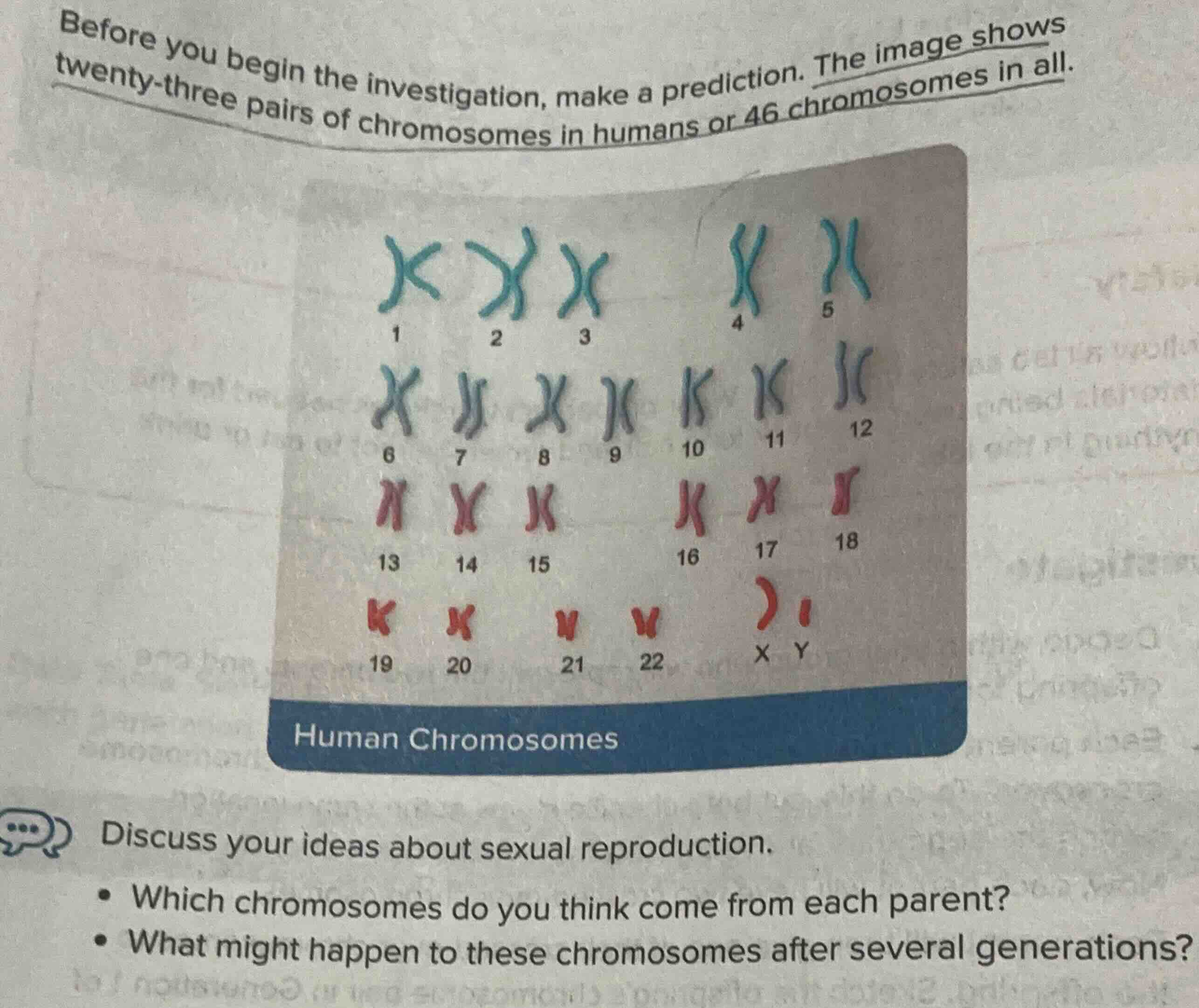
before you begin the investigation, make a prediction. the image shows twenty - three pairs of chromosomes in humans or 46 chromosomes in all.
human chromosomes
discuss your ideas about sexual reproduction.
- which chromosomes do you think come from each parent?
- what might happen to these chromosomes after several generations?
- For parental chromosome inheritance: In human sexual reproduction, each parent contributes one chromosome from each of the 23 pairs. This means one copy of each autosome (1-22) comes from the mother, and the other copy comes from the father. For sex chromosomes, a mother can only pass an X chromosome, while a father can pass either an X (resulting in a female offspring) or a Y (resulting in a male offspring).
- For long-term chromosome changes over generations: Through sexual reproduction, chromosomes undergo crossing over (genetic recombination) during meiosis, which shuffles genetic material within homologous pairs. Over multiple generations, this leads to new combinations of alleles being passed down. Additionally, random mutations can occur in chromosomes, and these changes can be inherited if they occur in germ cells. Over time, this genetic variation can lead to differences in traits within a population, and beneficial mutations may become more common through natural selection.

Snap & solve any problem in the app
Get step-by-step solutions on Sovi AI
Photo-based solutions with guided steps
Explore more problems and detailed explanations
- Which chromosomes come from each parent?
One chromosome from each numbered autosome pair (1-22) comes from the mother, and the other comes from the father. The mother contributes an X sex chromosome, while the father contributes either an X (for female offspring) or Y (for male offspring) sex chromosome.
- What might happen to these chromosomes after several generations?
Over generations, genetic recombination (crossing over) during meiosis will shuffle genetic material between homologous chromosomes, creating new allele combinations. Random mutations may also accumulate in the chromosomes. These changes will increase genetic variation in the population, with beneficial traits from these changes potentially becoming more prevalent through natural selection, while harmful ones may be selected against.