QUESTION IMAGE
Question
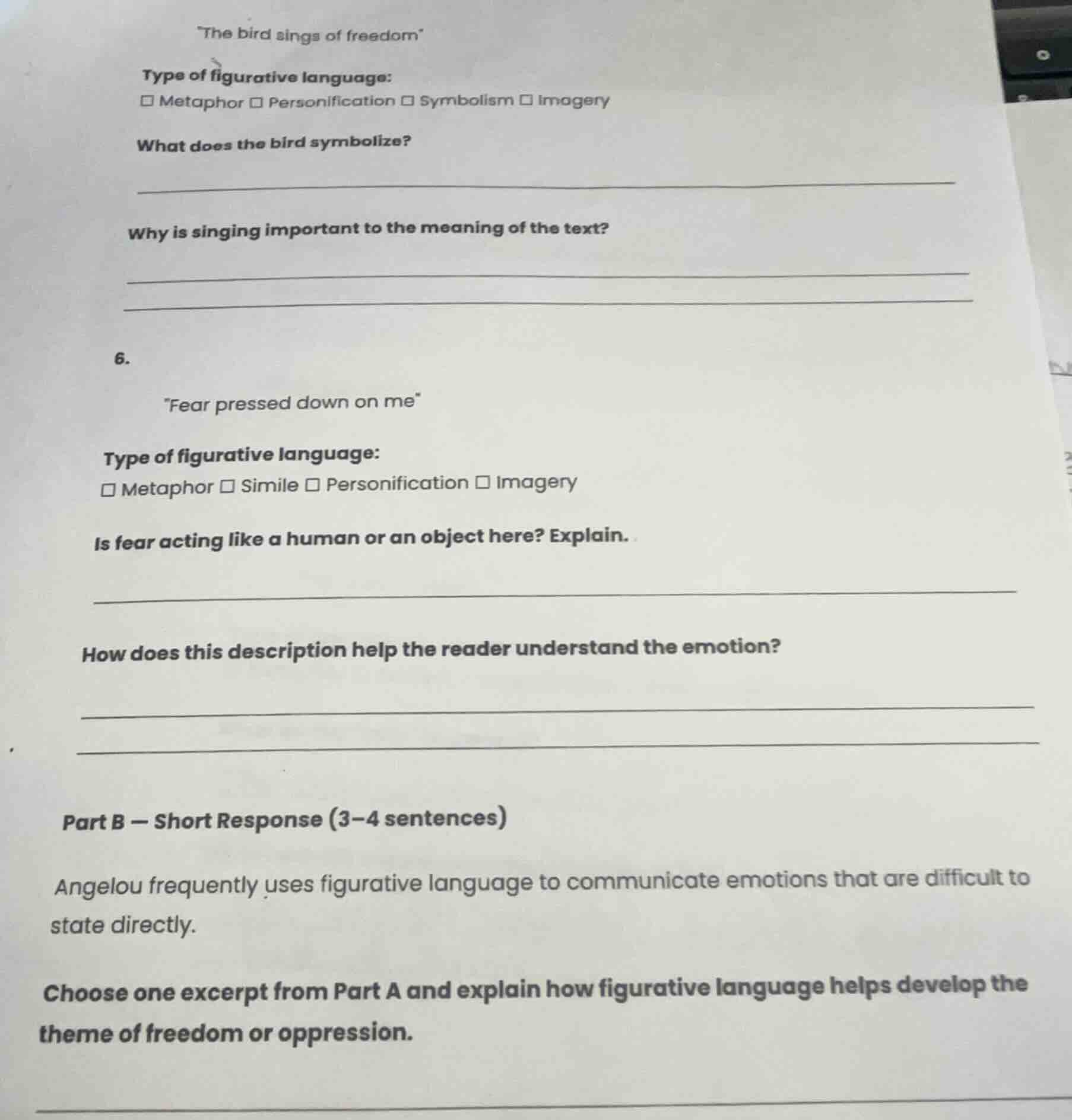
the bird sings of freedom
type of figurative language:
□ metaphor □ personification □ symbolism □ imagery
what does the bird symbolize?
_________________________
why is singing important to the meaning of the text?
_________________________
6.
\fear pressed down on me\
type of figurative language:
□ metaphor □ simile □ personification □ imagery
is fear acting like a human or an object here? explain.
_________________________
how does this description help the reader understand the emotion?
_________________________
part b — short response (3–4 sentences)
angelou frequently uses figurative language to communicate emotions that are difficult to state directly.
choose one excerpt from part a and explain how figurative language helps develop the theme of freedom or oppression.
For "The bird sings of freedom"
- Figurative Language: The phrase uses symbolism (the bird stands for a concept) and personification (birds don't sing about abstract ideas like humans do). Symbolism is the primary category here.
- Bird's Symbolism: The bird represents a being (often a person or group) that craves or embodies freedom, likely one that has been constrained.
- Importance of Singing: Singing is a vocal, expressive act that conveys joy, longing, and unshakable hope; it makes the abstract idea of freedom feel tangible and emotional, not just a concept.
For "Fear pressed down on me"
- Figurative Language: This is personification, as it gives the abstract emotion of fear a physical, human-like action (pressing down).
- Fear's Comparison: Fear acts like a physical force/object here. "Pressed down" describes a heavy, tangible weight, not a human action like speaking or gesturing.
- Reader Understanding: It turns an invisible emotion into a sensory experience—readers can imagine the crushing, immobilizing weight of intense fear, making the feeling vivid and relatable.
Part B Short Response
Using "The bird sings of freedom": Maya Angelou’s use of symbolic and personified figurative language turns a simple bird into a powerful vessel for the theme of freedom. The bird’s song is not just a sound; it is an act of resistance and hope, representing the unquenchable desire for liberation that cannot be silenced. By framing freedom through the bird’s expressive act, Angelou makes the abstract struggle for freedom feel intimate and universal, letting readers connect to the longing for autonomy without needing direct, explicit explanation.

Snap & solve any problem in the app
Get step-by-step solutions on Sovi AI
Photo-based solutions with guided steps
Explore more problems and detailed explanations
"The bird sings of freedom"
- Type of figurative language: □ Metaphor □ Personification ☑ Symbolism □ Imagery
- What does the bird symbolize? A being (or group of people) that longs for, embodies, or is denied freedom, representing the universal desire for liberation.
- Why is singing important to the meaning of the text? Singing is an expressive, unignorable act that turns abstract freedom into a tangible, emotional display of hope and resistance.
"Fear pressed down on me"
- Type of figurative language: □ Metaphor □ Simile ☑ Personification □ Imagery
- Is fear acting like a human or an object here? Explain. Fear acts like an object. "Pressed down" describes a heavy, crushing physical weight, not a human-specific action.
- How does this description help the reader understand the emotion? It turns an invisible emotion into a sensory, relatable experience, letting readers feel the immobilizing, overwhelming weight of intense fear.
Part B Short Response
Maya Angelou’s use of symbolic figurative language in "The bird sings of freedom" deepens the theme of freedom by turning a simple animal into a powerful symbol of unquenchable hope. The bird’s song is not just a natural sound; it is an act of quiet resistance, representing the way marginalized people cling to the idea of liberation even when constrained. By using the bird to embody this longing, Angelou makes the abstract struggle for freedom feel intimate and universal, allowing readers to connect to the emotion of the theme without direct, explicit explanation.