QUESTION IMAGE
Question
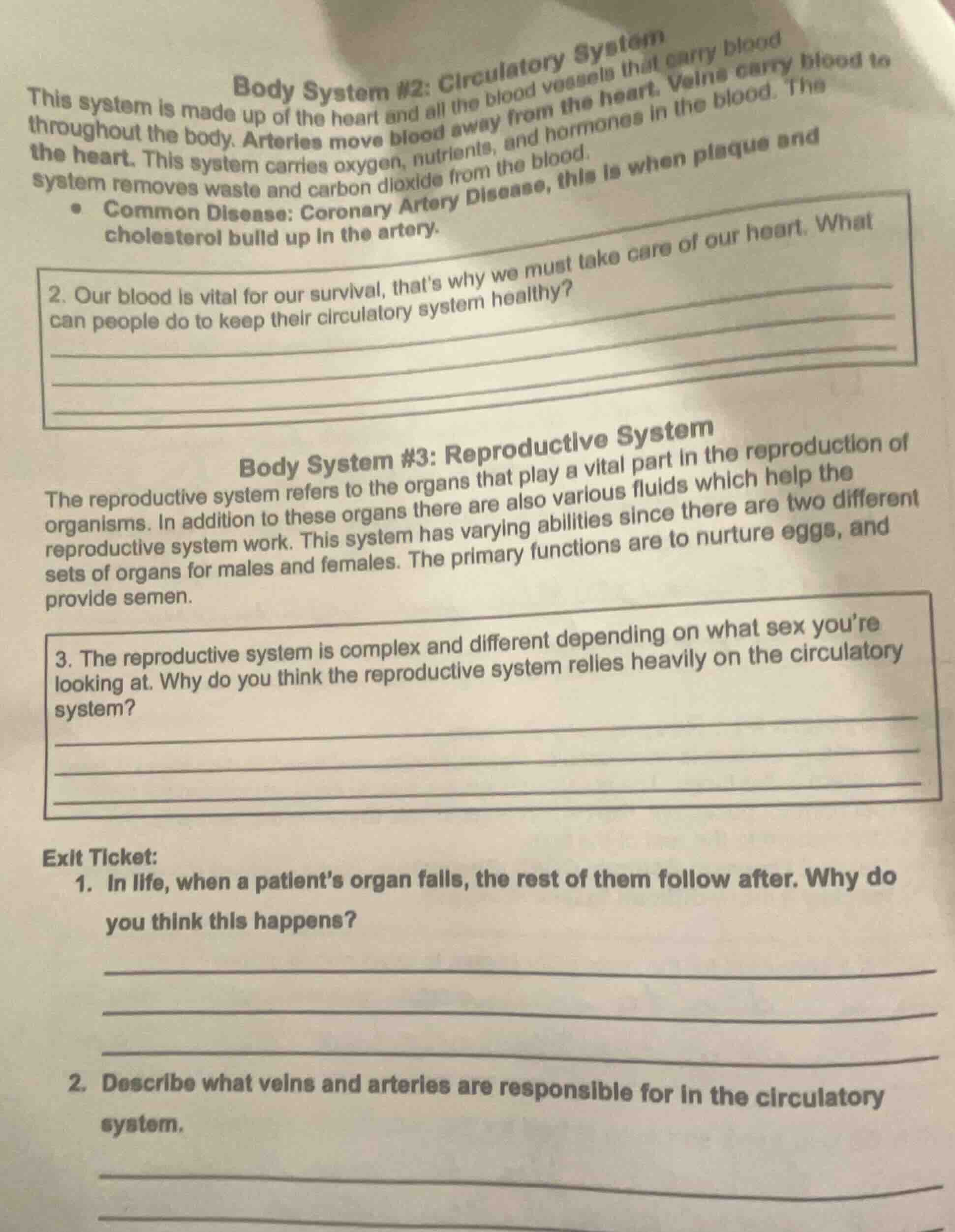
body system #2: circulatory system
this system is made up of the heart and all the blood vessels that carry blood throughout the body. arteries move blood away from the heart. veins carry blood to the heart. this system carries oxygen, nutrients, and hormones in the blood. the system removes waste and carbon dioxide from the blood.
- common disease: coronary artery disease, this is when plaque and cholesterol build up in the artery.
- our blood is vital for our survival, thats why we must take care of our heart. what can people do to keep their circulatory system healthy?
body system #3: reproductive system
the reproductive system refers to the organs that play a vital part in the reproduction of organisms. in addition to these organs there are also various fluids which help the reproductive system work. this system has varying abilities since there are two different sets of organs for males and females. the primary functions are to nurture eggs, and provide semen.
- the reproductive system is complex and different depending on what sex youre looking at. why do you think the reproductive system relies heavily on the circulatory system?
exit ticket:
- in life, when a patients organ fails, the rest of them follow after. why do you think this happens?
- describe what veins and arteries are responsible for in the circulatory system.
- For question 2 (Circulatory System Health):
- Focus on evidence-based lifestyle and dietary choices that support heart and blood vessel health, targeting risk factors like plaque buildup.
- For question 3 (Reproductive-Circulatory Link):
- Connect circulatory system functions (oxygen, nutrient delivery, hormone transport) to reproductive organ function and processes.
- For Exit Ticket 1 (Organ Failure Cascade):
- Explain that body systems are interdependent; one organ failure disrupts shared resources or regulatory functions needed by others.
- For Exit Ticket 2 (Vein/Artery Roles):
- Restate and clarify the core transport roles defined in the provided text for each vessel type.

Snap & solve any problem in the app
Get step-by-step solutions on Sovi AI
Photo-based solutions with guided steps
Explore more problems and detailed explanations
- What can people do to keep their circulatory system healthy?
- Eat a low-fat, fiber-rich diet with fruits, vegetables, and whole grains to reduce cholesterol buildup.
- Engage in regular physical activity to strengthen the heart and improve blood flow.
- Avoid smoking and limit alcohol intake to prevent vessel damage.
- Maintain a healthy body weight and manage stress levels to reduce heart strain.
- Why does the reproductive system rely heavily on the circulatory system?
- The circulatory system delivers oxygen and nutrients to reproductive organs to support their function.
- It transports reproductive hormones (like estrogen, testosterone) throughout the body to regulate fertility and development.
- For female reproductive health, it supplies blood to nourish a developing fetus during pregnancy.
- It carries fluids essential for reproductive processes (like semen components) to their target areas.
- Exit Ticket 1: Why does one organ failure lead to others failing?
- The body's organ systems are highly interdependent. Most organs rely on the circulatory system to receive oxygen, nutrients, and hormones, and to remove waste. If one vital organ (like the heart) fails, it disrupts this resource delivery to all other organs, impairing their ability to function. Additionally, organ failure can release toxins into the bloodstream or disrupt regulatory processes that keep other organs balanced, leading to a chain reaction of failure.
- Exit Ticket 2: Describe what veins and arteries are responsible for in the circulatory system?
- Arteries: Carry oxygen-rich blood away from the heart to deliver oxygen and nutrients to all tissues and organs throughout the body.
- Veins: Carry oxygen-poor blood (loaded with waste like carbon dioxide) back to the heart, so the blood can be re-oxygenated and recirculated.