QUESTION IMAGE
Question
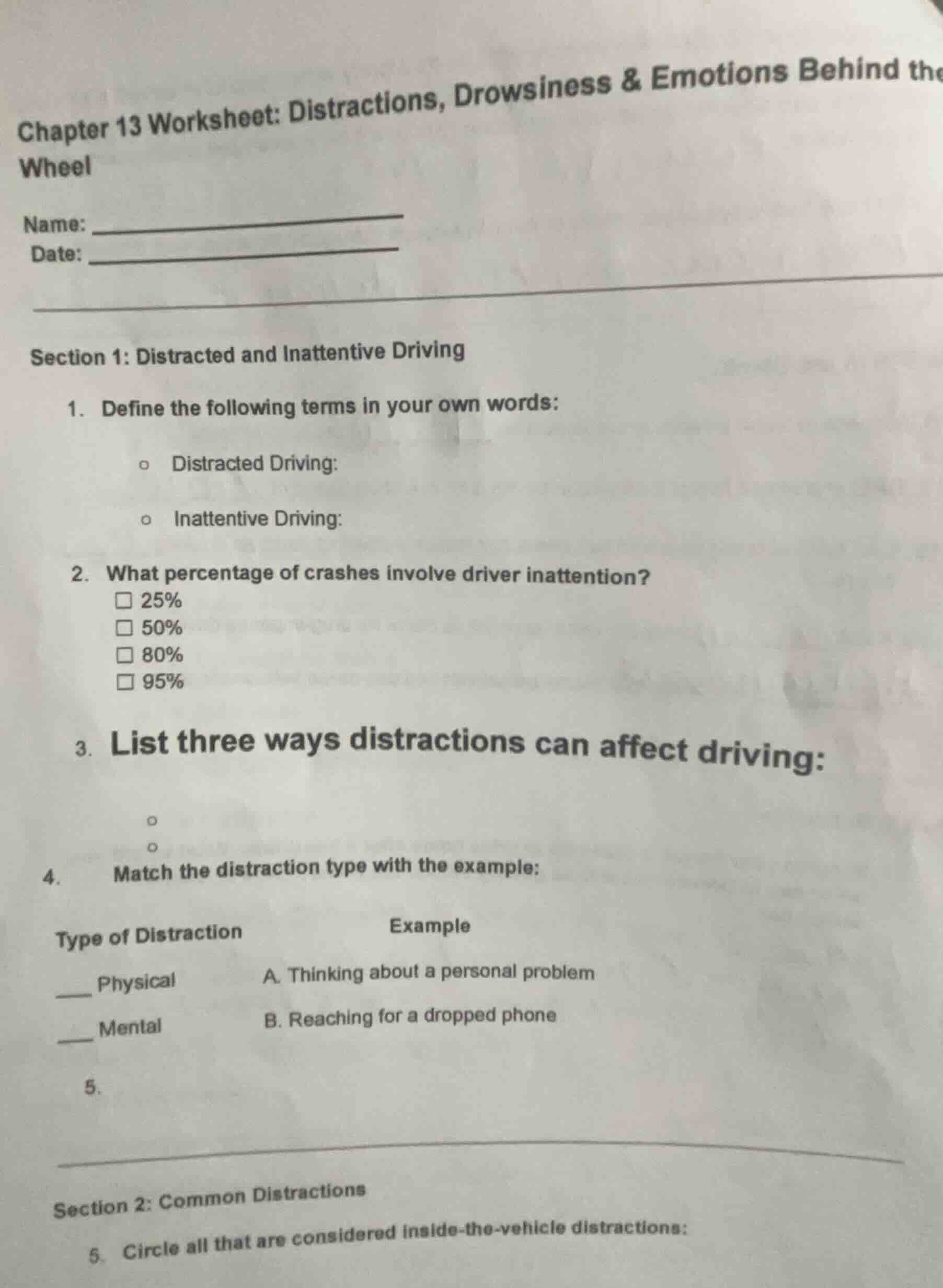
chapter 13 worksheet: distractions, drowsiness & emotions behind the wheel
name:
date:
section 1: distracted and inattentive driving
- define the following terms in your own words:
- distracted driving:
- inattentive driving:
- what percentage of crashes involve driver inattention?
- 25%
- 50%
- 80%
- 95%
- list three ways distractions can affect driving:
-
-
-
- match the distraction type with the example:
type of distraction example
____ physical a. thinking about a personal problem
____ mental b. reaching for a dropped phone
section 2: common distractions
- circle all that are considered inside-the-vehicle distractions:
Brief Explanations
- Definitions are simplified, driver-focused descriptions.
- Traffic safety data shows 80% of crashes link to inattention.
- Distractions impair core driving abilities.
- Physical distractions involve body movement; mental involve thoughts.

Snap & solve any problem in the app
Get step-by-step solutions on Sovi AI
Photo-based solutions with guided steps
Explore more problems and detailed explanations
1.
- Distracted Driving: Driving while diverted from the task by external/ internal stimuli (e.g., phone use, adjusting controls)
- Inattentive Driving: Driving without full focus on the road, even without an obvious distraction (e.g., daydreaming)
- 80%
3.
- Slow reaction time to hazards
- Impaired ability to stay in lanes
- Increased risk of missing traffic signals/signs
4.
- Physical: B. Reaching for a dropped phone
- Mental: A. Thinking about a personal problem
- (Note: No options provided for this question; if options were present, circle items that occur inside the vehicle, such as adjusting the radio, interacting with passengers, or reaching for items in the car)