QUESTION IMAGE
Question
citizens & government
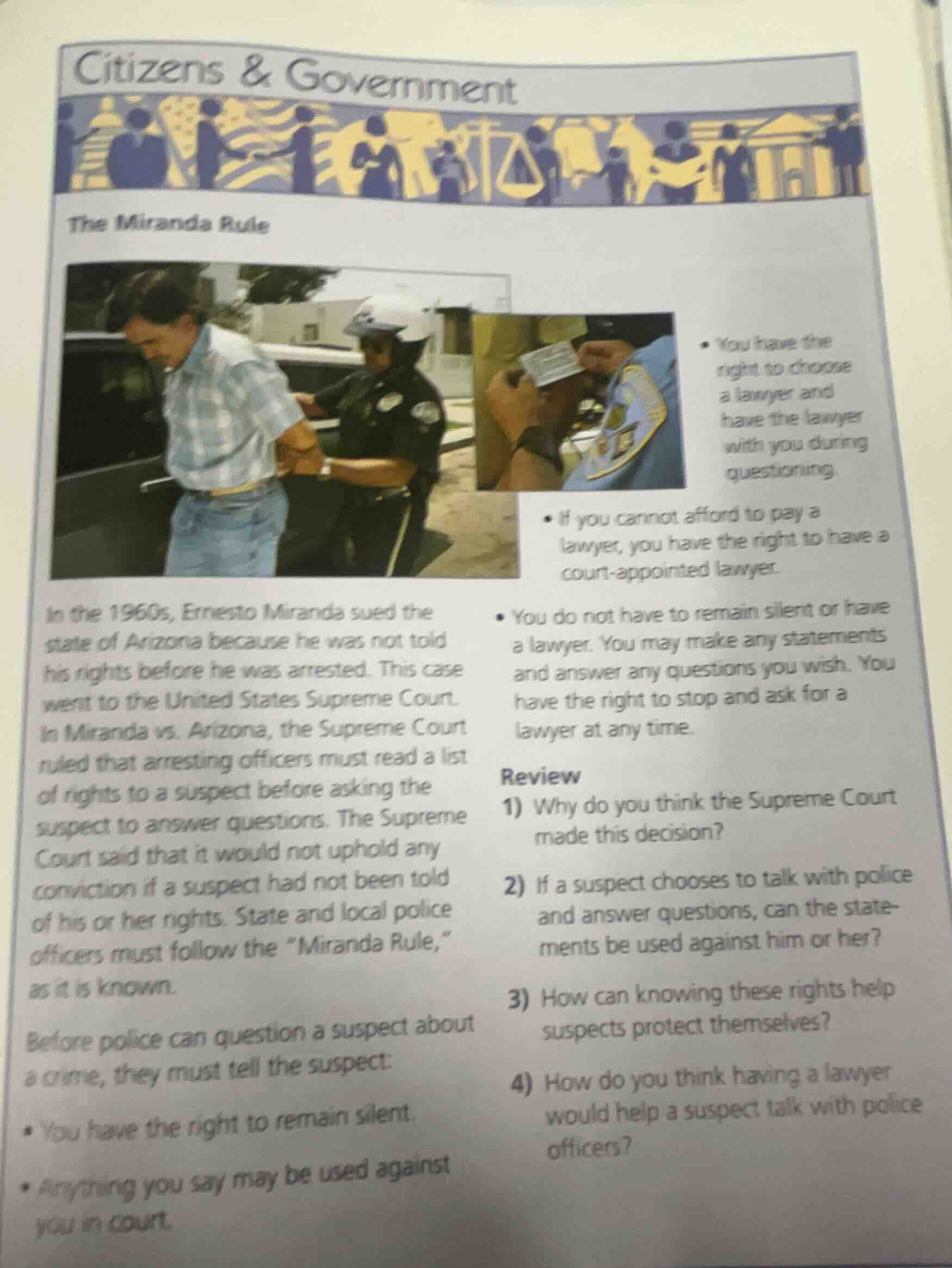
the miranda rule
in the 1960s, ernesto miranda sued the state of arizona because he was not told his rights before he was arrested. this case went to the united states supreme court. in miranda vs. arizona, the supreme court ruled that arresting officers must read a list of rights to a suspect before asking the suspect to answer questions. the supreme court said that it would not uphold any conviction if a suspect had not been told of his or her rights. state and local police officers must follow the “miranda rule,” as it is known.
before police can question a suspect about a crime, they must tell the suspect:
- you have the right to remain silent.
- anything you say may be used against you in court.
- you have the right to choose a lawyer and have the lawyer with you during questioning.
- if you cannot afford to pay a lawyer, you have the right to have a court - appointed lawyer.
- you do not have to remain silent or have a lawyer. you may make any statements and answer any questions you wish. you have the right to stop and ask for a lawyer at any time.
review
- why do you think the supreme court made this decision?
- if a suspect chooses to talk with police and answer questions, can the statements be used against him or her?
- how can knowing these rights help suspects protect themselves?
- how do you think having a lawyer would help a suspect talk with police officers?
1) Why do you think the Supreme Court made this decision?
The Supreme Court made the Miranda Rule decision to protect suspects' Fifth and Sixth Amendment rights (against self - incrimination and to counsel). Without being informed of rights, suspects (especially those unaware of legal protections) might unknowingly waive rights, leading to unfair convictions. It ensures a fair judicial process, prevents police coercion, and upholds due process by making sure suspects understand their legal standing before interrogation.
If a suspect is properly informed of Miranda rights (and waives them voluntarily, knowingly, and intelligently by choosing to talk without invoking the right to remain silent or have counsel), then the statements made can be used against them in court. The key is that the suspect must understand the rights and waive them freely.
Knowing Miranda rights lets suspects decide to remain silent to avoid self - incrimination (preventing them from saying things that could be used against them). It also allows them to request a lawyer, who can guide them through the legal process, ensure their rights are upheld during interrogation, and help them avoid making mistakes or being coerced into giving damaging statements.

Snap & solve any problem in the app
Get step-by-step solutions on Sovi AI
Photo-based solutions with guided steps
Explore more problems and detailed explanations
To protect suspects' Fifth (against self - incrimination) and Sixth (right to counsel) Amendment rights, ensure due process, prevent police coercion, and avoid unfair convictions by making suspects aware of their legal standing before interrogation.