QUESTION IMAGE
Question
class #: jan. 16th
document #4: victory gardens
during world war ii there was a campaign to encourage the use of homegrown foods. because commercial canned goods were rationed, the victory garden became an indispensable source of food for the home front. victory garden was a household activity during the war and one of the most well received of all home front efforts. at its peak, it is estimated that nearly 20 million gardens were grown and about 40 percent of all vegetables produced in the u.s. came from victory gardens.
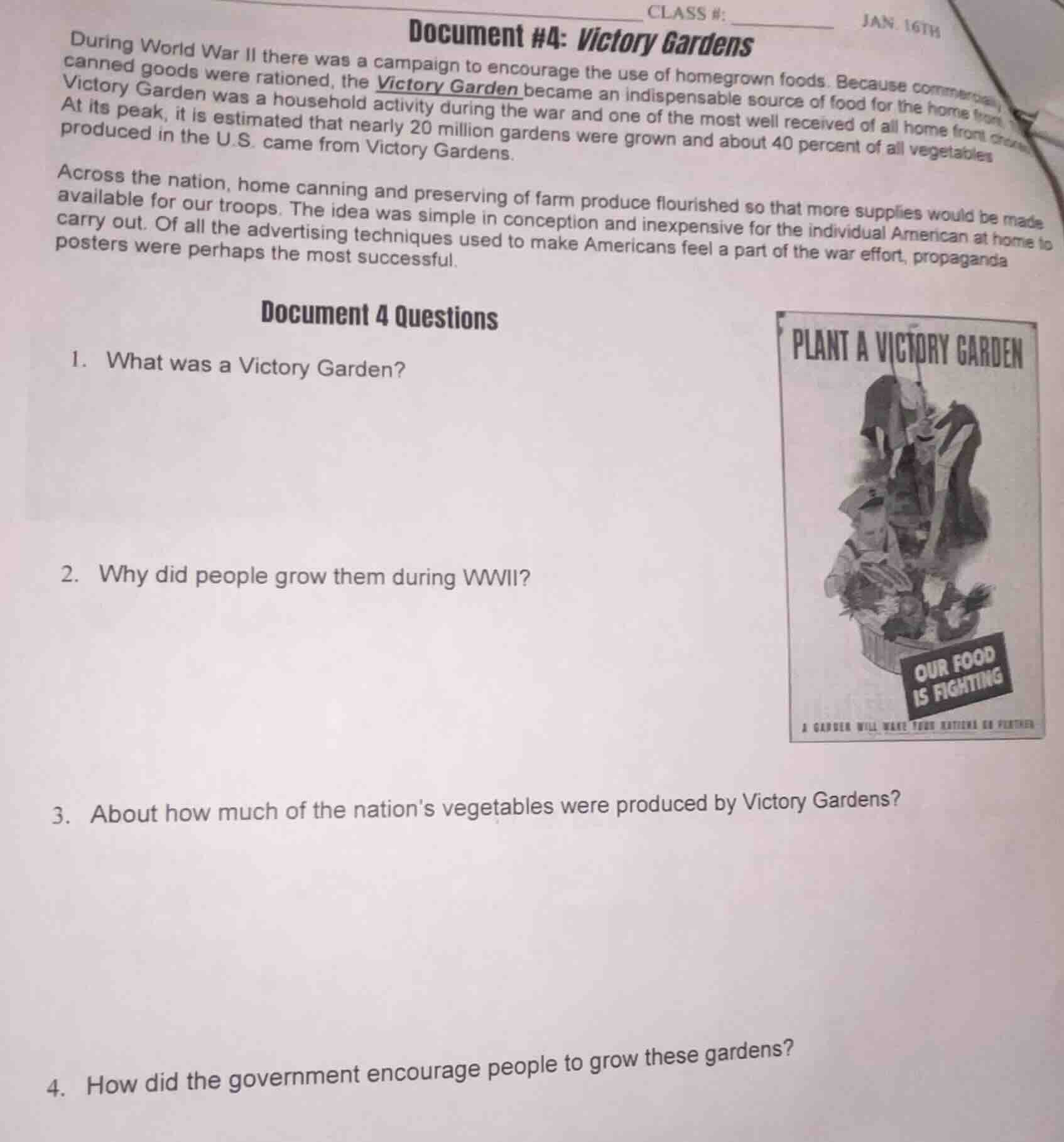
across the nation, home canning and preserving of farm produce flourished so that more supplies would be made available for our troops. the idea was simple in conception and inexpensive for the individual american at home to carry out. of all the advertising techniques used to make americans feel a part of the war effort, propaganda posters were perhaps the most successful.
document 4 questions
- what was a victory garden?
- why did people grow them during wwii?
- about how much of the nations vegetables were produced by victory gardens?
- how did the government encourage people to grow these gardens?
- Defined using the text's description of Victory Gardens as a household food source.
- Linked to the context of WWII food rationing and troop supply needs.
- Pulled directly from the provided statistical detail in the document.
- Identified from the text's note on propaganda techniques used for encouragement.

Snap & solve any problem in the app
Get step-by-step solutions on Sovi AI
Photo-based solutions with guided steps
Explore more problems and detailed explanations
- A Victory Garden was a household garden grown for homegrown food, an indispensable food source for the home front during WWII.
- People grew them because commercially canned goods were rationed, and they allowed more food supplies to be available for U.S. troops during WWII.
- About 40 percent of all vegetables produced in the U.S. came from Victory Gardens.
- The government encouraged people to grow these gardens using advertising techniques, most successfully propaganda posters, to make Americans feel part of the war effort.