QUESTION IMAGE
Question
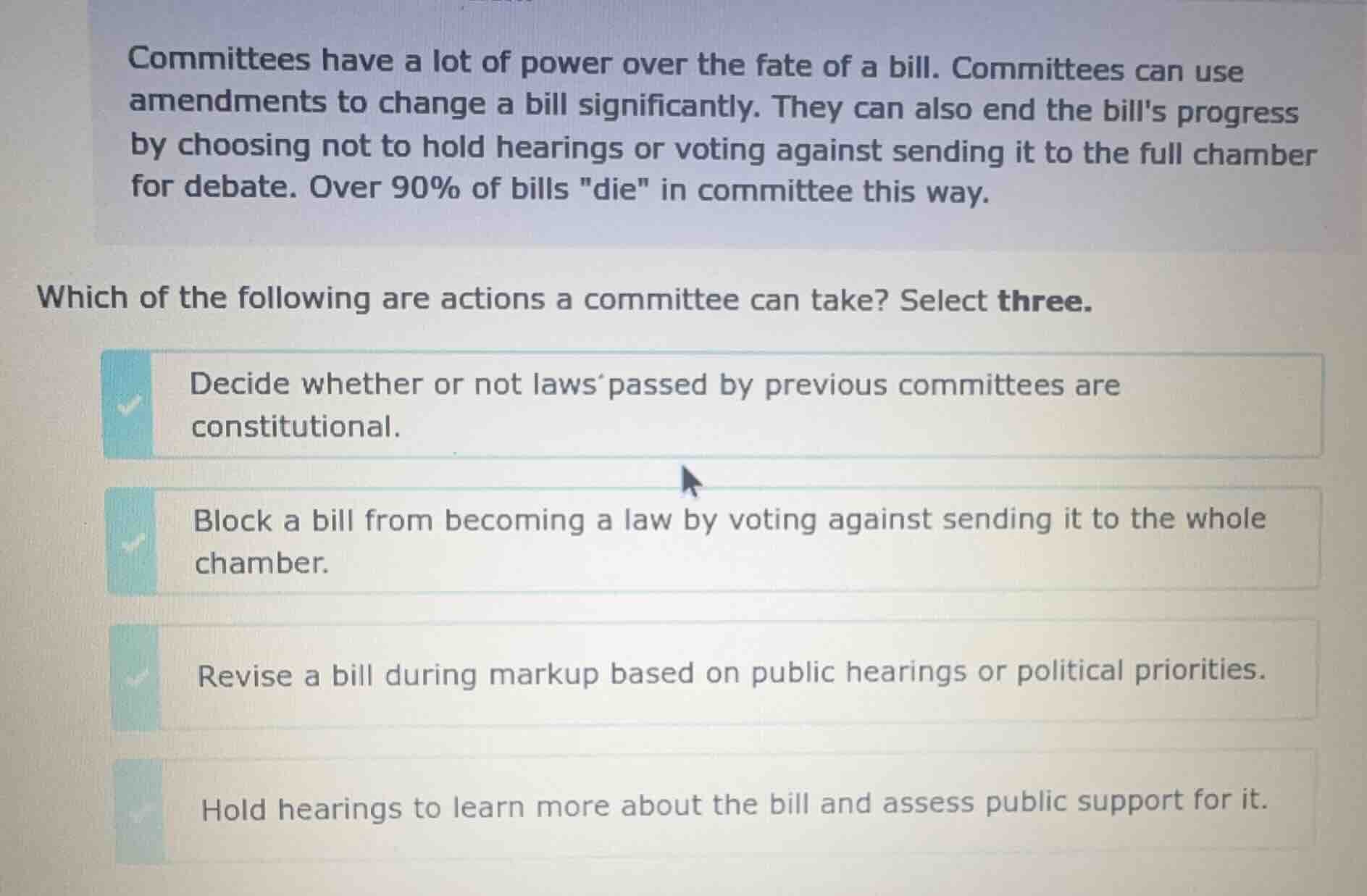
committees have a lot of power over the fate of a bill. committees can use amendments to change a bill significantly. they can also end the bills progress by choosing not to hold hearings or voting against sending it to the full chamber for debate. over 90% of bills \die\ in committee this way. which of the following are actions a committee can take? select three. decide whether or not laws‘passed by previous committees are constitutional. block a bill from becoming a law by voting against sending it to the whole chamber. revise a bill during markup based on public hearings or political priorities. hold hearings to learn more about the bill and assess public support for it.
- The first option is incorrect; determining constitutionality is a judicial branch power, not a legislative committee power.
- The second option is valid: committees can block bills by voting against sending them to the full chamber, as stated in the text.
- The third option is valid: committees use amendments (markup) to revise/change bills, which aligns with the text's note about significant changes via amendments.
- The fourth option is valid: committees can choose to hold hearings (and the text notes they can also choose not to hold hearings, confirming this is an available action).

Snap & solve any problem in the app
Get step-by-step solutions on Sovi AI
Photo-based solutions with guided steps
Explore more problems and detailed explanations
B. Block a bill from becoming a law by voting against sending it to the whole chamber.
C. Revise a bill during markup based on public hearings or political priorities.
D. Hold hearings to learn more about the bill and assess public support for it.