QUESTION IMAGE
Question
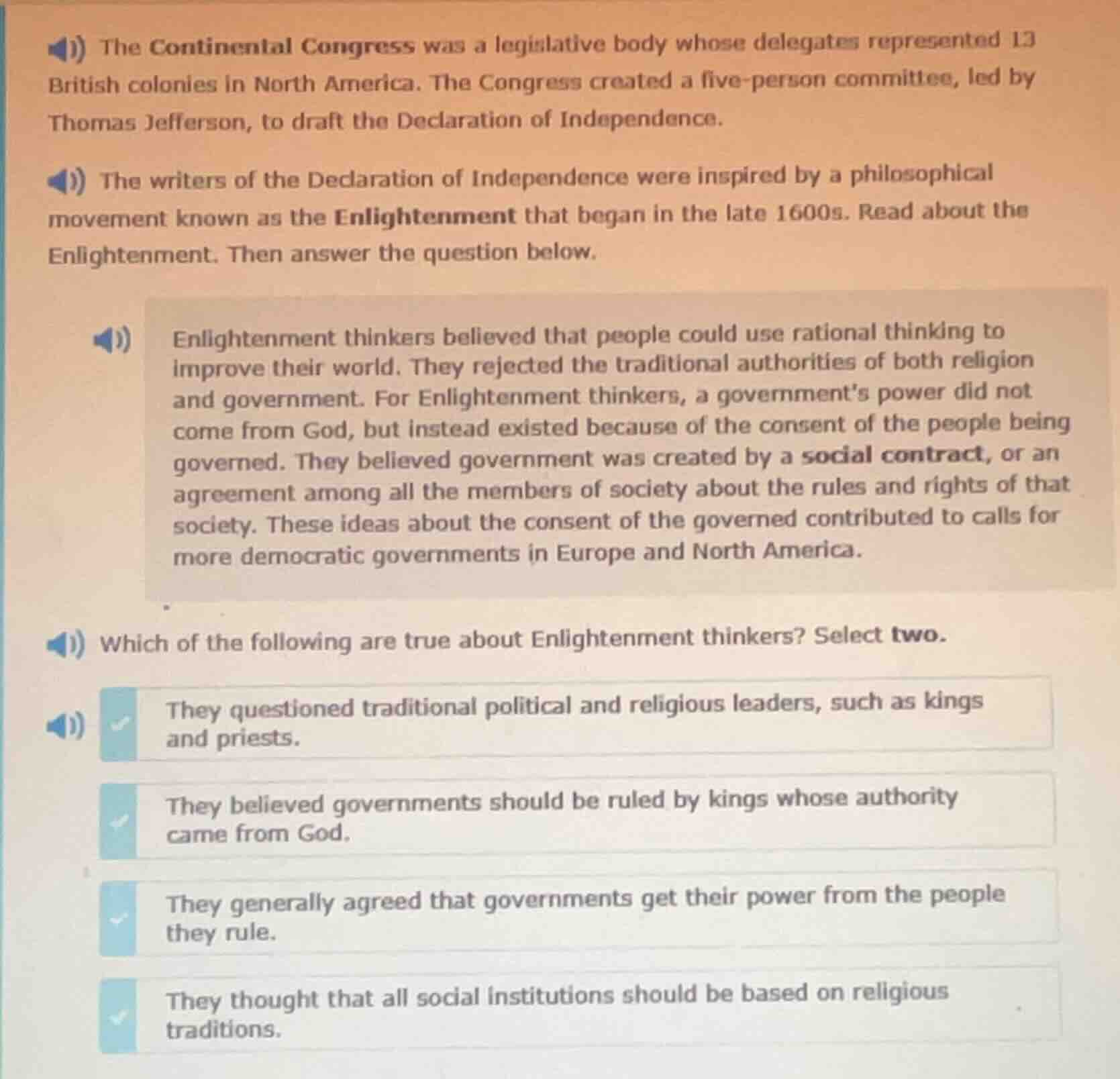
the continental congress was a legislative body whose delegates represented 13 british colonies in north america. the congress created a five - person committee, led by thomas jefferson, to draft the declaration of independence. the writers of the declaration of independence were inspired by a philosophical movement known as the enlightenment that began in the late 1600s. read about the enlightenment. then answer the question below. enlightenment thinkers believed that people could use rational thinking to improve their world. they rejected the traditional authorities of both religion and government. for enlightenment thinkers, a governments power did not come from god, but instead existed because of the consent of the people being governed. they believed government was created by a social contract, or an agreement among all the members of society about the rules and rights of that society. these ideas about the consent of the governed contributed to calls for more democratic governments in europe and north america. which of the following are true about enlightenment thinkers? select two. they questioned traditional political and religious leaders, such as kings and priests. they believed governments should be ruled by kings whose authority came from god. they generally agreed that governments get their power from the people they rule. they thought that all social institutions should be based on religious traditions.
- The text states Enlightenment thinkers rejected traditional religious and government authorities, so they questioned kings (political) and priests (religious).
- The text explicitly says Enlightenment thinkers believed government power came from the consent of the governed, not God.
- The other two options directly contradict the provided information about Enlightenment beliefs.

Snap & solve any problem in the app
Get step-by-step solutions on Sovi AI
Photo-based solutions with guided steps
Explore more problems and detailed explanations
A. They questioned traditional political and religious leaders, such as kings and priests.
C. They generally agreed that governments get their power from the people they rule.