QUESTION IMAGE
Question
cultural changes
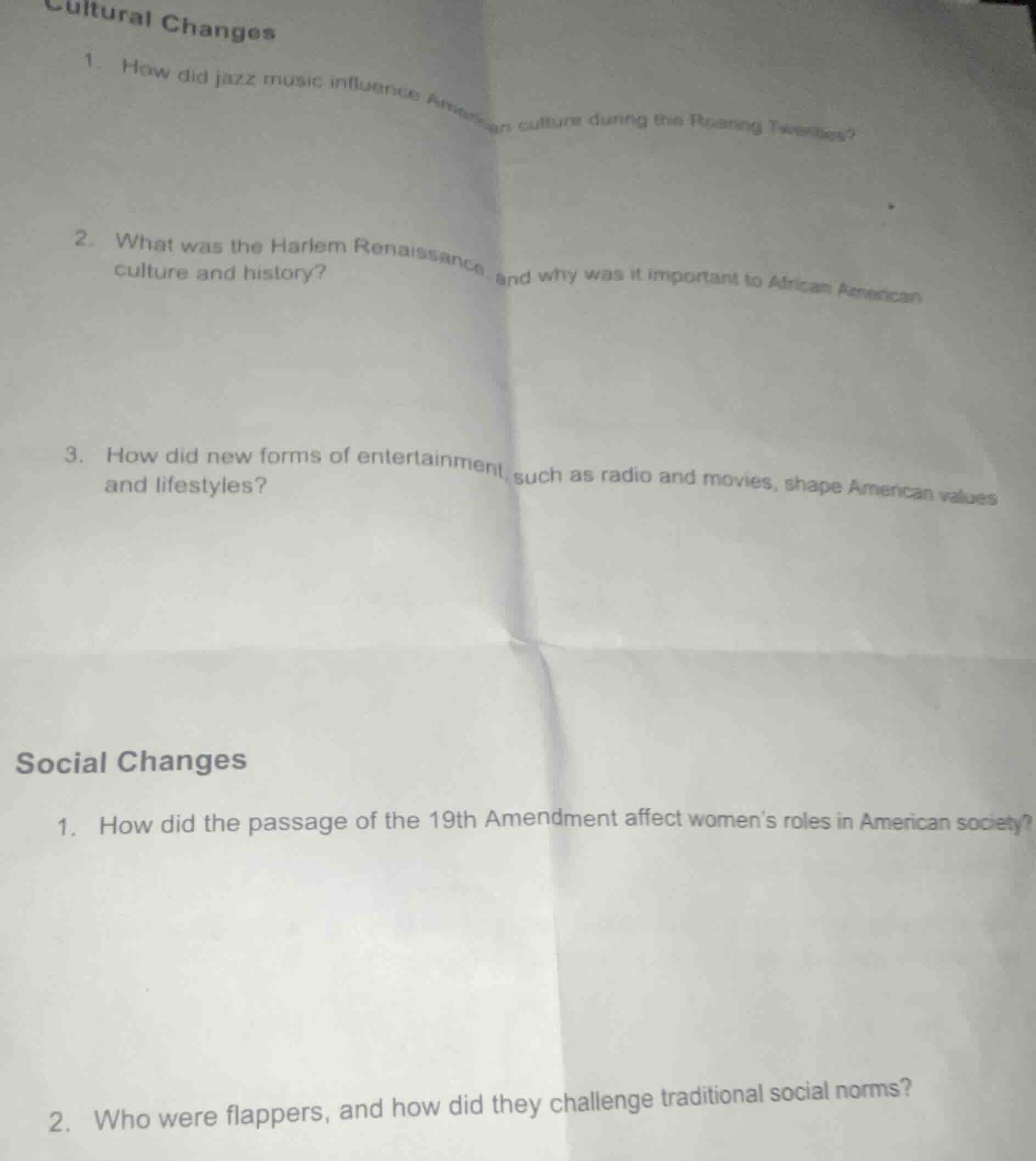
- how did jazz music influence american culture during the roaring twenties?
- what was the harlem renaissance, and why was it important to african american culture and history?
- how did new forms of entertainment, such as radio and movies, shape american values and lifestyles?
social changes
- how did the passage of the 19th amendment affect womens roles in american society?
- who were flappers, and how did they challenge traditional social norms?
Brief Explanations
Cultural Changes
- Jazz broke racial barriers by bringing Black and white audiences together in venues like speakeasies. It also fueled the rise of dance crazes (like the Charleston) that redefined social leisure, and gave Black artists mainstream recognition, shifting American views of Black creativity.
- The Harlem Renaissance was a 1920s cultural movement centered in Harlem, New York, where Black artists, writers, and musicians (like Langston Hughes, Louis Armstrong) created works celebrating Black identity. It was critical as it challenged racist stereotypes, created a shared Black cultural heritage, and laid groundwork for future civil rights movements.
- Radio and movies created a national shared culture, spreading mainstream values (like consumerism, idealized gender roles) across regions. They also normalized new leisure habits, promoted celebrity culture, and influenced fashion, speech, and social behaviors by presenting a unified "American" lifestyle.
Social Changes
- The 19th Amendment (1920) granted women the right to vote, which pushed women into political activism, encouraged greater educational and professional opportunities, and laid the groundwork for broader feminist movements expanding women's public roles.
- Flappers were young, urban 1920s women who rejected traditional norms: they wore short dresses, bobbed hair, drank/smoked in public, and pursued casual dating. They challenged ideas of female modesty, domesticity, and the strict gender roles of the Victorian era.

Snap & solve any problem in the app
Get step-by-step solutions on Sovi AI
Photo-based solutions with guided steps
Explore more problems and detailed explanations
Cultural Changes
- Jazz music integrated Black and white audiences, spurred new dance trends, elevated Black artists, and shifted American cultural attitudes toward Black creativity during the Roaring Twenties.
- The Harlem Renaissance was a 1920s Black cultural movement in Harlem focused on art, literature, and music; it was important because it celebrated Black identity, countered racist stereotypes, and laid a foundation for civil rights activism.
- Radio and movies created a unified national culture, spread mainstream American values, normalized new leisure routines, and shaped fashion, social behaviors, and consumer lifestyles across the country.
Social Changes
- The 19th Amendment granted women voting rights, enabling greater political participation, expanding access to education and careers, and advancing the push for broader gender equality in American society.
- Flappers were young 1920s urban women; they challenged traditional norms through their bold fashion (short dresses, bobbed hair), public socializing (drinking, smoking), and rejection of strict domestic and modest female roles.