QUESTION IMAGE
Question
cultural effects
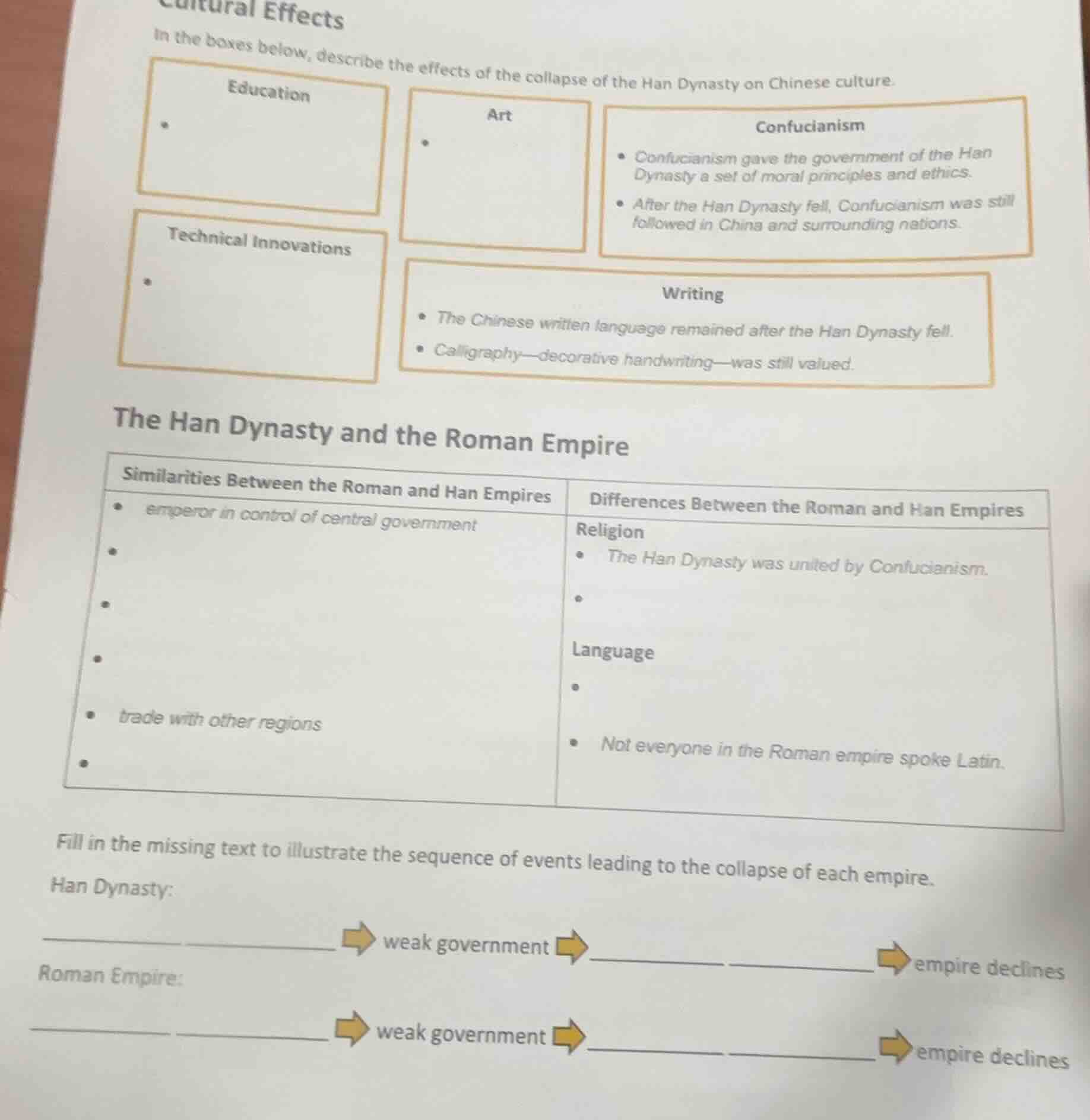
in the boxes below, describe the effects of the collapse of the han dynasty on chinese culture.
education
-
art
-
confucianism
- confucianism gave the government of the han dynasty a set of moral principles and ethics.
- after the han dynasty fell, confucianism was still followed in china and surrounding nations.
technical innovations
-
writing
- the chinese written language remained after the han dynasty fell.
- calligraphy—decorative handwriting—was still valued.
the han dynasty and the roman empire
similarities between the roman and han empires
- emperor in control of central government
-
-
-
- trade with other regions
-
differences between the roman and han empires
religion
- the han dynasty was united by confucianism.
-
language
-
- not everyone in the roman empire spoke latin.
fill in the missing text to illustrate the sequence of events leading to the collapse of each empire.
han dynasty:
____ __ ➔ weak government ➔ __ ____ ➔ empire declines
roman empire:
____ __ ➔ weak government ➔ __ ____ ➔ empire declines
Brief Explanations
Cultural Effects (Han Dynasty Collapse)
- Education: Formal imperial academies focused on Confucian texts declined, but private Confucian schools persisted among elite communities, preserving core educational traditions outside state control.
- Art: Court-sponsored art (like large-scale stone carvings) diminished, but regional folk art and Buddhist-influenced art (newly spreading) emerged, diversifying artistic styles.
- Technical Innovations: State-backed projects (like canal maintenance) halted, but existing innovations (paper, iron casting) continued to spread regionally through local craftspeople.
Han Dynasty and Roman Empire
- Similarities:
- Large, centralized bureaucratic systems to manage territories
- Standardized legal codes to unify rule across regions
- Professional standing armies to defend borders
- Infrastructure projects (roads, aqueducts/Canals) to connect territories
- Tax systems based on agriculture and trade
- Differences:
- Religion: The Roman Empire had a polytheistic state religion that later adopted Christianity as its official faith.
- Language: Most people across the Han Dynasty spoke and used a standardized written Chinese, creating linguistic unity.
Collapse Event Sequences
- Han Dynasty:
- Peasant uprisings (e.g., Yellow Turban Rebellion) → weak government → warlord fragmentation and external nomadic raids → empire declines
- Roman Empire:
- Economic crisis (inflation, over-reliance on slavery) → weak government → barbarian invasions and civil wars → empire declines

Snap & solve any problem in the app
Get step-by-step solutions on Sovi AI
Photo-based solutions with guided steps
Explore more problems and detailed explanations
Cultural Effects
- Education: Private Confucian schools preserved elite learning.
- Art: Regional folk/Buddhist art replaced court art dominance.
- Technical Innovations: Existing tech spread locally without state support.
Han-Roman Empire Comparisons
Similarities
- Large centralized bureaucratic systems
- Standardized legal codes
- Professional standing armies
- Cross-territory infrastructure projects
- Agriculture/trade-based tax systems
Differences
- Religion: Roman Empire had polytheism, later state Christianity.
- Language: Han Dynasty had widespread standardized written Chinese.
Collapse Sequences
- Han Dynasty: Peasant uprisings → weak government → warlord raids → empire declines
- Roman Empire: Economic crisis → weak government → barbarian/civil wars → empire declines