QUESTION IMAGE
Question
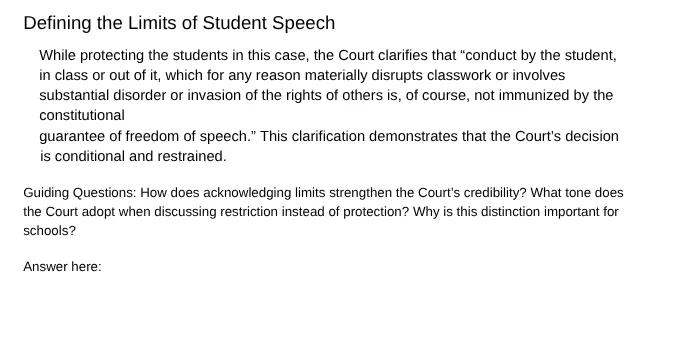
defining the limits of student speech
while protecting the students in this case, the court clarifies that \conduct by the student,
in class or out of it, which for any reason materially disrupts classwork or involves
substantial disorder or invasion of the rights of others is, of course, not immunized by the
constitutional
guarantee of freedom of speech.\ this clarification demonstrates that the court’s decision
is conditional and restrained.
guiding questions: how does acknowledging limits strengthen the court’s credibility? what tone does
the court adopt when discussing restriction instead of protection? why is this distinction important for
schools?
answer here:
- Credibility from Limits: Acknowledging limits shows the Court is balanced, not overly permissive. It recognizes real - world school needs (like maintaining order) while upholding free speech, so it’s seen as reasonable, not extreme.
- Tone on Restriction: The Court uses a measured, objective tone. It frames restrictions as necessary for school functionality (disruptions, rights invasions), not punitive, emphasizing a practical, rule - based approach.
- Importance for Schools: Schools need clear rules. Distinguishing restriction from protection helps schools enforce discipline (for disruptions) without violating speech rights, creating a safe, orderly learning environment while respecting students’ freedoms.

Snap & solve any problem in the app
Get step-by-step solutions on Sovi AI
Photo-based solutions with guided steps
Explore more problems and detailed explanations
- Strengthening Credibility: Acknowledging limits shows the Court is reasonable, balancing free speech with school needs (order, rights protection), avoiding an extreme “all - or - nothing” stance, so it’s seen as fair and pragmatic.
- Tone on Restriction: The Court adopts an objective, practical tone. It presents restrictions as necessary to prevent disruption/rights violations, framing them as functional (for school operations) rather than punitive.
- Importance for Schools: This distinction gives schools clear guidance: they can protect speech (for non - disruptive expression) and restrict it (for disruptive/harmful conduct), maintaining order while respecting students’ constitutional rights, ensuring a safe, productive learning environment.