QUESTION IMAGE
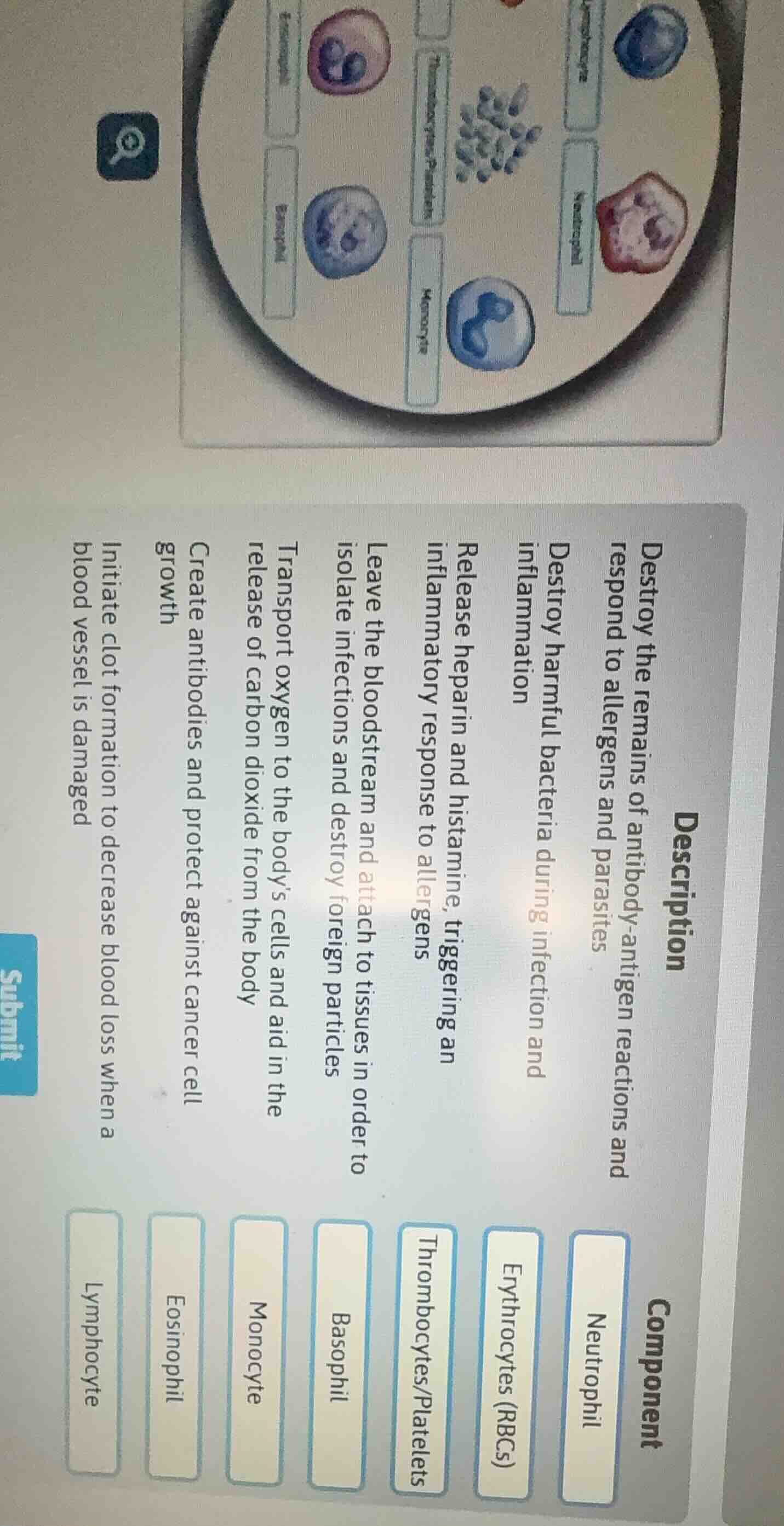
Question
description
destroy the remains of antibody - antigen reactions and respond to allergens and parasites
destroy harmful bacteria during infection and inflammation
release heparin and histamine, triggering an inflammatory response to allergens
leave the bloodstream and attach to tissues in order to isolate infections and destroy foreign particles
transport oxygen to the body’s cells and aid in the release of carbon dioxide from the body
create antibodies and protect against cancer cell growth
initiate clot formation to decrease blood loss when a blood vessel is damaged
component
neutrophil
erythrocytes (rbcs)
thrombocytes/platelets
basophil
monocyte
eosinophil
lymphocyte
Match each blood cell component to its core physiological function based on hematology knowledge:
- Neutrophils are the primary bacterial-fighting white blood cells that drive inflammatory responses during infection.
- Eosinophils target antibody-antigen complexes, allergens, and parasites.
- Erythrocytes (RBCs) are specialized for gas transport (oxygen and carbon dioxide).
- Basophils release heparin and histamine to mediate allergic/inflammatory reactions.
- Monocytes exit the bloodstream to become tissue macrophages that isolate and destroy foreign particles/infections.
- Lymphocytes produce antibodies and provide immune surveillance against cancer cells.
- Thrombocytes (Platelets) initiate clotting to stop bleeding from damaged vessels.

Snap & solve any problem in the app
Get step-by-step solutions on Sovi AI
Photo-based solutions with guided steps
Explore more problems and detailed explanations
- Destroy the remains of antibody-antigen reactions and respond to allergens and parasites → Eosinophil
- Destroy harmful bacteria during infection and inflammation → Neutrophil
- Release heparin and histamine, triggering an inflammatory response to allergens → Basophil
- Leave the bloodstream and attach to tissues in order to isolate infections and destroy foreign particles → Monocyte
- Transport oxygen to the body's cells and aid in the release of carbon dioxide from the body → Erythrocytes (RBCs)
- Create antibodies and protect against cancer cell growth → Lymphocyte
- Initiate clot formation to decrease blood loss when a blood vessel is damaged → Thrombocytes/Platelets