QUESTION IMAGE
Question
determine whether the following example is positive (+) or negative (-) and name the body system(s) that are involved.
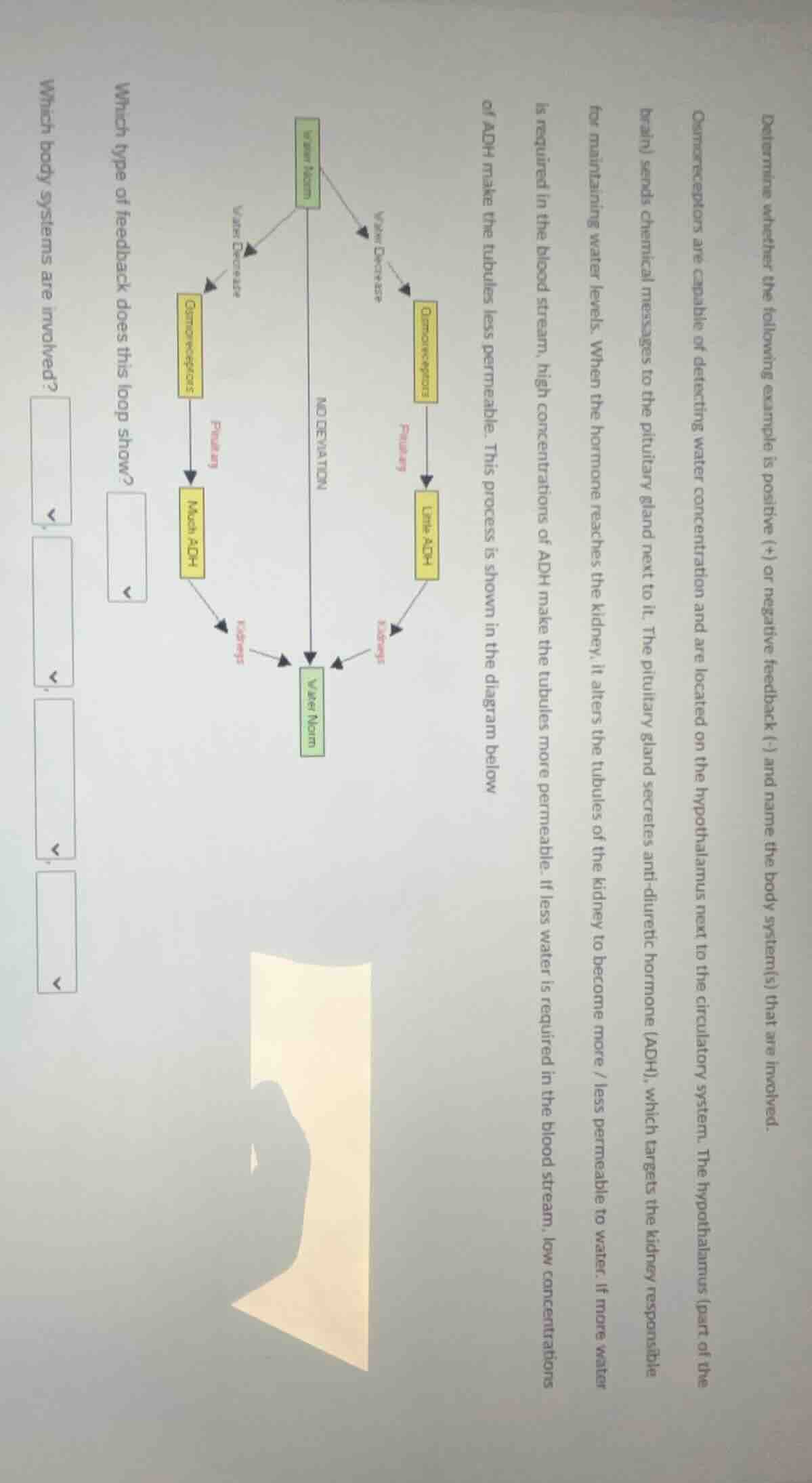
osmoreceptors are capable of detecting water concentration and are located on the hypothalamus next to the circulatory system. the hypothalamus (part of the brain) sends chemical messages to the pituitary gland next to it. the pituitary gland secretes anti - diuretic hormone (adh), which targets the kidney responsible for maintaining water levels. when the hormone reaches the kidney, it alters the tubules of the kidney to become more / less permeable to water. if more water is required in the blood stream, high concentrations of adh make the tubules more permeable. if less water is required in the blood stream, low concentrations of adh make the tubules less permeable. this process is shown in the diagram below
which type of feedback does this loop show?
which body systems are involved?
- The process reverses deviations from normal water levels: high water concentration triggers less ADH (reducing water retention) and low water concentration triggers more ADH (increasing water retention), both acting to return to normal levels, which defines negative feedback.
- The hypothalamus/brain (nervous system) detects changes, the pituitary (endocrine system) releases ADH, the kidneys (urinary/excretory system) adjust water permeability, and the circulatory system transports ADH.

Snap & solve any problem in the app
Get step-by-step solutions on Sovi AI
Photo-based solutions with guided steps
Explore more problems and detailed explanations
- This is negative (-) feedback.
- The involved body systems are:
- Nervous system
- Endocrine system
- Urinary/excretory system
- Circulatory system