QUESTION IMAGE
Question
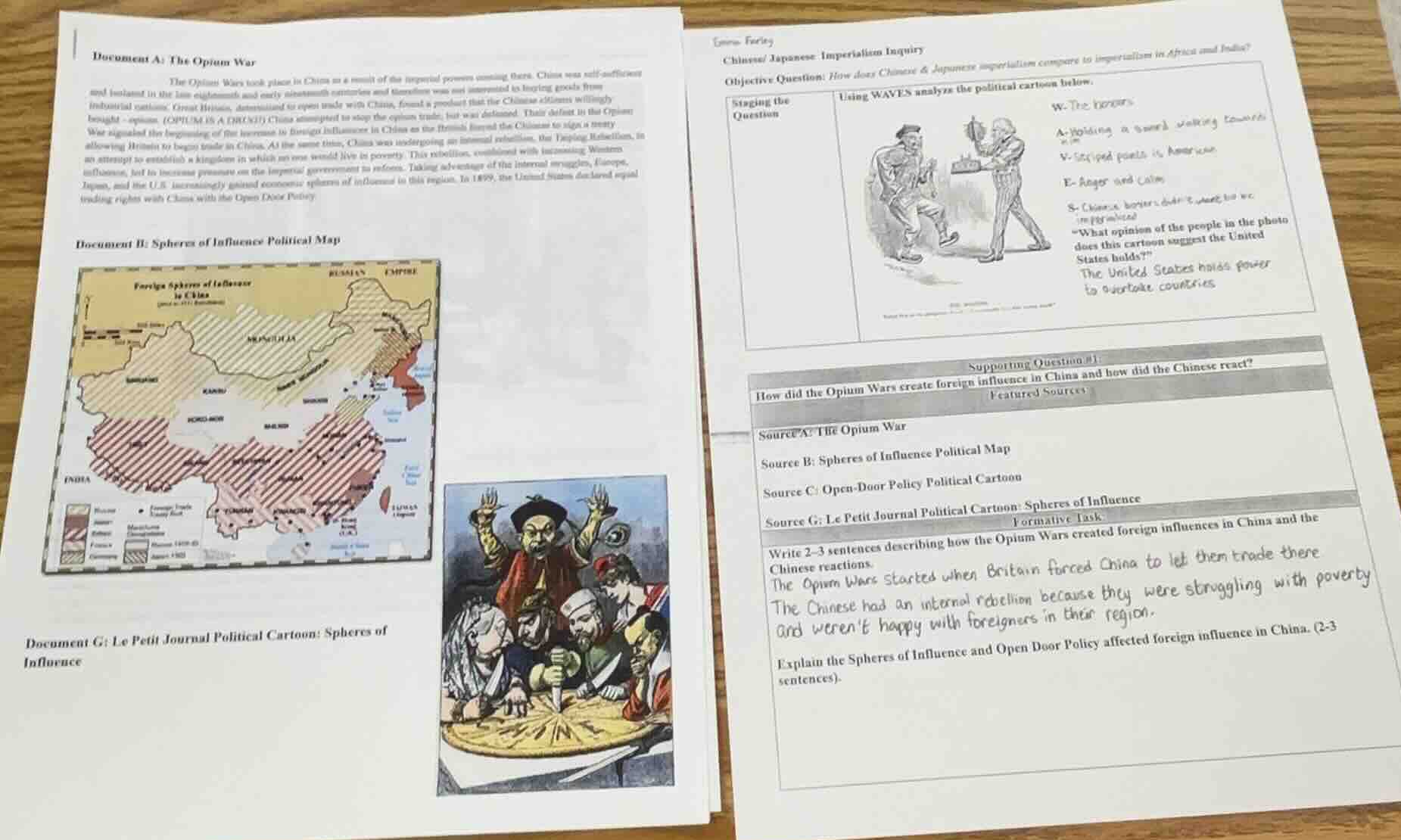
document a: the opium warthe opium wars took place in china as a result of the imperial powers acting there. china was self-sufficient and isolated in the late eighteenth and early nineteenth centuries and therefore was not interested in buying goods from industrial nations. great britain, determined to open trade with china, found a product that the chinese citizens willingly brought - opium. (opium is a drug!) china attempted to stop the opium trade, but was defeated. their defeat in the opium war signaled the beginning of the increase in foreign influence in china as the british forced the chinese to sign a treaty allowing britain to begin trade in china. at the same time, china was undergoing an internal rebellion, the taiping rebellion, in an attempt to establish a kingdom in which no one would live in poverty. this rebellion, combined with increasing western influence, led to increased pressure on the imperial government to reform. taking advantage of the internal struggles, europe, japan, and the u.s. increasingly gained economic spheres of influence in this region. in 1899, the united states declared equal trading rights with china with the open door policydocument b: spheres of influence political mapforeign spheres of influence in chinadocument g: le petit journal political cartoon: spheres of influenceemma farleychinese/ japanese- imperialism inquiryobjective question: how does chinese & japanese imperialism compare to imperialism in africa and india?staging the questionusing waves analyze the political cartoon below.w- the horrorsa- holding a sword walking towardsv- striped pants is americane- anger and calms- chinese boxer didnt want to be imperialized“what opinion of the people in the photo does this cartoon suggest the united states holds?”the united states holds power to overtake countriessupporting question #1how did the opium wars create foreign influence in china and how did the chinese react?featured sourcessource a: the opium warsource b: spheres of influence political mapsource c: open-door policy political cartoonsource g: le petit journal political cartoon: spheres of influenceformative task:write 2-3 sentences describing how the opium wars created foreign influences in china and the chinese reactions.the opium wars started when britain forced china to let them trade therethe chinese had an internal rebellion because they were struggling with poverty and werent happy with foreigners in their region.explain the spheres of influence and open door policy affected foreign influence in china. (2-3 sentences).
For the first task (Opium Wars and Chinese reactions): The Opium Wars, triggered by Britain's push for opium trade access, ended in Chinese defeat. This forced China to sign unequal treaties that opened its ports to foreign trade and ceded territory, embedding foreign economic and political influence. Internally, this humiliation, paired with widespread poverty, fueled domestic unrest like the Taiping Rebellion, as the Chinese populace resisted both foreign intrusion and the failing imperial government.
For the second task (Spheres of Influence and Open Door Policy): European powers and Japan carved out spheres of influence in China, granting them exclusive economic rights in specific regions, which split China's economy and deepened foreign control. The U.S. Open Door Policy (1899) sought equal trade access for all nations in China, preventing full colonization but also perpetuated foreign economic dominance by ensuring all imperial powers could exploit Chinese markets without one power gaining total control.

Snap & solve any problem in the app
Get step-by-step solutions on Sovi AI
Photo-based solutions with guided steps
Explore more problems and detailed explanations
- The Opium Wars created foreign influence when Britain defeated China, forcing unequal treaties that opened Chinese ports to foreign trade and ceded territory, embedding foreign economic and political power. In reaction, the Chinese faced widespread poverty, which paired with anger over foreign intrusion to spark internal rebellions like the Taiping Rebellion, as both the populace and some factions of the government resisted the loss of sovereignty.
- Spheres of Influence allowed European powers and Japan to claim exclusive economic rights in specific Chinese regions, splitting China's economy and deepening foreign control by letting outside powers exploit local resources and markets without Chinese oversight. The Open Door Policy, declared by the U.S. in 1899, established equal trade access for all imperial powers in China, preventing any single nation from fully colonizing China but also ensuring foreign economic dominance continued, as all outside powers could still exploit Chinese markets and resources.