QUESTION IMAGE
Question
ecology - ecosystem
levels of organization
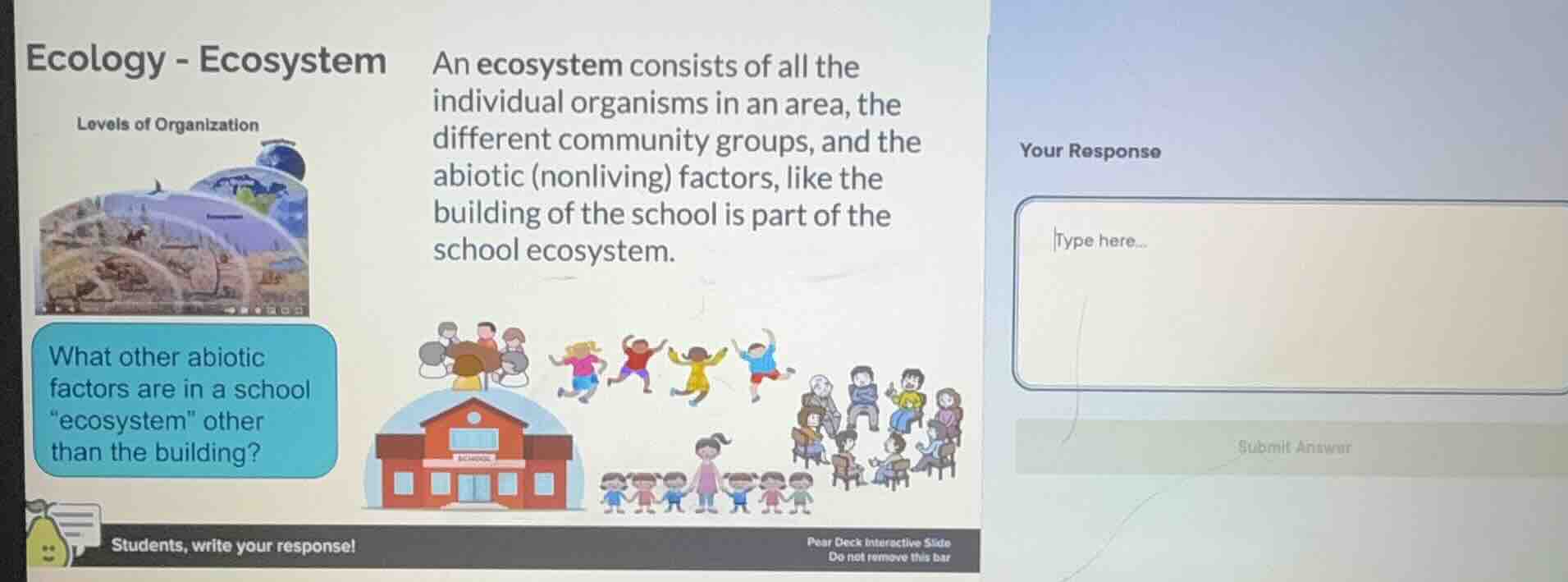
an ecosystem consists of all the
individual organisms in an area, the
different community groups, and the
abiotic (nonliving) factors, like the
building of the school is part of the
school ecosystem.
what other abiotic
factors are in a school
“ecosystem” other
than the building?
students, write your response!
pear deck interactive slide
do not remove this bar
your response
type here...
submit answer
Abiotic factors are non-living components of an ecosystem. For a school ecosystem, these include physical and chemical non-living elements that interact with the living organisms in the space.

Snap & solve any problem in the app
Get step-by-step solutions on Sovi AI
Photo-based solutions with guided steps
Explore more problems and detailed explanations
Examples of other abiotic factors in a school ecosystem include:
- The air (temperature, oxygen content) in the school
- Desks, chairs, and other furniture
- Whiteboards, chalkboards, and classroom technology
- The playground equipment
- Water fountains and the water supply in the school
- The sunlight entering classrooms and outdoor areas
- The soil in any school garden or outdoor green spaces