QUESTION IMAGE
Question
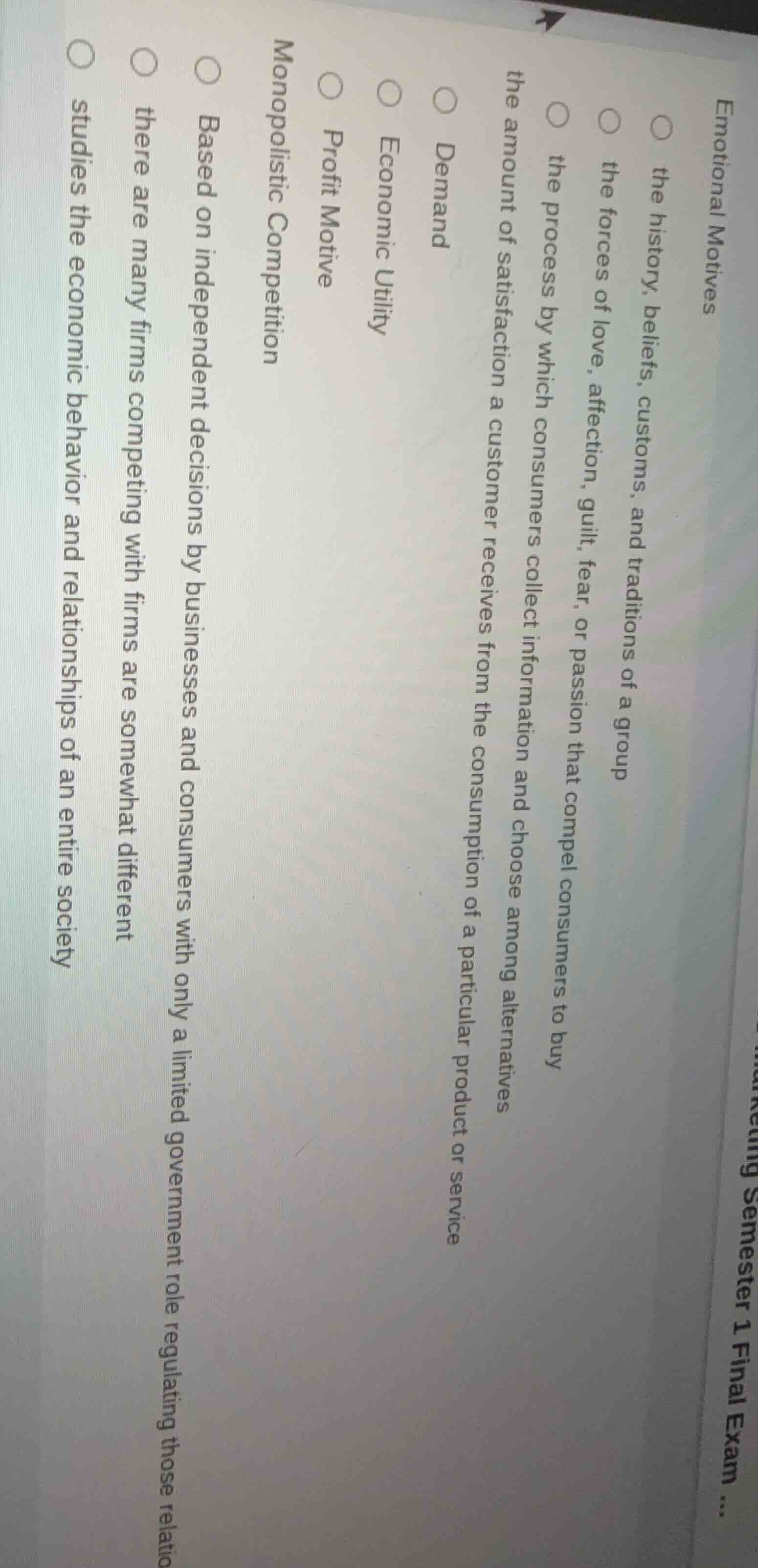
emotional motives
○ the history, beliefs, customs, and traditions of a group
○ the forces of love, affection, guilt, fear, or passion that compel consumers to buy
○ the process by which consumers collect information and choose among alternatives
the amount of satisfaction a customer receives from the consumption of a particular product or service
○ demand
○ economic utility
○ profit motive
monopolistic competition
○ based on independent decisions by businesses and consumers with only a limited government role regulating those relatio
○ there are many firms competing with firms are somewhat different
studies the economic behavior and relationships of an entire society
- For "Emotional Motives": These are non-rational, feeling-driven factors that influence consumer purchasing decisions, which matches the description of love, affection, guilt, fear, or passion compelling consumers to buy.
- For "Economic Utility": This refers to the satisfaction a consumer gains from consuming a good or service, which aligns with the definition provided.
- For "Monopolistic Competition": This market structure is defined by many competing firms that sell differentiated (somewhat different) products, with limited government intervention.

Snap & solve any problem in the app
Get step-by-step solutions on Sovi AI
Photo-based solutions with guided steps
Explore more problems and detailed explanations
- Emotional Motives: the forces of love, affection, guilt, fear, or passion that compel consumers to buy
- Economic Utility: the amount of satisfaction a customer receives from the consumption of a particular product or service
- Monopolistic Competition: there are many firms competing with firms are somewhat different