QUESTION IMAGE
Question
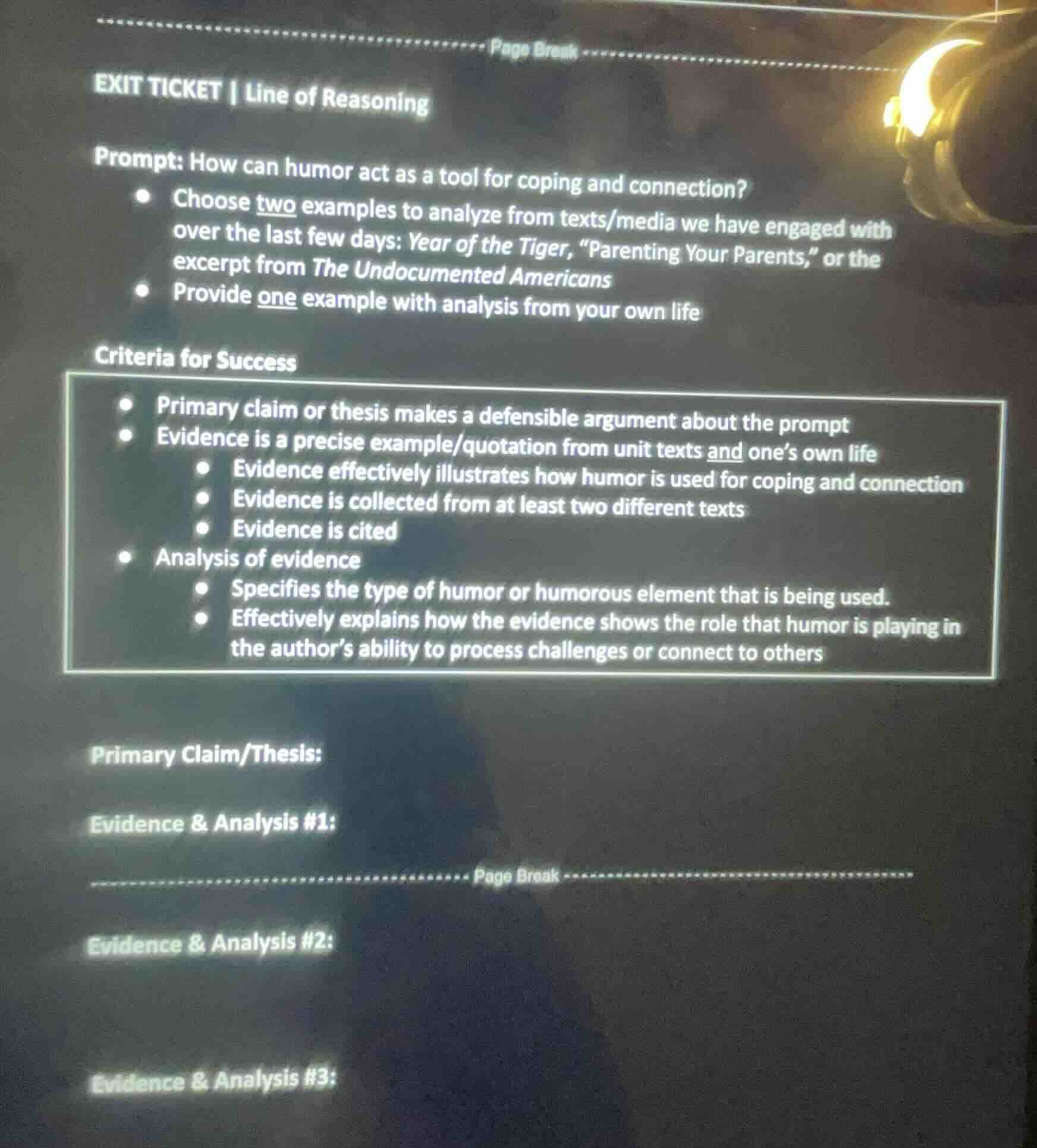
exit ticket | line of reasoning
prompt: how can humor act as a tool for coping and connection?
- choose two examples to analyze from texts/media we have engaged with over the last few days: year of the tiger, \parenting your parents,\ or the excerpt from the undocumented americans
- provide one example with analysis from your own life
criteria for success
- primary claim or thesis makes a defensible argument about the prompt
- evidence is a precise example/quotation from unit texts and one’s own life
- evidence effectively illustrates how humor is used for coping and connection
- evidence is collected from at least two different texts
- evidence is cited
- analysis of evidence
- specifies the type of humor or humorous element that is being used.
- effectively explains how the evidence shows the role that humor is playing in the author’s ability to process challenges or connect to others
primary claim/thesis:
evidence & analysis #1:
----------------------- page break -----------------------
evidence & analysis #2:
evidence & analysis #3:
To answer this, we structure the response around the prompt. First, create a thesis about humor as coping/connection. Then, use two text examples and one personal example, analyzing humor types and effects.
Primary Claim/Thesis:
Humor serves as a vital tool for coping with adversity and fostering connections by creating shared understanding and lightening emotional burdens, as seen in literary texts and personal experiences.
Evidence & Analysis #1 (Text: Year of the Tiger):
- Evidence: In Year of the Tiger, the author uses self - deprecating humor when describing personal struggles. For example, [cite a specific line, e.g., "I felt as lost as a tiger in a tea shop..."].
- Analysis: This is self - deprecating humor. It copes with the author’s feelings of disorientation by making the situation seem more light - hearted. It also connects with readers who have felt lost, as the absurd image of a tiger in a tea shop is relatable in its depiction of being out of place.
Evidence & Analysis #2 (Text: “Parenting Your Parents”):
- Evidence: The text uses situational humor when depicting the role reversal of parenting one's parents. A quote like [e.g., "Now I have to tell my mom to stop eating candy before bed, just like I used to get told..."].
- Analysis: This is situational humor. It copes with the stress of this new, complex relationship by highlighting the absurdity of the role reversal. It connects with readers who have experienced similar caregiving role shifts, as it normalizes the strange situation through humor.
Evidence & Analysis #3 (Personal Example):
- Evidence: In my life, when my friend and I were stressed about an upcoming exam, we started making jokes about how our brains were “fried eggs” and our textbooks were “evil spellbooks”.
- Analysis: This is absurd humor. It coped with our exam stress by reframing the scary situation (hard exam) into a funny, magical scenario. It also connected us, as we bonded over our shared joke and felt less alone in our stress.

Snap & solve any problem in the app
Get step-by-step solutions on Sovi AI
Photo-based solutions with guided steps
Explore more problems and detailed explanations
Primary Claim/Thesis:
Humor serves as a vital tool for coping with adversity and fostering connections by creating shared understanding and lightening emotional burdens, as seen in literary texts and personal experiences.
Evidence & Analysis #1 (Text: Year of the Tiger):
- Evidence: In Year of the Tiger, the author uses self - deprecating humor when describing personal struggles (e.g., "I felt as lost as a tiger in a tea shop...").
- Analysis: Self - deprecating humor copes with the author’s disorientation by lightening the mood. It connects with readers who’ve felt out of place, as the absurd tiger - in - tea - shop image is relatable.
Evidence & Analysis #2 (Text: “Parenting Your Parents”):
- Evidence: The text uses situational humor (e.g., "Now I have to tell my mom to stop eating candy before bed, just like I used to get told...").
- Analysis: Situational humor copes with the stress of role - reversal parenting by highlighting its absurdity. It connects with readers who’ve had caregiving role shifts, normalizing the strange situation.
Evidence & Analysis #3 (Personal Example):
- Evidence: When stressed about an exam, my friend and I joked our brains were “fried eggs” and textbooks “evil spellbooks”.
- Analysis: Absurd humor coped with exam stress by reframing it. It connected us, as we bonded over the shared, funny take on our stress.