QUESTION IMAGE
Question
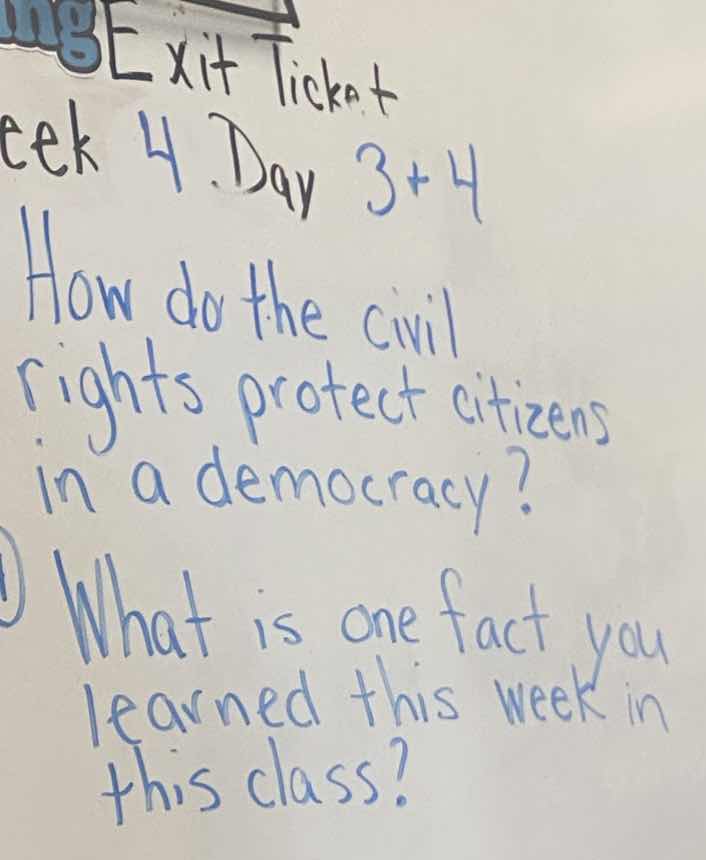
exit ticket
week 4.day 3+4
how do the civil rights protect citizens in a democracy?
what is one fact you learned this week in this class?
For the first question: Civil rights safeguard democracy by establishing legal protections that ensure all citizens are treated equally under the law, preventing discrimination based on traits like race, gender, or religion. They also guarantee core freedoms (such as speech, assembly, and voting) that let citizens participate in democratic processes, hold leaders accountable, and shape policy.
For the second question: This is personalized to the specific class content, but an example could be learning that the Voting Rights Act of 1965 was a landmark U.S. law that eliminated discriminatory voting barriers targeting Black Americans.

Snap & solve any problem in the app
Get step-by-step solutions on Sovi AI
Photo-based solutions with guided steps
Explore more problems and detailed explanations
- Civil rights protect citizens in a democracy by:
- Enshrining equal legal treatment, banning systemic discrimination to ensure fair access to resources, opportunities, and institutions for all groups.
- Guaranteeing fundamental freedoms (e.g., speech, press, assembly, voting) that enable citizens to engage in democratic discourse, participate in elections, and hold governing bodies accountable, which are foundational to a functional democracy.
- (Example answer, tailored to class content): I learned that the Universal Declaration of Human Rights, adopted in 1948, sets a global standard for civil rights by outlining inalienable rights for all people, regardless of their nationality or background.