QUESTION IMAGE
Question
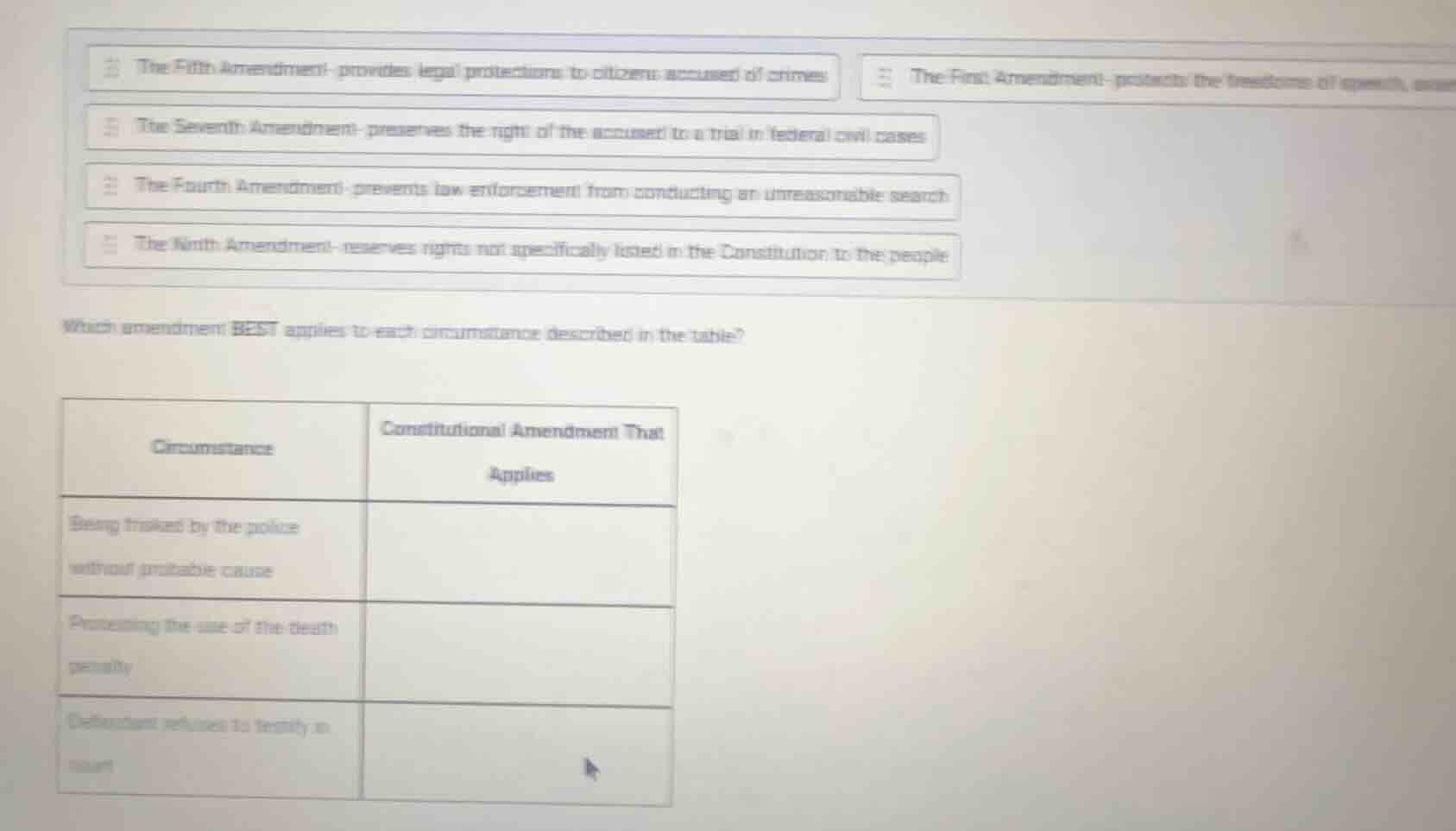
the fifth amendment- provides legal protections to citizens accused of crimes the first amendment- protects the freedoms of speech,
the seventh amendment- preserves the right of the accused to a trial in federal civil cases
the fourth amendment- prevents law enforcement from conducting an unreasonable search
the ninth amendment- reserves rights not specifically listed in the constitution to the people
which amendment best applies to each circumstance described in the table?
| circumstance | constitutional amendment that applies |
|---|---|
| contesting the use of the death penalty | |
| defendant refuses to testify in court |
Brief Explanations
- For being searched without probable cause: The Fourth Amendment prohibits unreasonable searches by law enforcement, which matches this circumstance.
- For protesting the death penalty: The First Amendment protects freedom of speech and the right to protest, which covers this action.
- For a defendant refusing to testify in court: The Fifth Amendment includes the right against self-incrimination, allowing this refusal.

Snap & solve any problem in the app
Get step-by-step solutions on Sovi AI
Photo-based solutions with guided steps
Explore more problems and detailed explanations
| Circumstance | Constitutional Amendment That Applies |
|---|---|
| Protesting the use of the death penalty | The First Amendment- protects the freedoms of speech, assembly (and protest) |
| Defendant refuses to testify in court | The Fifth Amendment- provides legal protections to citizens accused of crimes (including right against self-incrimination) |