QUESTION IMAGE
Question
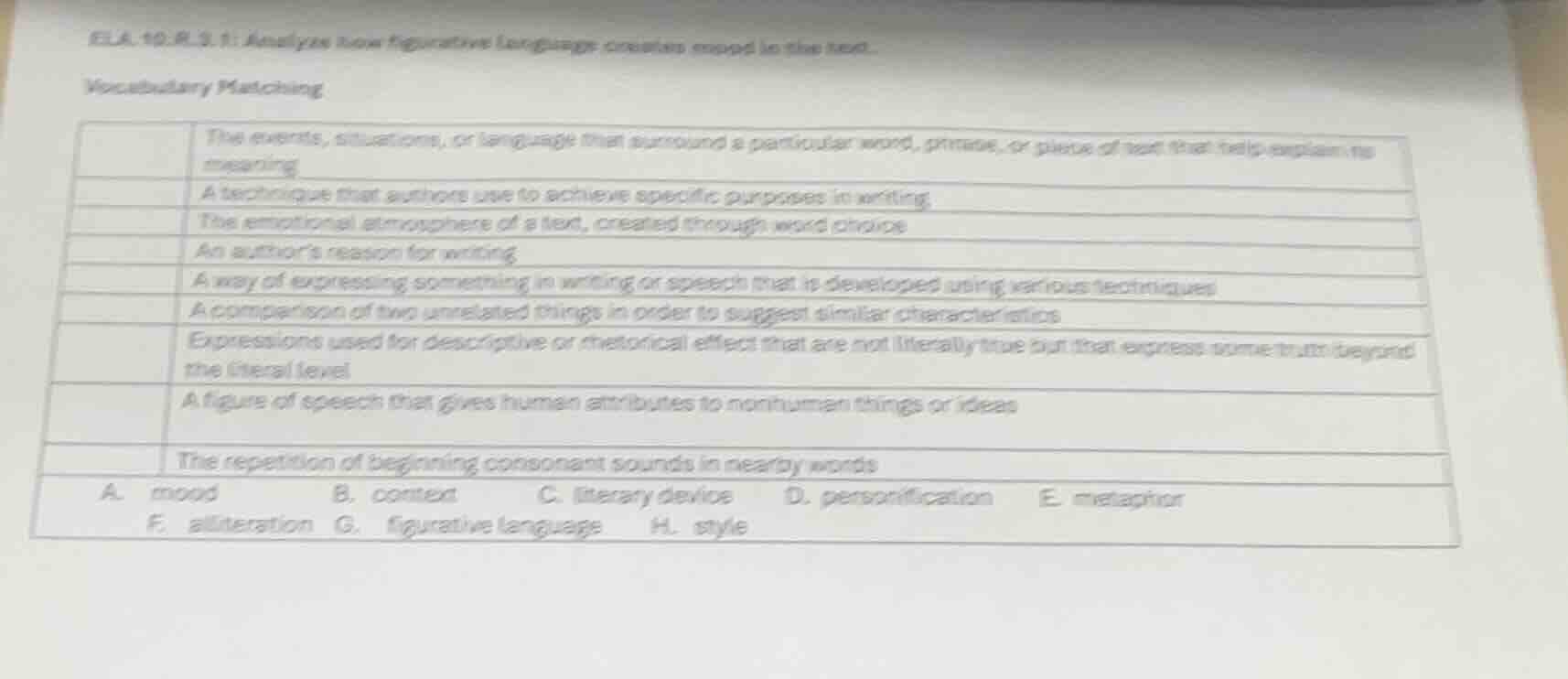
fla.10.r.3.1: analyze how figurative language creates mood in the text.
vocabulary matching
the events, situations, or language that surround a particular word, phrase, or piece of text that help explain its meaning
a technique that authors use to achieve specific purposes in writing
the emotional atmosphere of a text, created through word choice
an author’s reason for writing
a way of expressing something in writing or speech that is developed using various techniques
a comparison of two unrelated things in order to suggest similar characteristics
expressions used for descriptive or rhetorical effect that are not literally true but that express some truth beyond the literal level
a figure of speech that gives human attributes to nonhuman things or ideas
the repetition of beginning consonant sounds in nearby words
a. mood b. context c. literary device d. personification e. metaphor
f. alliteration g. figurative language h. style
Match each definition to the correct literary/vocabulary term by identifying the core meaning of each phrase and pairing it with the corresponding term.

Snap & solve any problem in the app
Get step-by-step solutions on Sovi AI
Photo-based solutions with guided steps
Explore more problems and detailed explanations
- The events, situations, or language that surround a particular word, phrase, or piece of text that help explain its meaning → B. context
- A technique that authors use to achieve specific purposes in writing → C. literary device
- The emotional atmosphere of a text, created through word choice → A. mood
- An author's reason for writing → (Note: This term is not listed in the options provided)
- A way of expressing something in writing or speech that is developed using various techniques → H. style
- A comparison of two unrelated things in order to suggest similar characteristics → E. metaphor
- Expressions used for descriptive or rhetorical effect that are not literally true but that express some truth beyond the literal level → G. figurative language
- A figure of speech that gives human attributes to nonhuman things or ideas → D. personification
- The repetition of beginning consonant sounds in nearby words → F. alliteration