QUESTION IMAGE
Question
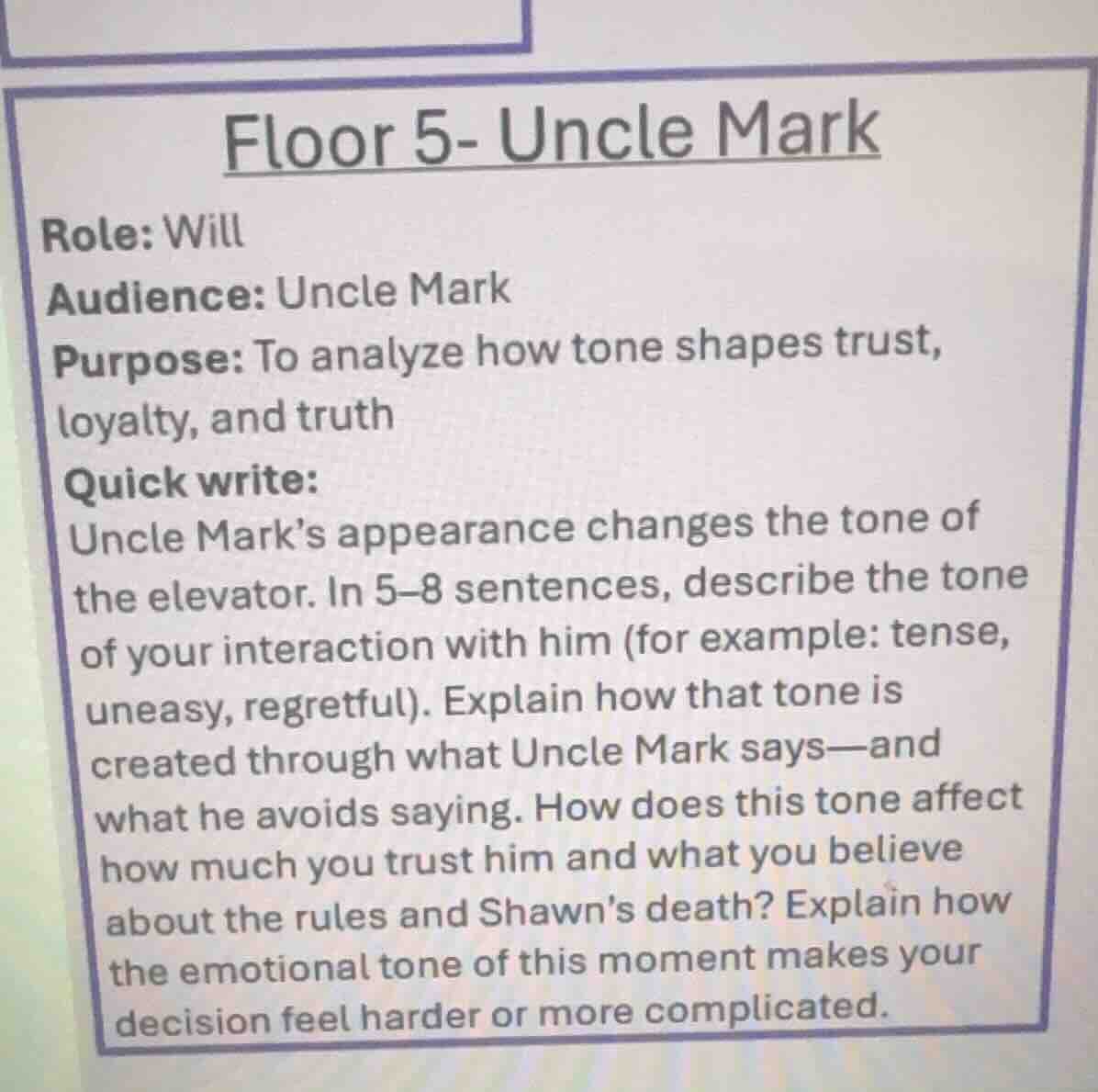
floor 5- uncle mark
role: will
audience: uncle mark
purpose: to analyze how tone shapes trust,
loyalty, and truth
quick write:
uncle marks appearance changes the tone of
the elevator. in 5–8 sentences, describe the tone
of your interaction with him (for example: tense,
uneasy, regretful). explain how that tone is
created through what uncle mark says—and
what he avoids saying. how does this tone affect
how much you trust him and what you believe
about the rules and shawns death? explain how
the emotional tone of this moment makes your
decision feel harder or more complicated.
The interaction with Uncle Mark carries a tight, wary, regret-tinged tension. His voice is low, deliberate, and he only acknowledges Shawn’s death in vague, clipped phrases like “what happened to that boy was a shame” without naming Shawn directly, avoiding any mention of the rules that might have led to his death. He repeatedly circles back to “sticking to the plan” and “looking out for family” but never addresses the unspoken fear that the rules failed Shawn. This evasion and forced casualness create a tone that feels like a fragile, threatening truce—he’s trying to calm me, but his refusal to confront the truth makes every word feel like a test. This tone erodes my trust: I can’t believe his reassurances about the rules being “for our own good” when he won’t face their cost, but his quiet, familiar gruffness (a leftover from when he’d fix my bike as a kid) makes me hesitate to reject him entirely. The mix of unease and lingering loyalty muddles my decision—speaking up feels like betraying the last piece of family I have left, but staying silent feels like betraying Shawn’s memory, and the tense, unspoken weight of the elevator makes either choice feel like a loss.

Snap & solve any problem in the app
Get step-by-step solutions on Sovi AI
Photo-based solutions with guided steps
Explore more problems and detailed explanations
The interaction with Uncle Mark has a tense, wary, regret-tinged tone. When he steps into the elevator, his shoulders are hunched like he’s carrying a secret, and his voice is low, deliberate, never meeting my eyes as he mutters, “Heard you’ve been asking questions.” He avoids saying Shawn’s name entirely, only referring to him as “that boy” when he mumbles, “What happened was a mistake, but we can’t undo it,” and quickly shifts to warning me, “Stick to the rules, and you’ll stay safe.” This evasion creates a tone that feels like a fragile, threatening truce—he’s trying to calm me, but his refusal to confront the truth behind Shawn’s death makes every word feel like a test. This tone erodes my trust: I can’t believe his vague reassurances about the rules being “for our own good” when he won’t acknowledge their cost, but his quiet, familiar gruffness (a leftover from when he’d fix my bike as a kid) makes me hesitate to push back. The mix of unease and lingering loyalty muddles my decision—speaking up feels like betraying the last piece of family I have left, but staying silent feels like betraying Shawn’s memory, and the unspoken weight in the elevator makes either choice feel like a painful loss.