QUESTION IMAGE
Question
the french and indian war
from alliance to swelling tension
like all conflicts, the french and indian war was costly, so
britain demanded higher taxes from the colonies to cover
it.
- initial compliance: the colonies were initially fine
with raised taxes, expecting them to decrease or end
after the war.
- raising resentment: british taxation increased after
the war’s end, stirring anger against britain in the
colonies.
by the time of the french and indian war, the american
colonies had been influenced by the enlightenment ideas,
creating friction against britain’s abuses of power.
- political repression: colonists had no influence in
british parliament or ability to vote, meaning they
could not stop britain from raising taxes.
- rallying cry: “no taxation without
representation” became a popular cry, pitting values of
liberty against taxation.
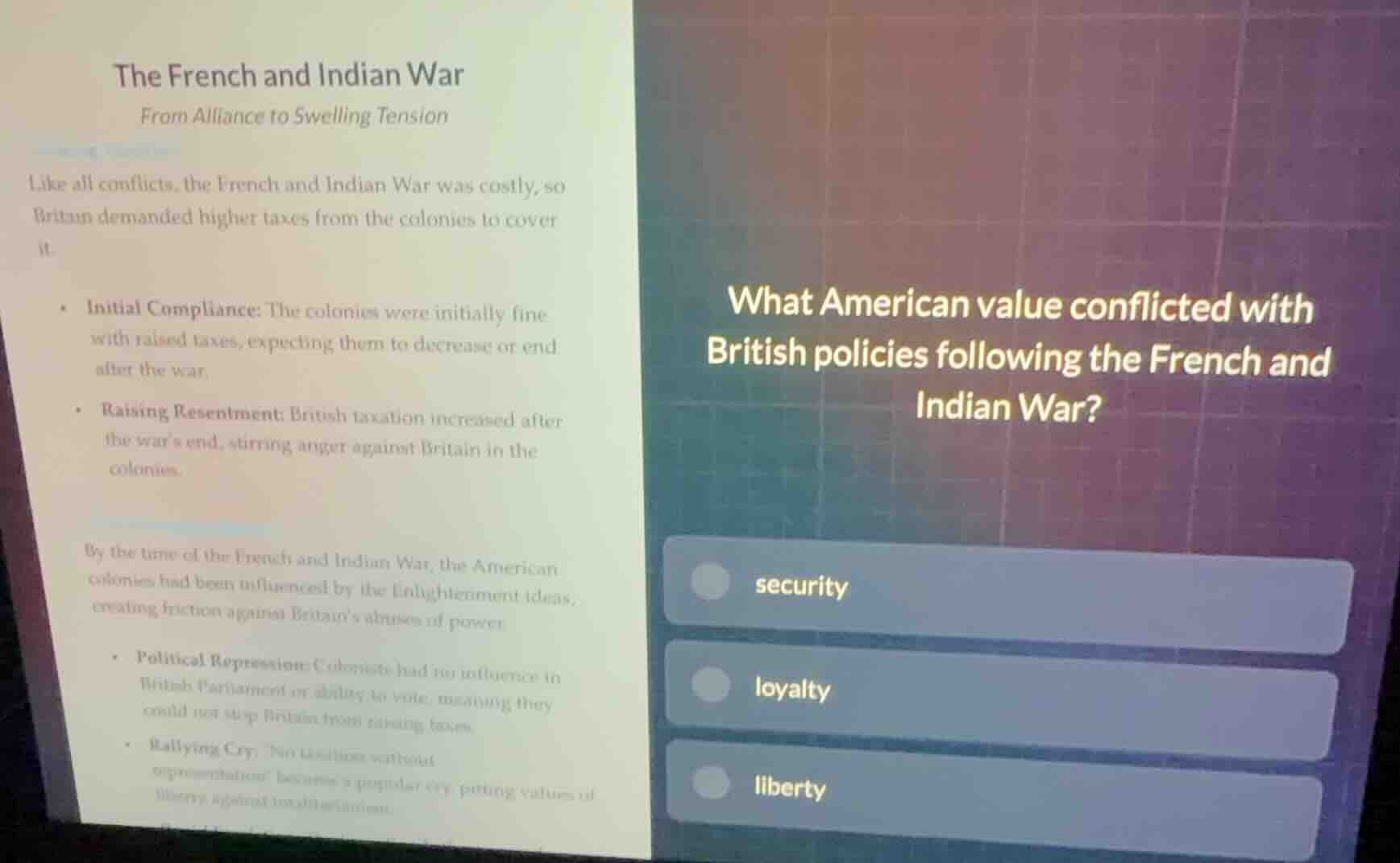
what american value conflicted with
british policies following the french and
indian war?
○ security
○ loyalty
○ liberty
The British imposed unrepresentative post-war taxes on colonies. The colonies adopted the "No taxation without representation" rallying cry, rooted in Enlightenment ideas, which centered on the value of liberty against unaccountable power. This directly clashed with British tax policies.

Snap & solve any problem in the app
Get step-by-step solutions on Sovi AI
Photo-based solutions with guided steps
Explore more problems and detailed explanations
liberty