QUESTION IMAGE
Question
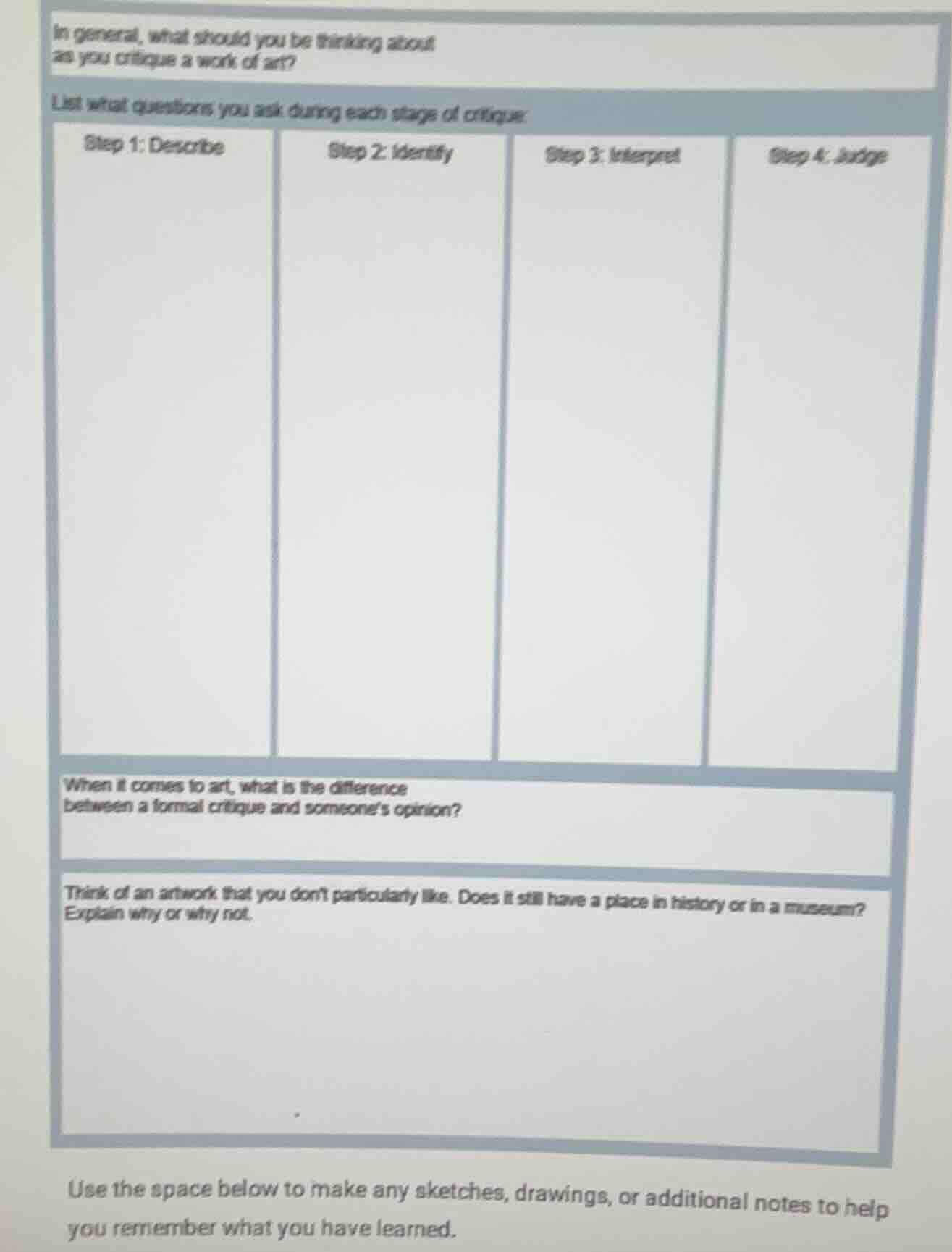
in general, what should you be thinking about as you critique a work of art?
list what questions you ask during each stages of critique:
step 1: describe
step 2: identify
step 3: interpret
step 4: judge
when it comes to art, what is the difference between a formal critique and someones opinion?
think of an artwork that you dont particularly like. does it still have a place in history or in a museum? explain why or why not.
use the space below to make any sketches, drawings, or additional notes to help you remember what you have learned.
Brief Explanations
- For general art critique thinking: Focus on observable elements, context, intent, and impact, separating personal taste from analytical assessment.
- For stage-specific questions:
- Describe: Focus on factual, visible details without interpretation.
- Identify: Connect details to art styles, techniques, or artist intent.
- Interpret: Analyze meaning behind the work's elements and context.
- Judge: Evaluate merit using evidence from prior steps.
- For formal critique vs. opinion: Formal critique uses structured, evidence-based analysis tied to art principles/context; opinion is subjective, ungrounded personal preference.
- For disliked artwork's place: Even unliked works hold historical, cultural, or artistic value, documenting trends, techniques, or societal perspectives.

Snap & solve any problem in the app
Get step-by-step solutions on Sovi AI
Photo-based solutions with guided steps
Explore more problems and detailed explanations
- In general, you should think about:
- The observable, factual details of the work
- The artistic techniques, styles, and context used
- The intended or interpreted meaning of the work
- The work's artistic merit and impact, separate from personal taste
- Stage-specific questions:
Step 1: Describe
- What materials are used?
- What shapes, colors, or figures are visible?
- What is the composition or layout?
- What is the size or scale of the work?
Step 2: Identify
- What artistic style does this fit?
- What techniques did the artist use?
- What historical/cultural context applies?
- What is the artist's likely intent?
Step 3: Interpret
- What message might the work convey?
- How do the elements create meaning?
- What emotions does it evoke, and why?
- How does context shape its meaning?
Step 4: Judge
- How successful is the work technically?
- Does it effectively achieve its intent?
- What is its significance to art history?
- What strengths/weaknesses does it have?
- A formal art critique is a structured, evidence-based analysis that uses artistic principles, historical context, and observable details to evaluate a work. It is objective and rooted in academic or artistic frameworks. Someone's opinion is a subjective, personal reaction that does not require supporting evidence or adherence to analytical standards—it is based solely on personal taste.
- Yes, an artwork I don't like can still have a place in history or a museum. For example, if I dislike a provocative contemporary installation, it may still document a specific cultural moment, push artistic boundaries, or reflect important societal conversations. Museums and art history preserve works for their historical, cultural, or artistic significance, not just for popular appeal. Such works offer insight into evolving artistic practices and the perspectives of their time, even if they do not align with my personal preferences.