QUESTION IMAGE
Question
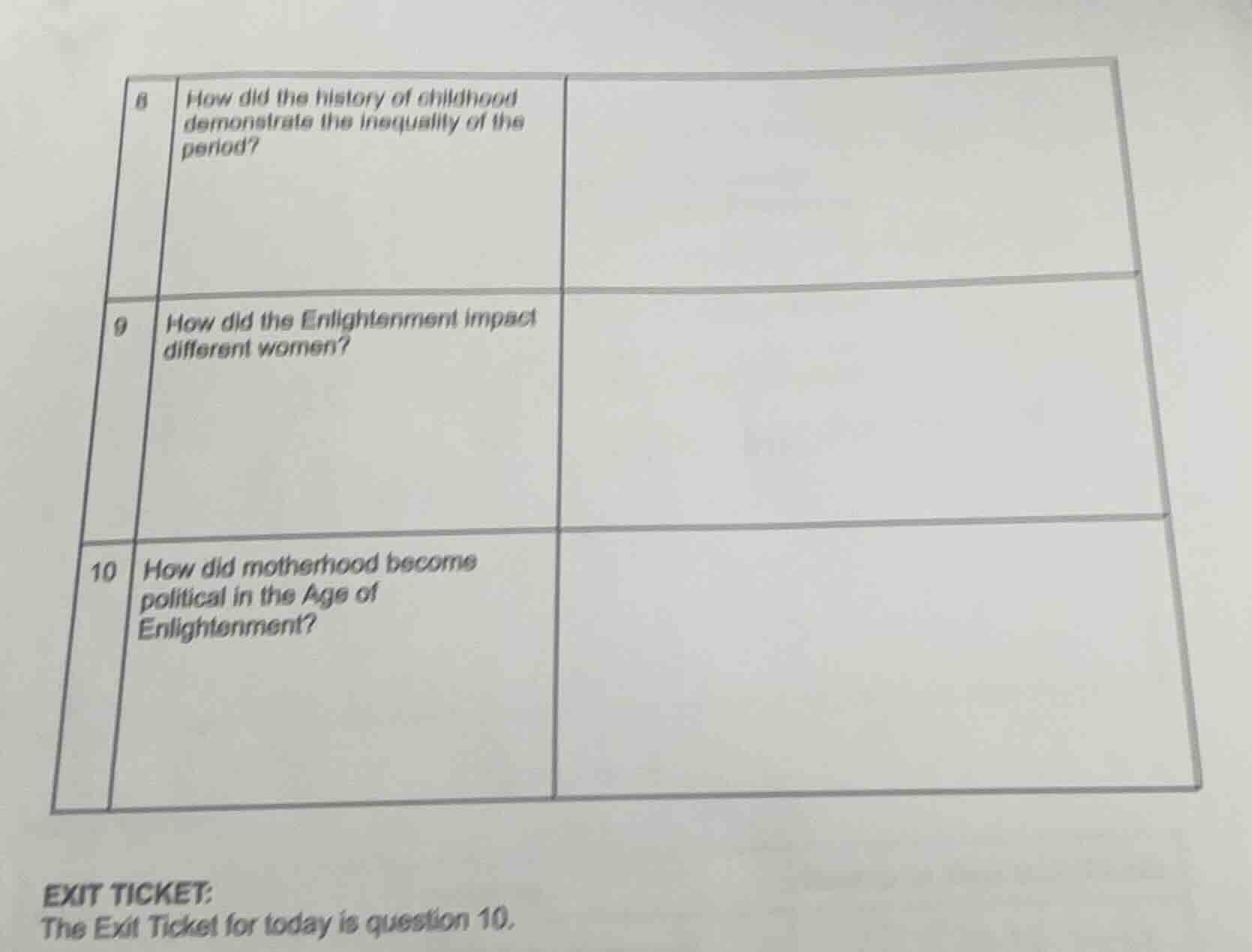
8 how did the history of childhood demonstrate the inequality of the period?
9 how did the enlightenment impact different women?
10 how did motherhood become political in the age of enlightenment?
exit ticket:
the exit ticket for today is question 10.
During the Enlightenment, thinkers centered ideas of citizenship, virtue, and social order. Elites framed motherhood as a "republican motherhood" duty: women were tasked with raising educated, virtuous sons to sustain the new democratic/Enlightened political systems, tying maternal roles directly to the success of the state. Additionally, debates over women's education (a key Enlightenment focus on rationality) became tied to their maternal function—arguing educated mothers would produce better citizens. This turned motherhood from a private domestic role into a public, political responsibility tied to the health of the nation and Enlightenment ideals of collective good.

Snap & solve any problem in the app
Get step-by-step solutions on Sovi AI
Photo-based solutions with guided steps
Explore more problems and detailed explanations
In the Age of Enlightenment, motherhood became political through the rise of the "republican motherhood" ideology: Enlightenment thinkers linked women's maternal role to the success of new democratic and rational political systems, framing the duty of raising educated, virtuous (male) citizens as a public, state-focused responsibility. Debates over women's education, a core Enlightenment concern with rationality, were also tied to maternal function, as educated mothers were seen as critical to producing capable citizens, thus elevating motherhood from a private domestic task to a political role tied to national stability and Enlightenment ideals of collective virtue.