QUESTION IMAGE
Question
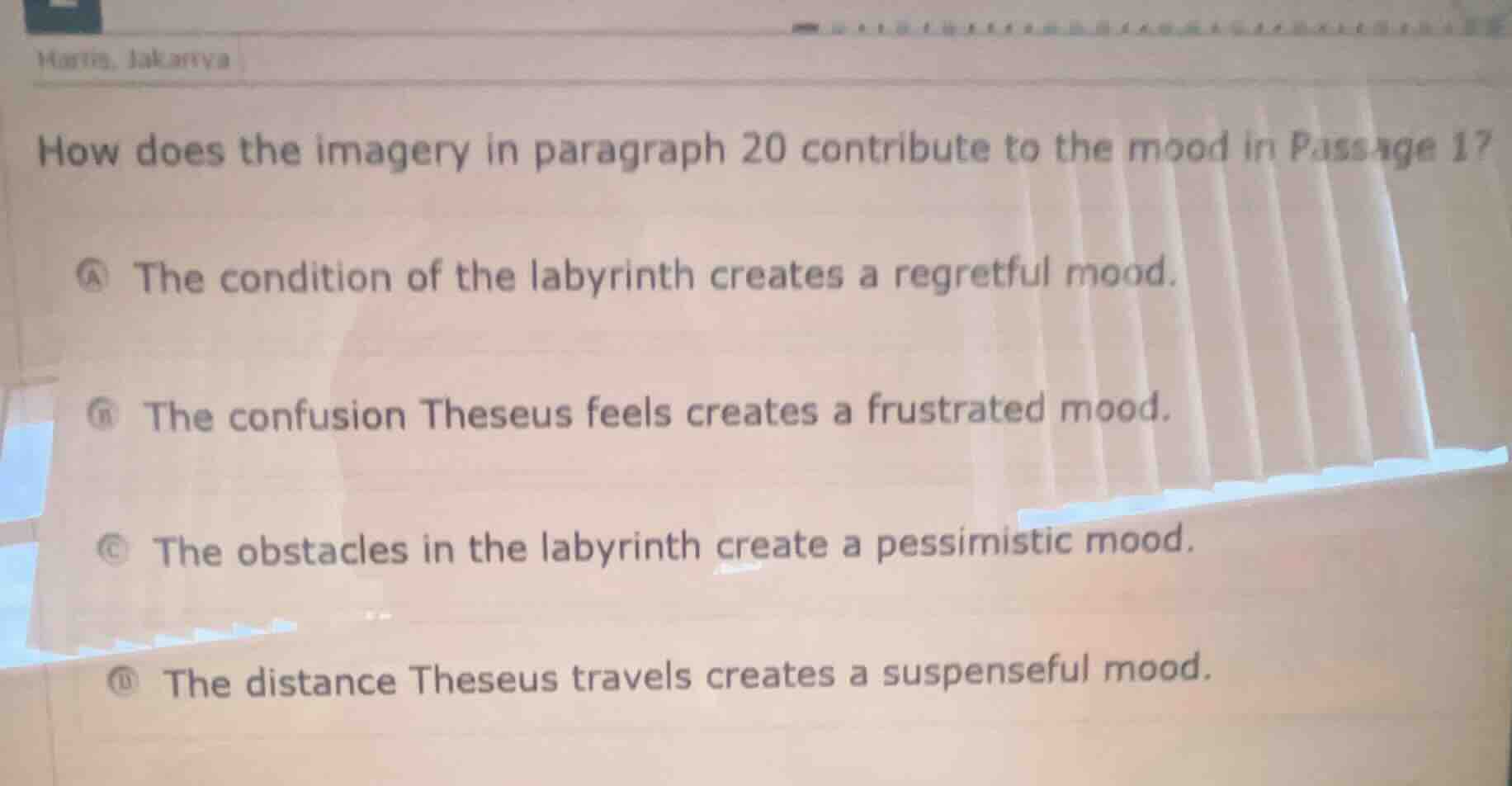
how does the imagery in paragraph 20 contribute to the mood in passage 1? a the condition of the labyrinth creates a regretful mood. b the confusion theseus feels creates a frustrated mood. c the obstacles in the labyrinth create a pessimistic mood. d the distance theseus travels creates a suspenseful mood.
Brief Explanations
To solve this, we analyze each option:
- Option A: A labyrinth's condition (like being old/damaged) doesn't typically create regret. Regret is about past actions, not a setting's state. Eliminate A.
- Option B: If Theseus is confused in the labyrinth, confusion leading to frustration makes sense. But let's check others.
- Option C: Obstacles in a labyrinth (like walls/paths) don't inherently create pessimism (a belief things will go wrong). Pessimism is an attitude, not just from obstacles. Eliminate C.
- Option D: As Theseus travels through the labyrinth (a mysterious, dangerous place), the distance he covers builds suspense—will he find the Minotaur? Will he get out? This fits how imagery (the labyrinth journey) creates a suspenseful mood. Between B and D, D is better because "distance traveled" in a labyrinth (with unknowns) is more about suspense (tension about what's next) than frustration (which is more about being annoyed at confusion). So D is correct.

Snap & solve any problem in the app
Get step-by-step solutions on Sovi AI
Photo-based solutions with guided steps
Explore more problems and detailed explanations
D. The distance Theseus travels creates a suspenseful mood.