QUESTION IMAGE
Question
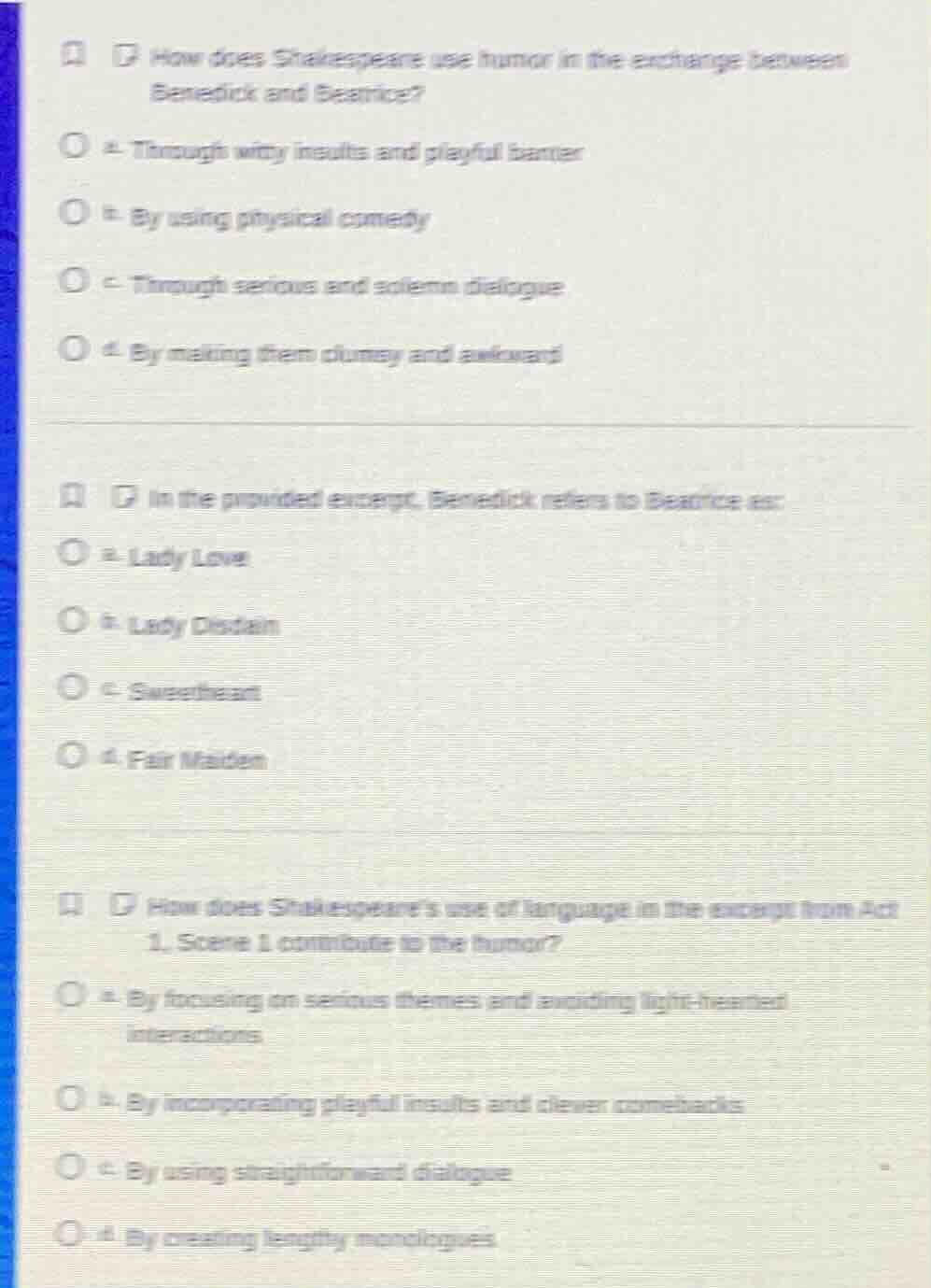
how does shakespeare use humor in the exchange between benedick and beatrice?
a. through witty insults and playful banter
b. by using physical comedy
c. through serious and solemn dialogue
d. by making them clumsy and awkward
in the provided excerpt, benedick refers to beatrice as:
a. lady love
b. lady disdain
c. sweetheart
d. fair maiden
how does shakespeare’s use of language in the excerpt from act 1, scene 1 contribute to the humor?
a. by focusing on serious themes and avoiding light - hearted interactions
b. by incorporating playful insults and clever comebacks
c. by using straightforward dialogue
d. by creating lengthy monologues
First Question:
In Shakespeare's works, especially in the interactions between Benedick and Beatrice (from Much Ado About Nothing), their humor comes from witty verbal sparring, insults that are playful rather than hurtful, and banter. Physical comedy (option b) isn't their primary humor source. Serious dialogue (option c) would not be humorous. Making them clumsy/awkward (option d) isn't how their humor is portrayed. So option a is correct.
In the context of Much Ado About Nothing, Benedick refers to Beatrice as "Lady Disdain" due to their initial bickering and her seemingly haughty or disdainful demeanor in his perception. The other options ("Lady Love", "Sweetheart", "Fair Maiden") do not match his typical early references to her.
Shakespeare's language in the excerpt (from Much Ado About Nothing, Act 1, Scene 1) for Benedick and Beatrice's interaction uses playful insults (like Benedick's "Lady Disdain") and clever comebacks (their quick, witty dialogue). Focusing on serious themes (option a) is incorrect for humor. Straightforward dialogue (option c) wouldn't create humor. Lengthy monologues (option d) aren't the source of humor here; it's their back - and - forth banter. So option b is correct.

Snap & solve any problem in the app
Get step-by-step solutions on Sovi AI
Photo-based solutions with guided steps
Explore more problems and detailed explanations
A. Through witty insults and playful banter