QUESTION IMAGE
Question
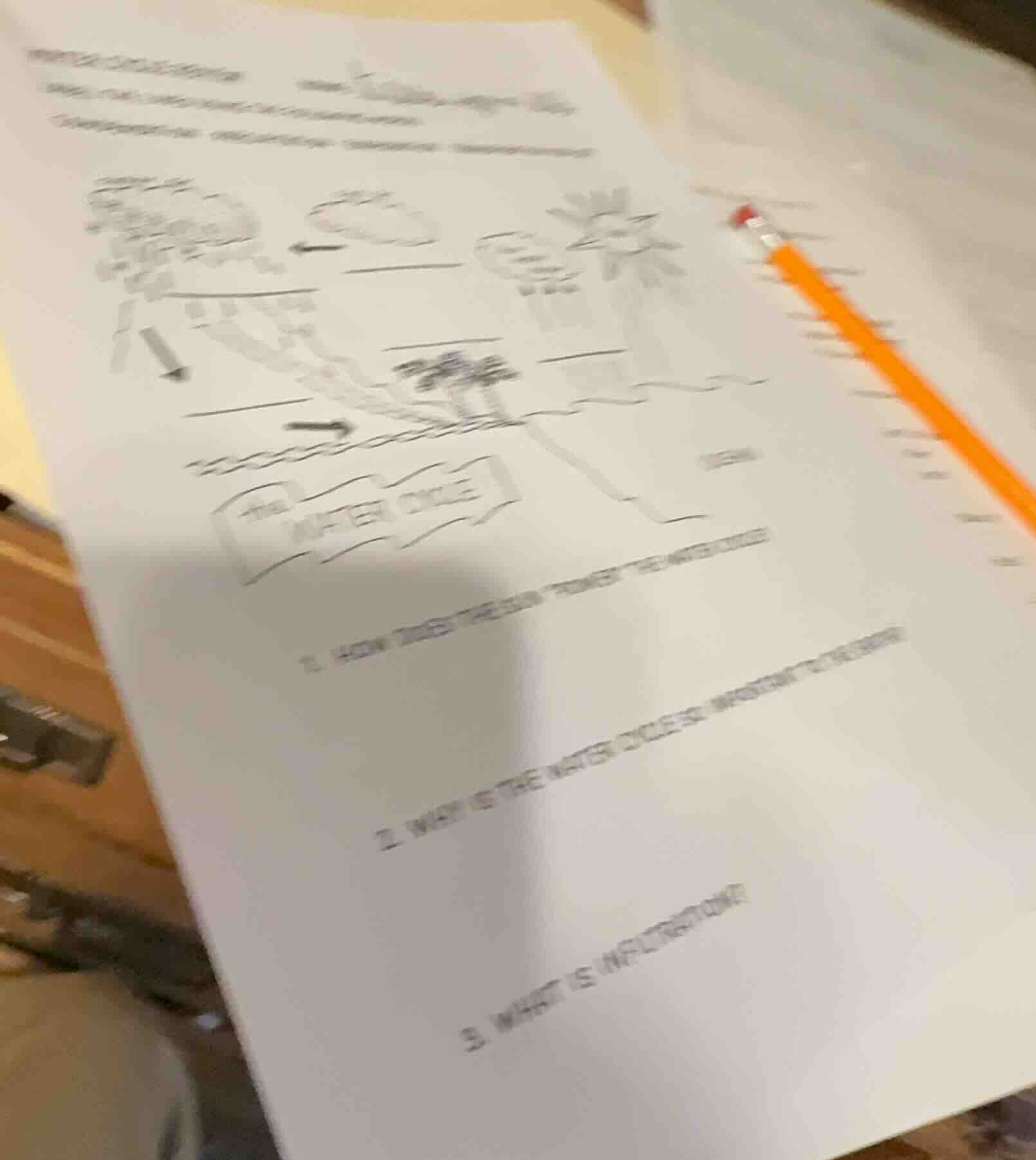
- how does the sun \power\ the water cycle?
- why is the water cycle so important to us?
- what is
Question 1: How does the sun "power" the water cycle?
The sun provides energy in the form of heat. This heat causes water on Earth's surface (like oceans, lakes, rivers) to evaporate (turn from liquid to water vapor). It also drives transpiration (water vapor release from plants) and affects air currents that move water vapor, which is key for condensation and precipitation in the water cycle.
The water cycle replenishes freshwater sources (rivers, lakes, groundwater) essential for drinking, agriculture, and ecosystems. It regulates climate (e.g., through evaporation cooling, cloud formation), supports plant growth (via precipitation for photosynthesis), and maintains habitats (aquatic ecosystems, wetland biodiversity). Without it, life would lack accessible water, and ecosystems/climates would collapse.
Infiltration is the process where water (from precipitation, runoff, or other sources) soaks into the soil and porous rock layers, moving downward to recharge groundwater aquifers. It replenishes underground water reserves, reduces surface runoff (preventing flooding), and filters water (removing pollutants as it moves through soil).

Snap & solve any problem in the app
Get step-by-step solutions on Sovi AI
Photo-based solutions with guided steps
Explore more problems and detailed explanations
The sun powers the water cycle by providing heat energy. This heat causes evaporation (liquid water on Earth’s surface, e.g., oceans, lakes, turns to water vapor) and transpiration (water vapor released from plants). The sun’s heat also drives atmospheric circulation (wind), which moves water vapor, enabling condensation (vapor to liquid droplets, forming clouds) and precipitation (rain, snow, etc.), completing the cycle.