QUESTION IMAGE
Question
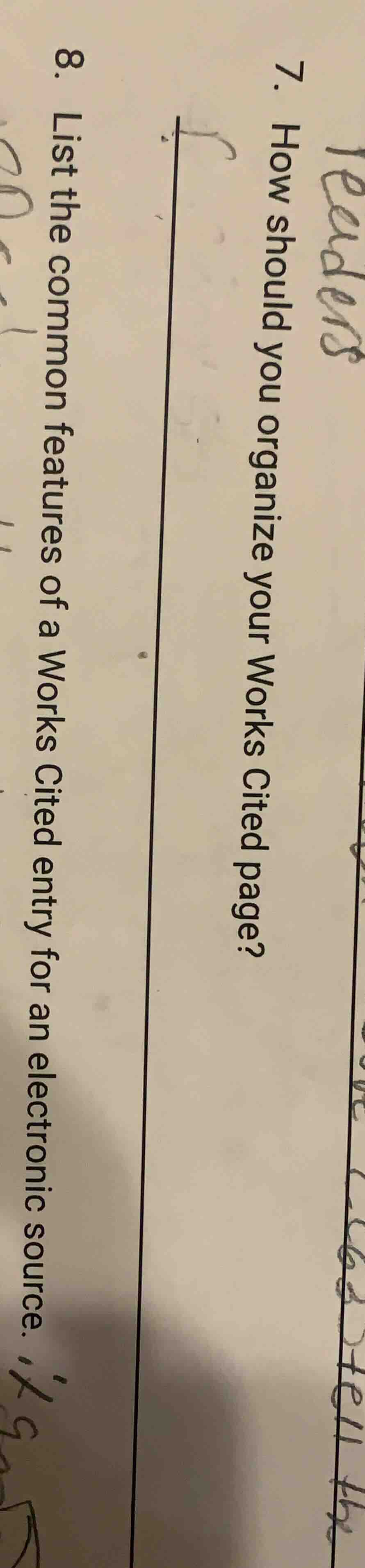
- how should you organize your works cited page?
- list the common features of a works cited entry for an electronic source.
For question 7: A Works Cited page follows standard academic formatting rules (e.g., MLA, APA). It starts on a new page, uses the same font/margins as the main text, lists sources alphabetically by the first element of each entry, uses hanging indents for entries longer than one line, and includes full publication details for each source cited in the text.
For question 8: A standard electronic source Works Cited entry (MLA example) includes core elements: creator/author name, title of the source, title of the container, publisher, publication date, location (URL/DOI), and access date (if required).

Snap & solve any problem in the app
Get step-by-step solutions on Sovi AI
Photo-based solutions with guided steps
Explore more problems and detailed explanations
- Organize a Works Cited page by:
- Starting on a separate new page
- Using consistent formatting (font, margins) with the main document
- Alphabetizing entries by the first term (usually author last name)
- Applying hanging indents for multi-line entries
- Including complete, accurate publication details for all cited sources
- Common features of an electronic source Works Cited entry:
- Author/creator's full name (last, first format)
- Title of the specific electronic source (article, video, etc.)
- Title of the larger container (website, database, platform)
- Publisher or sponsor of the source
- Date of publication (or update)
- Location: URL, DOI, or permalink
- Access date (only if the source is unstable/unlikely to persist)