QUESTION IMAGE
Question
identify tone
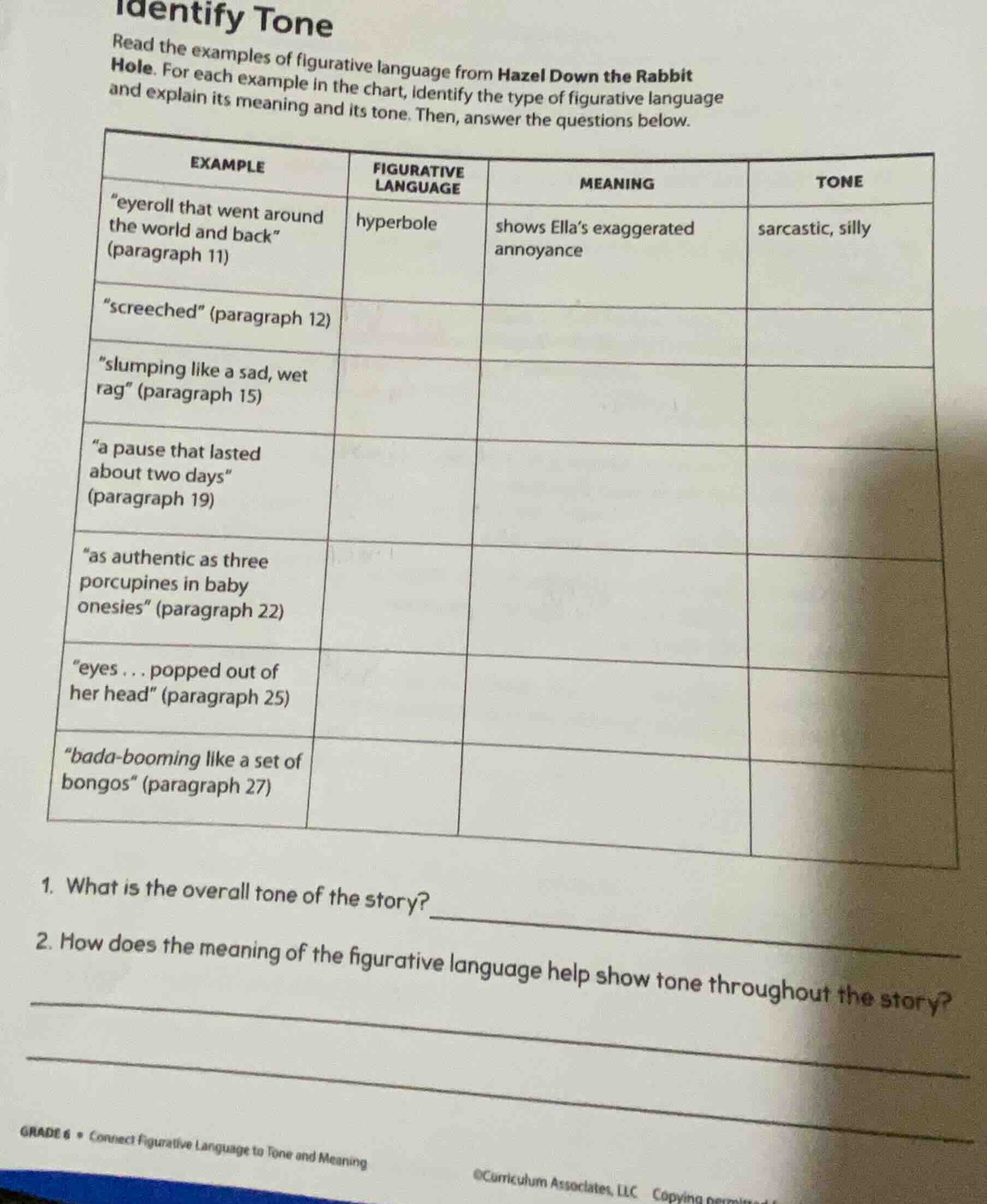
read the examples of figurative language from hazel down the rabbit hole. for each example in the chart, identify the type of figurative language and explain its meaning and its tone. then, answer the questions below.
| example | figurative language | meaning | tone |
|---|---|---|---|
| \screeched\ (paragraph 12) | |||
| \slumping like a sad, wet rag\ (paragraph 15) | |||
| \a pause that lasted about two days\ (paragraph 19) | |||
| \as authentic as three porcupines in baby onesies\ (paragraph 22) | |||
| \eyes... popped out of her head\ (paragraph 25) | |||
| \bada - booming like a set of bongos\ (paragraph 27) |
- what is the overall tone of the story?
- how does the meaning of the figurative language help show tone throughout the story?
grade 6 • connect figurative language to tone and meaning
©curriculum associates, llc copying
Brief Explanations
First, complete the table by identifying each figurative language type, its meaning, and tone, then answer the final questions based on the table's patterns:
- For "screeched": It is onomatopoeia, a word that mimics the sound it describes. It shows a harsh, sharp vocalization, creating an irritated, dramatic tone.
- For "slumping like a sad, wet rag": This is a simile (uses "like" to compare two things). It exaggerates how defeated, drained, and sad the character feels, giving a mopey, silly tone.
- For "a pause that lasted about two days": This is hyperbole (exaggeration for effect). It emphasizes that the pause felt extremely long, creating an impatient, dramatic tone.
- For "as authentic as three porcupines in baby onesies": This is a simile. Porcupines in baby onesies are absurd and not "authentic" in a serious sense, so it mocks something as fake/ridiculous, giving a sarcastic, silly tone.
- For "eyes... popped out of her head": This is hyperbole. It exaggerates extreme surprise or shock, creating an amazed, silly tone.
- For "bada-booming like a set of bongos": This is a simile (and onomatopoeia in "bada-booming"). It compares a sound to bongos, making it feel playful and loud, giving a lighthearted, silly tone.
For the final questions:
- The overall tone is consistent across the examples, leaning into silly, sarcastic, and playful energy.
- Each figurative language choice uses exaggeration, absurd comparisons, or sound mimicry to amplify playful, exaggerated emotions, which builds the story's silly, sarcastic tone consistently.

Snap & solve any problem in the app
Get step-by-step solutions on Sovi AI
Photo-based solutions with guided steps
Explore more problems and detailed explanations
Completed Table:
| EXAMPLE | FIGURATIVE LANGUAGE | MEANING | TONE |
|---|---|---|---|
| "screeched" (paragraph 12) | onomatopoeia | describes a harsh, sharp vocalization | irritated, dramatic |
| "slumping like a sad, wet rag" (paragraph 15) | simile | exaggerates the character's defeated, drained mood | mopey, silly |
| "a pause that lasted about two days" (paragraph 19) | hyperbole | emphasizes the pause felt extremely long | impatient, dramatic |
| "as authentic as three porcupines in baby onesies" (paragraph 22) | simile | mocks something as obviously fake/ridiculous | sarcastic, silly |
| "eyes . . . popped out of her head" (paragraph 25) | hyperbole | exaggerates extreme surprise/shock | amazed, silly |
| "bada-booming like a set of bongos" (paragraph 27) | simile/onomatopoeia | compares a sound to playful, loud bongos | lighthearted, silly |
Final Questions:
- The overall tone of the story is silly, sarcastic, and playful.
- The figurative language uses exaggeration, absurd comparisons, and sound mimicry to amplify over-the-top, playful emotions. Each example amplifies a dramatic or silly feeling, which builds and reinforces the story's consistent silly, sarcastic tone throughout.