QUESTION IMAGE
Question
identifying biotic & abiotic factors of an ecosystem
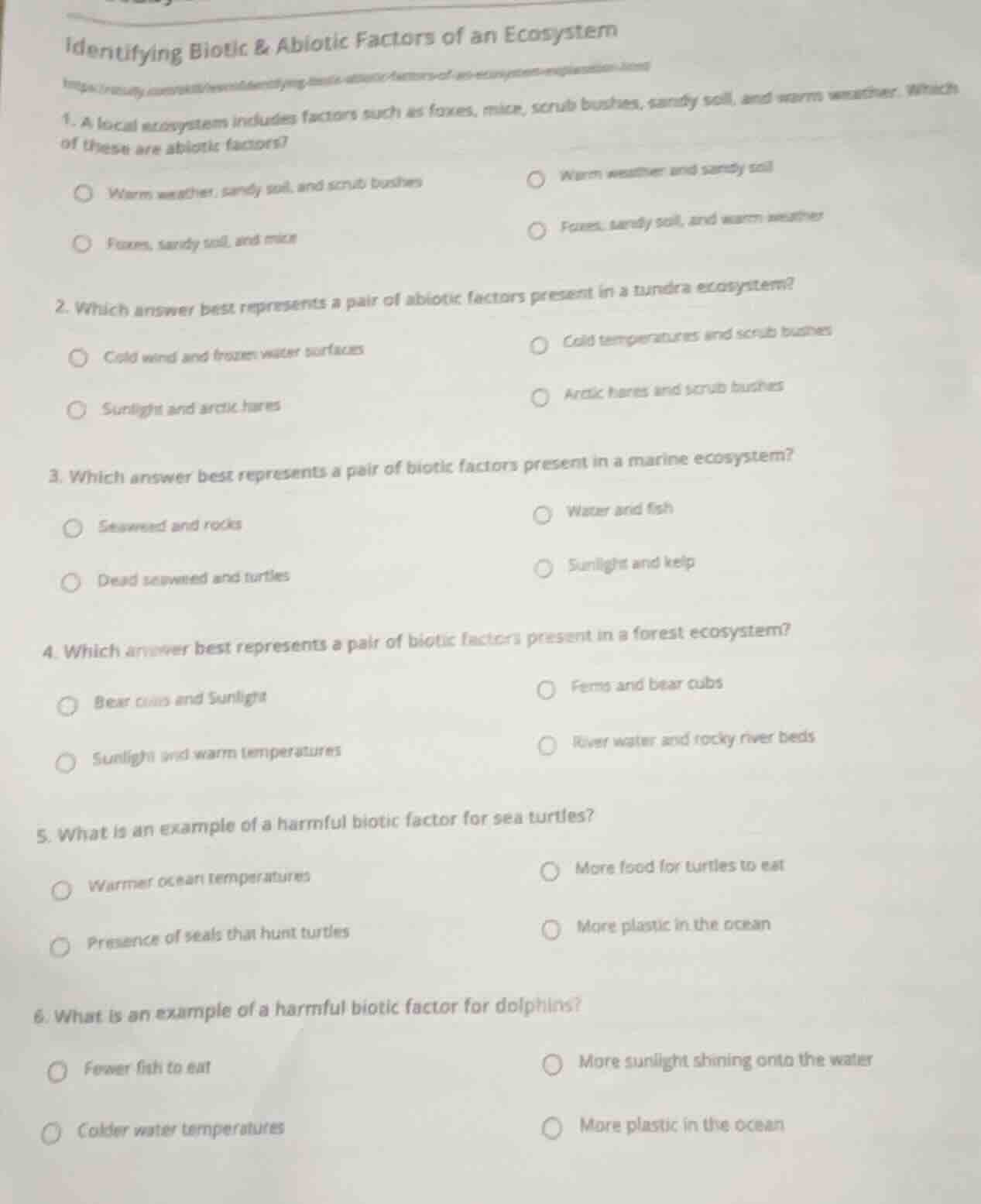
- a local ecosystem includes factors such as foxes, mice, scrub bushes, sandy soil, and warm weather. which of these are abiotic factors?
○ warm weather, sandy soil, and scrub bushes
○ warm weather and sandy soil
○ foxes, sandy soil, and mice
○ foxes, sandy soil, and warm weather
- which answer best represents a pair of abiotic factors present in a tundra ecosystem?
○ cold wind and frozen water surfaces
○ cold temperatures and scrub bushes
○ sunlight and arctic hares
○ arctic hares and scrub bushes
- which answer best represents a pair of biotic factors present in a marine ecosystem?
○ seaweed and rocks
○ water and fish
○ dead seaweed and turtles
○ sunlight and kelp
- which answer best represents a pair of biotic factors present in a forest ecosystem?
○ bear cubs and sunlight
○ ferns and bear cubs
○ sunlight and warm temperatures
○ river water and rocky river beds
- what is an example of a harmful biotic factor for sea turtles?
○ warmer ocean temperatures
○ more food for turtles to eat
○ presence of seals that hunt turtles
○ more plastic in the ocean
- what is an example of a harmful biotic factor for dolphins?
○ fewer fish to eat
○ more sunlight shining onto the water
○ colder water temperatures
○ more plastic in the ocean
- Abiotic factors are non-living components of an ecosystem. Warm weather and sandy soil are non-living; foxes, mice, scrub bushes are biotic (living).
- Abiotic factors are non-living. Cold wind and frozen water surfaces are non-living tundra components; scrub bushes and arctic hares are biotic.
- Biotic factors are living (or once-living) organisms. Dead seaweed (once living) and turtles (living) are biotic; rocks, water, sunlight are abiotic.
- Biotic factors are living organisms. Ferns and bear cubs are both living forest organisms; sunlight, temperatures, water, rocks are abiotic.
- Harmful biotic factors are living organisms that negatively impact a species. Seals that hunt turtles are living and harmful; warm temperatures, plastic are abiotic, more food is beneficial.
- Harmful biotic factors relate to living resources or organisms. Fewer fish (a biotic food source) harms dolphins; sunlight, cold water, plastic are abiotic.

Snap & solve any problem in the app
Get step-by-step solutions on Sovi AI
Photo-based solutions with guided steps
Explore more problems and detailed explanations
- Warm weather and sandy soil
- Cold wind and frozen water surfaces
- Dead seaweed and turtles
- Ferns and bear cubs
- Presence of seals that hunt turtles
- Fewer fish to eat