QUESTION IMAGE
Question
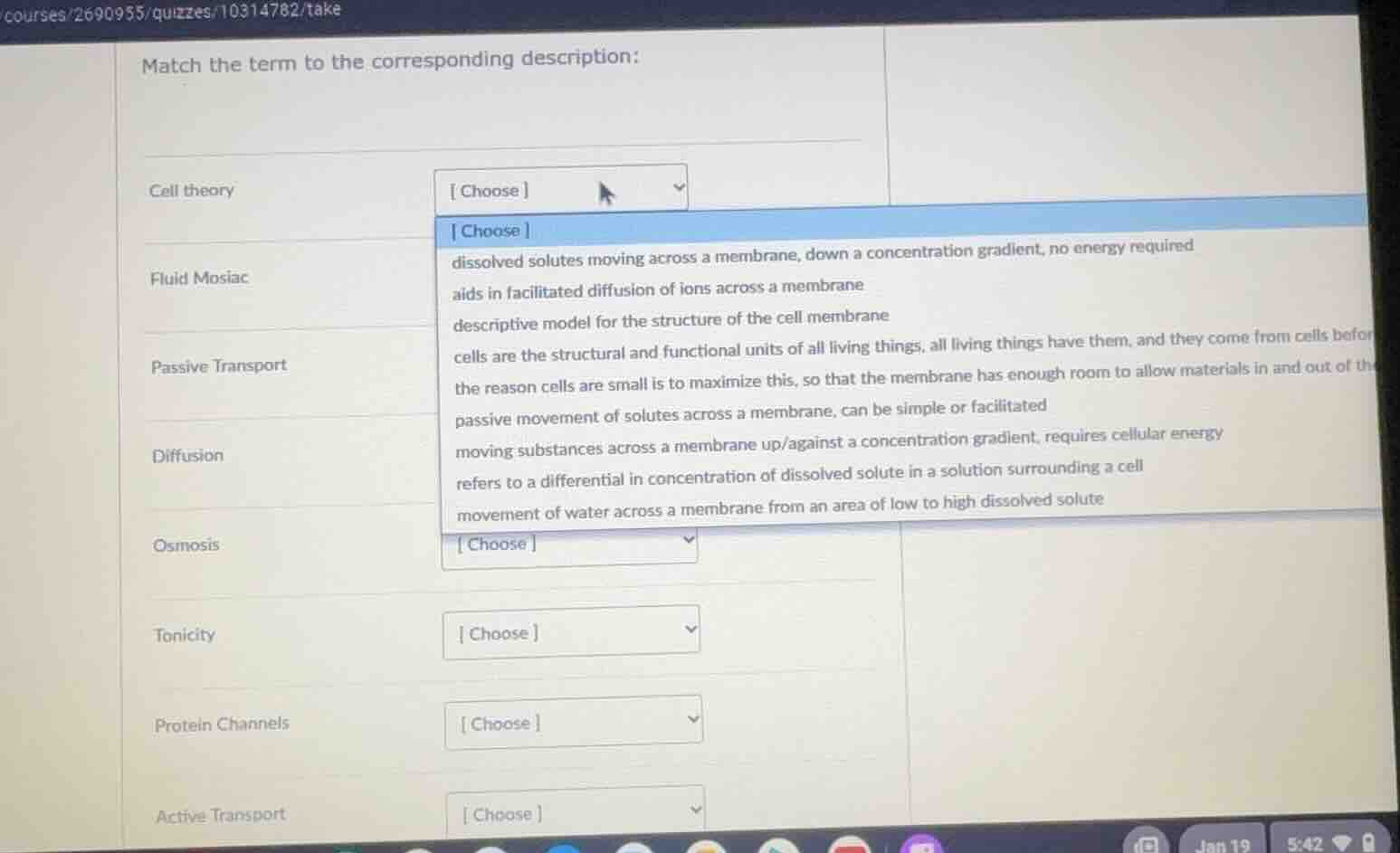
match the term to the corresponding description:
cell theory choose
fluid mosiac choose
dissolved solutes moving across a membrane, down a concentration gradient, no energy required
aids in facilitated diffusion of ions across a membrane
descriptive model for the structure of the cell membrane
cells are the structural and functional units of all living things, all living things have them, and they come from cells befor
the reason cells are small is to maximize this, so that the membrane has enough room to allow materials in and out of thi
passive movement of solutes across a membrane, can be simple or facilitated
moving substances across a membrane up/against a concentration gradient, requires cellular energy
refers to a differential in concentration of dissolved solute in a solution surrounding a cell
movement of water across a membrane from an area of low to high dissolved solute
passive transport choose
diffusion choose
osmosis choose
tonicity choose
protein channels choose
active transport choose
Each term is matched to its core biological definition related to cell structure and membrane transport:
- Cell theory is the foundational idea that cells are the basic units of life, all life is made of cells, and cells arise from pre-existing cells.
- Fluid Mosaic is the accepted model describing cell membrane structure.
- Passive Transport is the umbrella term for all energy-free membrane solute movement, which includes simple and facilitated types.
- Diffusion is the passive movement of solutes down their concentration gradient without energy input.
- Osmosis specifically refers to the movement of water across a membrane to the area of higher dissolved solute concentration.
- Tonicity describes the concentration difference of solutes around a cell.
- Protein Channels assist in facilitated diffusion by letting ions cross membranes.
- Active Transport requires energy to move substances against their concentration gradient.

Snap & solve any problem in the app
Get step-by-step solutions on Sovi AI
Photo-based solutions with guided steps
Explore more problems and detailed explanations
- Cell theory: cells are the structural and functional units of all living things, all living things have them, and they come from cells before
- Fluid Mosiac: descriptive model for the structure of the cell membrane
- Passive Transport: passive movement of solutes across a membrane, can be simple or facilitated
- Diffusion: dissolved solutes moving across a membrane, down a concentration gradient, no energy required
- Osmosis: movement of water across a membrane from an area of low to high dissolved solute
- Tonicity: refers to a differential in concentration of dissolved solute in a solution surrounding a cell
- Protein Channels: aids in facilitated diffusion of ions across a membrane
- Active Transport: moving substances across a membrane up/against a concentration gradient, requires cellular energy