QUESTION IMAGE
Question
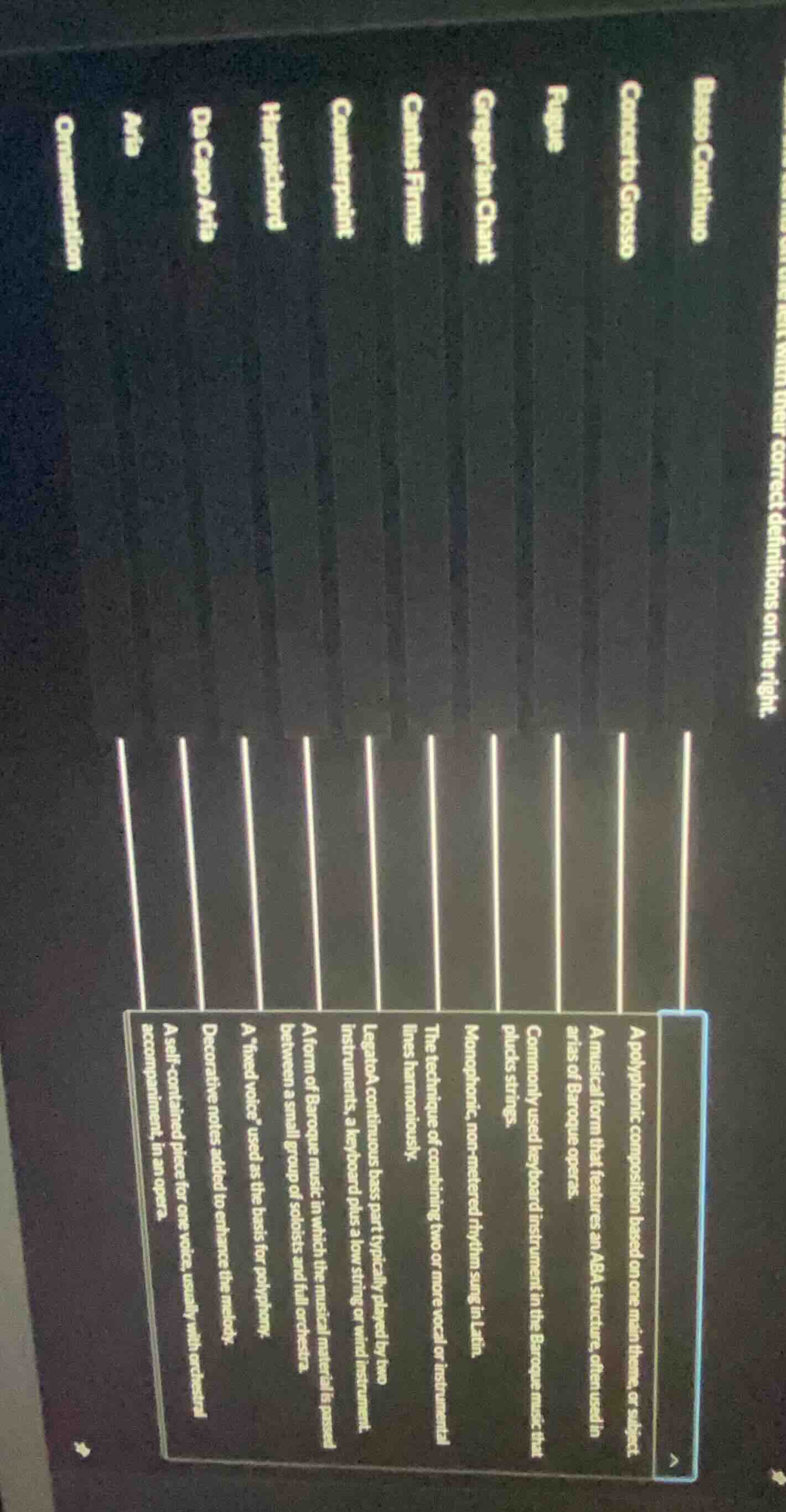
match the terms on the left with their correct definitions on the right.
basso continuo
concerto grosso
fugue
gregorian chant
cantus firmus
counterpoint
harpsichord
da capo aria
aria
ornamentation
a polyphonic composition based on one main theme, or subject.
a musical form that features an aba structure, often used in arias of baroque operas.
commonly used keyboard instrument in the baroque music that plucks strings.
monophonic, non-metered rhythm sung in latin.
the technique of combining two or more vocal or instrumental lines harmoniously.
legatoa continuous bass part typically played by two instruments, a keyboard plus a low string or wind instrument.
a form of baroque music in which the musical material is passed between a small group of soloists and full orchestra.
a \fixed voice\ used as the basis for polyphony.
decorative notes added to enhance the melody.
a self-contained piece for one voice, usually with orchestral accompaniment, in an opera.
Each musical term is matched to its standard definition based on Western music history:
- Basso Continuo: Defined by a continuous bass part played by two instruments (keyboard + low string/wind).
- Concerto Grosso: Baroque form with soloist group and full orchestra.
- Fugue: Polyphonic work built from one main theme/subject.
- Gregorian Chant: Monophonic, non-metric Latin vocal music.
- Cantus Firmus: Fixed foundational melody for polyphonic works.
- Counterpoint: Technique for combining harmonic musical lines.
- Harpsichord: Baroque keyboard instrument with plucked strings.
- Da Capo Aria: ABA-structured vocal piece for Baroque operas.
- Aria: Self-contained solo vocal work with orchestral accompaniment.
- Ornamentation: Decorative notes added to enhance a melody.

Snap & solve any problem in the app
Get step-by-step solutions on Sovi AI
Photo-based solutions with guided steps
Explore more problems and detailed explanations
- Basso Continuo: A continuous bass part typically played by two instruments, a keyboard plus a low string or wind instrument.
- Concerto Grosso: A form of Baroque music in which the musical material is passed between a small group of soloists and full orchestra.
- Fugue: A polyphonic composition based on one main theme, or subject.
- Gregorian Chant: Monophonic, non-metered rhythm sung in Latin.
- Cantus Firmus: A "fixed voice" used as the basis for polyphony.
- Counterpoint: The technique of combining two or more vocal or instrumental lines harmoniously.
- Harpsichord: Commonly used keyboard instrument in the Baroque music that plucks strings.
- Da Capo Aria: A musical form that features an ABA structure, often used in arias of Baroque operas.
- Aria: A self-contained piece for one voice, usually with orchestral accompaniment, in an opera.
- Ornamentation: Decorative notes added to enhance the melody.