QUESTION IMAGE
Question
media & government
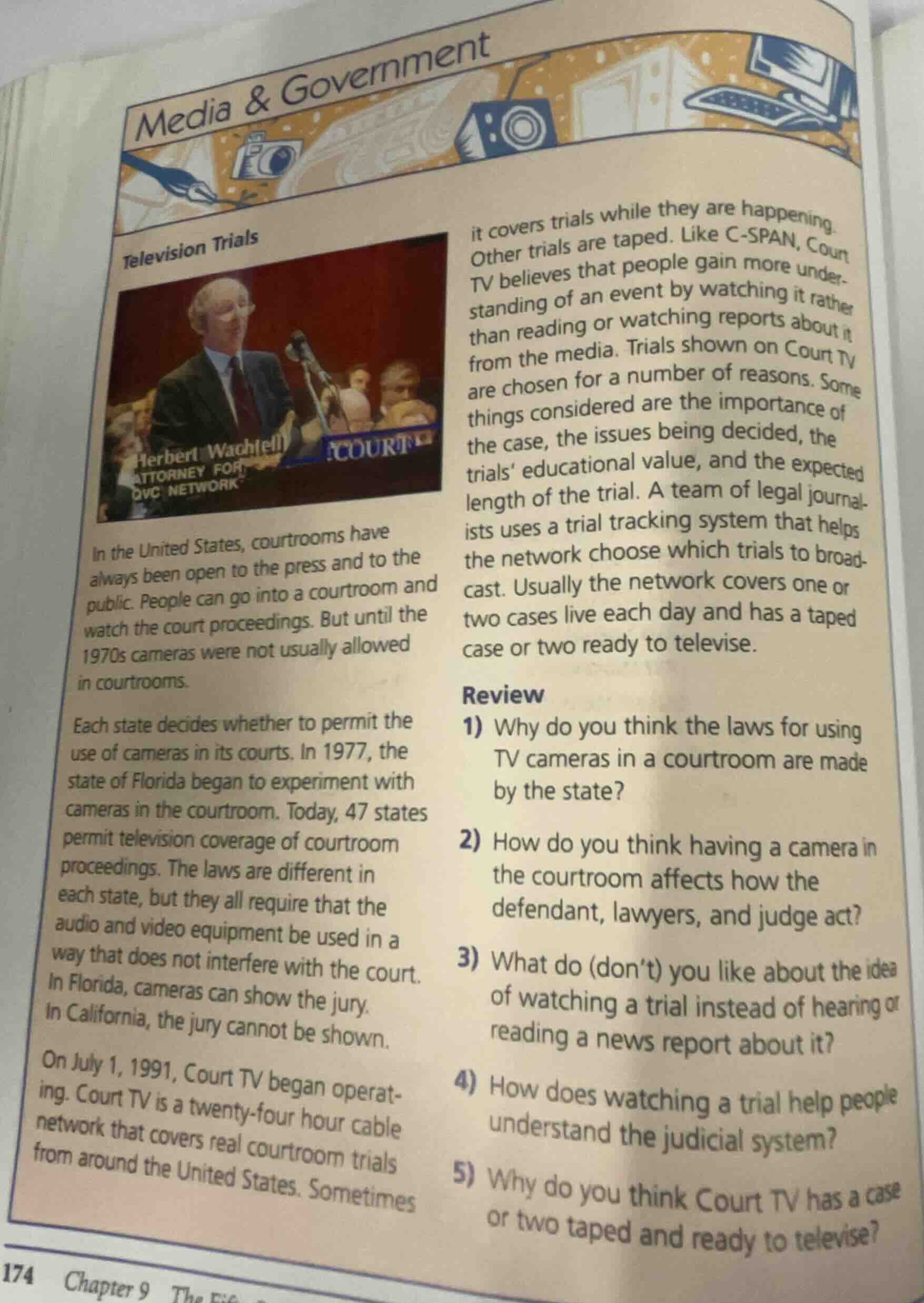
television trials
in the united states, courtrooms have always been open to the press and to the public. people can go into a courtroom and watch the court proceedings. but until the 1970s cameras were not usually allowed in courtrooms.
each state decides whether to permit the use of cameras in its courts. in 1977, the state of florida began to experiment with cameras in the courtroom. today, 47 states permit television coverage of courtroom proceedings. the laws are different in each state, but they all require that the audio and video equipment be used in a way that does not interfere with the court. in florida, cameras can show the jury. in california, the jury cannot be shown.
on july 1, 1991, court tv began operating. court tv is a twenty - four hour cable network that covers real courtroom trials from around the united states. sometimes it covers trials while they are happening. other trials are taped. like c - span, court tv believes that people gain more understanding of an event by watching it rather than reading or watching reports about it from the media. trials shown on court tv are chosen for a number of reasons. some things considered are the importance of the case, the issues being decided, the trials’ educational value, and the expected length of the trial. a team of legal journalists uses a trial tracking system that helps the network choose which trials to broadcast. usually the network covers one or two cases live each day and has a taped case or two ready to televise.
review
- why do you think the laws for using tv cameras in a courtroom are made by the state?
- how do you think having a camera in the courtroom affects how the defendant, lawyers, and judge act?
- what do (don’t) you like about the idea of watching a trial instead of hearing or reading a news report about it?
- how does watching a trial help people understand the judicial system?
- why do you think court tv has a case or two taped and ready to televise?
To answer these questions, we analyze the text and apply relevant concepts:
Question 1
States have different legal systems, cultures, and priorities. Allowing states to set camera laws in courts lets them tailor rules to their unique judicial needs, like balancing transparency (public access via media) with fair trial guarantees (e.g., protecting jury privacy, as seen in Florida vs. California jury - showing rules). This respects state sovereignty in judicial administration.
The presence of cameras may make the defendant, lawyers, and judge more self - conscious. Defendants might feel pressured to appear "innocent - looking," lawyers may perform for the camera (e.g., grandstanding), and judges may be more formal to uphold the court's dignity. However, it could also make them more accountable, as their actions are publicly visible, encouraging professionalism.
Liking: Watching a trial gives direct, unfiltered access to the process, helping people understand legal procedures better than news reports (which may be biased or summarize). Disliking: It can invade privacy (e.g., showing jurors in some states), turn trials into "media spectacles" (distracting from justice), or cause participants to act unnaturally (affecting the trial’s fairness).

Snap & solve any problem in the app
Get step-by-step solutions on Sovi AI
Photo-based solutions with guided steps
Explore more problems and detailed explanations
States make these laws because each state has its own judicial system, cultural context, and priorities. They can tailor the rules (e.g., on showing juries) to balance transparency (public access to courts via media) and fair trial rights, respecting state sovereignty in managing their courts.