QUESTION IMAGE
Question
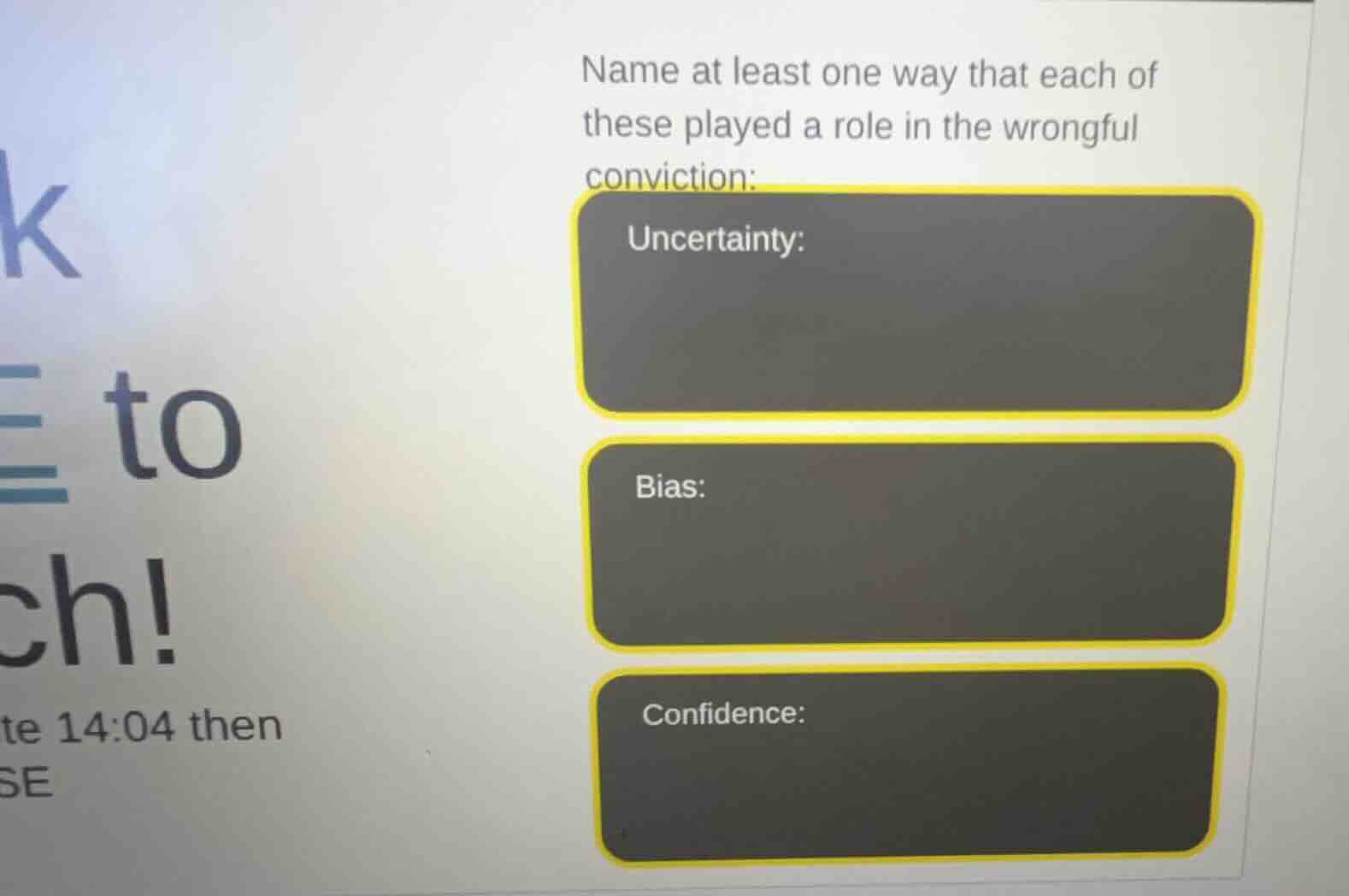
name at least one way that each of these played a role in the wrongful conviction: uncertainty: bias: confidence:
Brief Explanations
- For Uncertainty: Forensic evidence (like imperfect eyewitness identification with unclear details) that lacks definitive proof can lead investigators to fill gaps with assumptions, contributing to wrongful conviction.
- For Bias: Investigative bias, where law enforcement focuses only on evidence that supports a pre-selected suspect and ignores exculpatory evidence, can skew the case toward a wrongful conviction.
- For Confidence: Overconfident testimony from experts (e.g., a forensic analyst overly certain of flawed evidence like bite mark analysis) can persuade juries to convict an innocent person.

Snap & solve any problem in the app
Get step-by-step solutions on Sovi AI
Photo-based solutions with guided steps
Explore more problems and detailed explanations
- Uncertainty: Ambiguous forensic evidence (e.g., unclear eyewitness descriptions) leads investigators to make unsubstantiated assumptions targeting an innocent person.
- Bias: Investigative confirmation bias, where officials only pursue evidence that supports their initial suspect and dismiss contradictory proof.
- Confidence: Overconfident, unvalidated expert testimony (e.g., flawed forensic analysis presented as definitive) convinces juries of guilt.