QUESTION IMAGE
Question
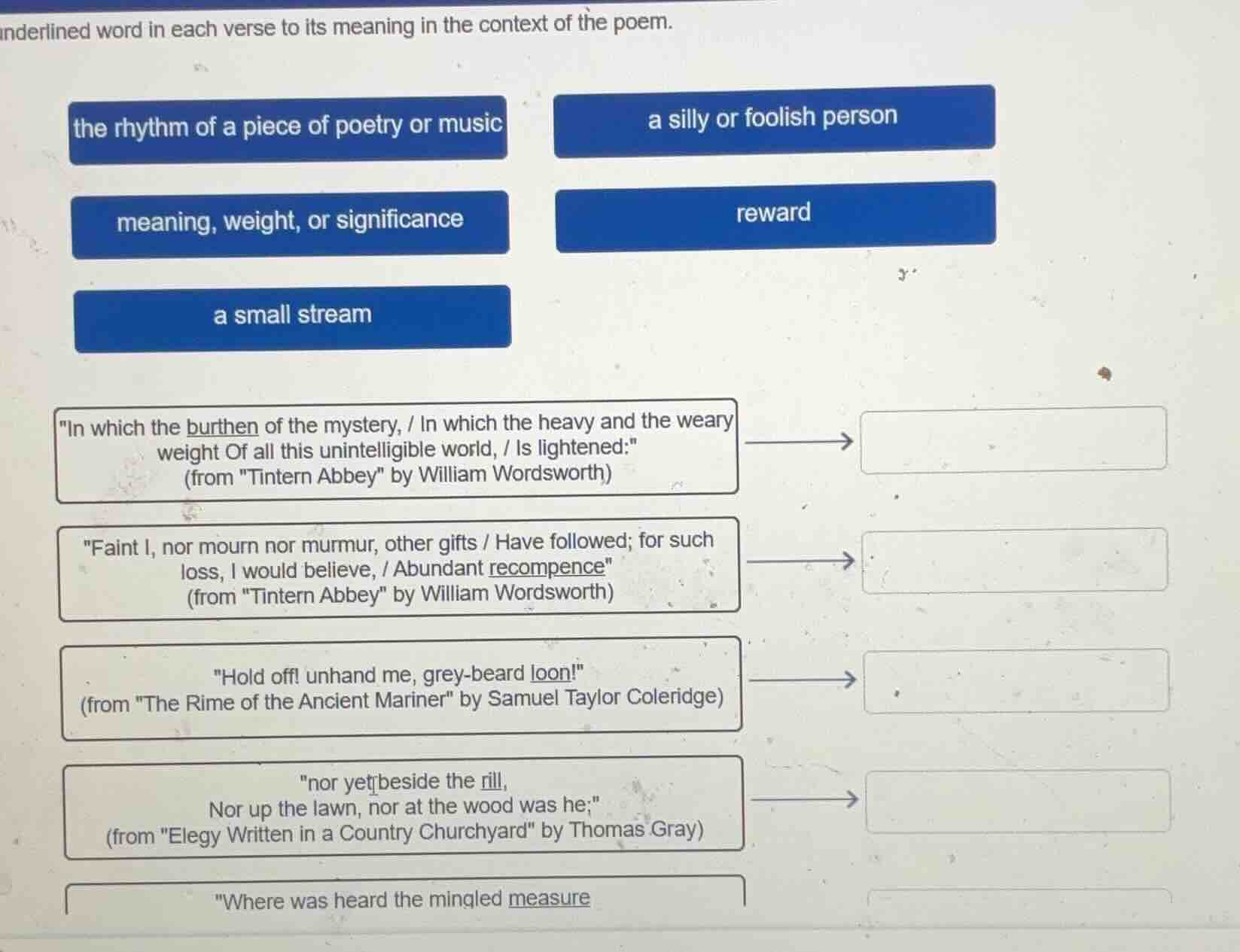
nderlined word in each verse to its meaning in the context of the poem.
the rhythm of a piece of poetry or music a silly or foolish person
meaning, weight, or significance reward
a small stream
\in which the burthen of the mystery, / in which the heavy and the weary
weight of all this unintelligible world, / is lightened:\
(from \tintern abbey\ by william wordsworth)
\faint i, nor mourn nor murmur, other gifts / have followed; for such
loss, i would believe, / abundant recompence\
(from \tintern abbey\ by william wordsworth)
\hold off! unhand me, grey - beard loon!\
(from \the rime of the ancient mariner\ by samuel taylor coleridge)
or yet beside the rill,
nor up the lawn, nor at the wood was he;\
(from \elegy written in a country churchyard\ by thomas gray)
\where was heard the mingled measure
- For "burthen", the context links it to the "heavy and the weary weight" of the world, so it matches the definition of meaning/weight/significance.
- "Recompence" is used in the context of gifts following loss, so it means reward.
- "Loon" is an insult directed at a person, so it refers to a silly/foolish person.
- "Rill" is described as a water feature beside a lawn/wood, so it means a small stream.
- "Measure" refers to something heard in a poetic context, so it means the rhythm of poetry/music.

Snap & solve any problem in the app
Get step-by-step solutions on Sovi AI
Photo-based solutions with guided steps
Explore more problems and detailed explanations
- "In which the burthen of the mystery..." → meaning, weight, or significance
- "Faint I, nor mourn nor murmur, other gifts / Have followed; for such loss, I would believe, / Abundant recompence" → reward
- "Hold off! unhand me, grey-beard loon!" → a silly or foolish person
- "nor yet beside the rill, Nor up the lawn, nor at the wood was he;" → a small stream
- "Where was heard the mingled measure" → the rhythm of a piece of poetry or music