QUESTION IMAGE
Question
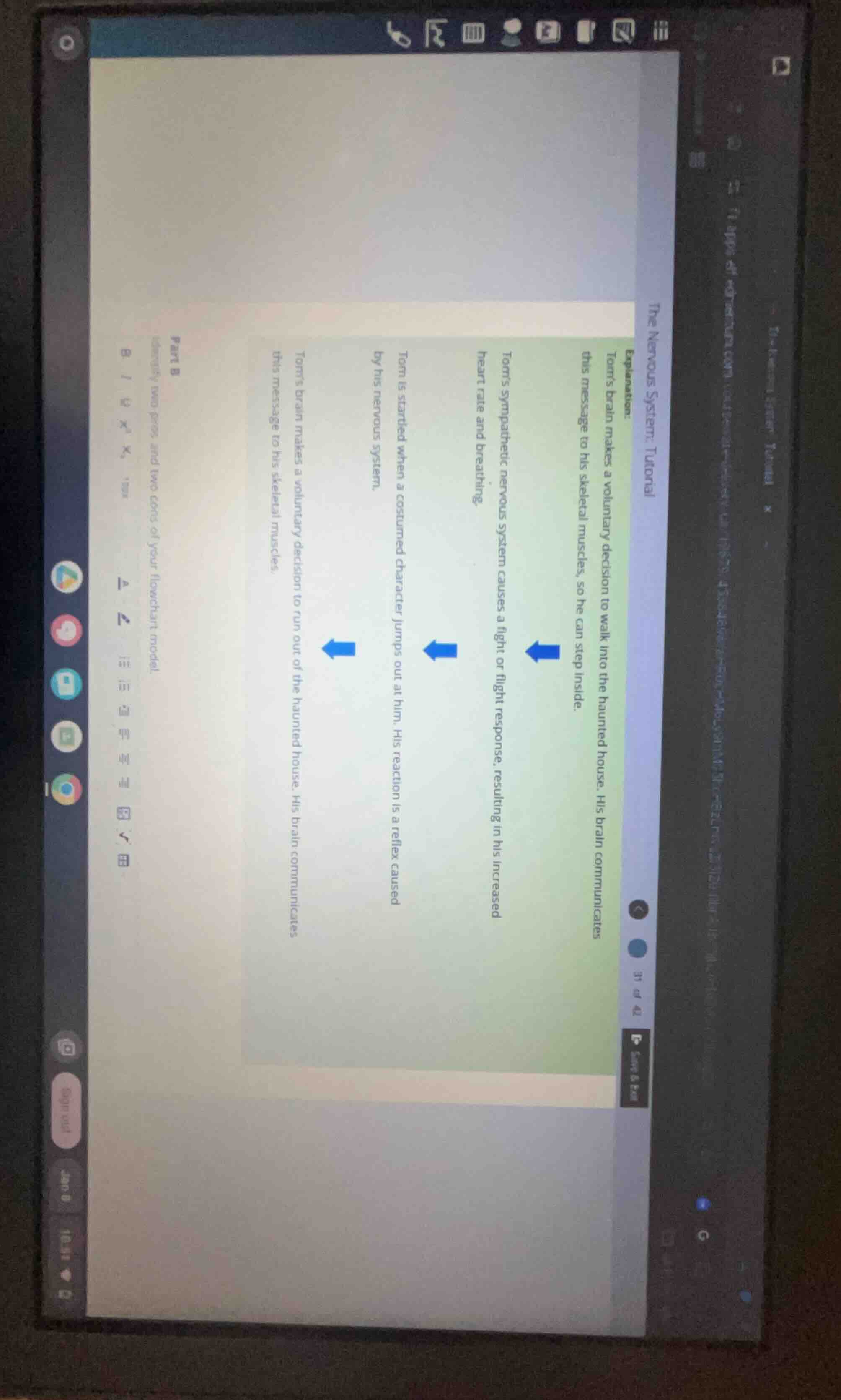
the nervous system: tutorial explanation: tom’s brain makes a voluntary decision to walk into the haunted house. his brain communicates this message to his skeletal muscles, so he can step inside. tom’s sympathetic nervous system causes a fight or flight response, resulting in his increased heart rate and breathing. tom is startled when a costumed character jumps out at him. his reaction is a reflex caused by his nervous system. tom’s brain makes a voluntary decision to run out of the haunted house. his brain communicates this message to his skeletal muscles. part b identify two pros and two cons of your flowchart model.
- Voluntary (CNS, Somatic NS) examples (pros):
- Tom's brain makes a voluntary decision to walk into the haunted house. His brain communicates this message to his skeletal muscles, so he can step inside.
- Tom's brain makes a voluntary decision to run out of the haunted house. His brain communicates this message to his skeletal muscles.
- Involuntary (Autonomic/Reflex NS) examples (cons):
- Tom's sympathetic nervous system causes a fight or flight response, resulting in his increased heart rate and breathing.
- Tom is startled when a costumed character jumps out at him. His reaction is a reflex caused by his nervous system.

Snap & solve any problem in the app
Get step-by-step solutions on Sovi AI
Photo-based solutions with guided steps
Explore more problems and detailed explanations
Pros (Voluntary Nervous System Actions):
- Voluntarily deciding to walk into the haunted house and controlling skeletal muscles to step inside
- Voluntarily deciding to run out of the haunted house and controlling skeletal muscles to do so
Cons (Involuntary Nervous System Responses):
- Sympathetic nervous system triggering increased heart rate/breathing (fight-or-flight)
- Reflexive startle response to the costumed character