QUESTION IMAGE
Question
2.1.5 - neuropharmacology - 2
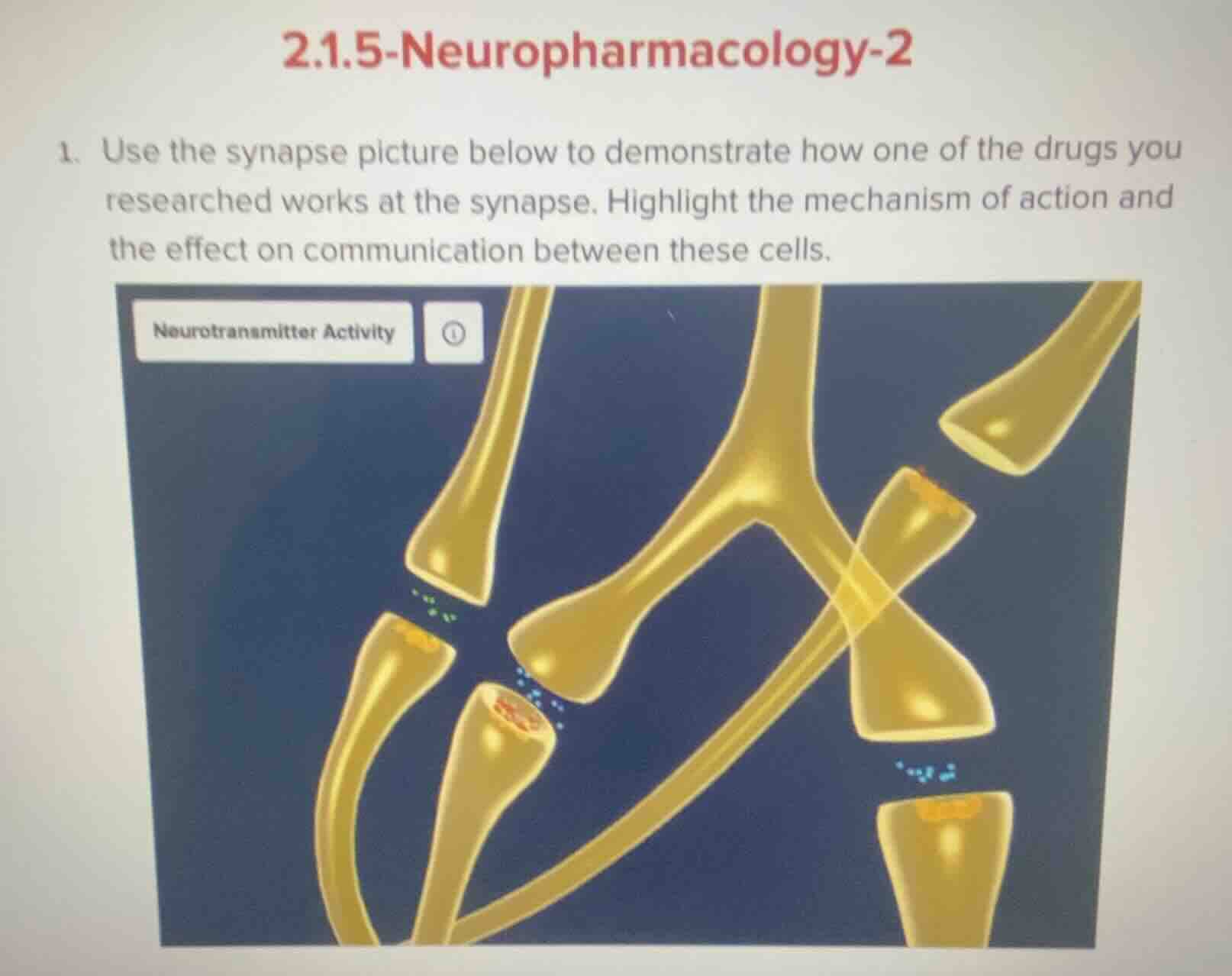
- use the synapse picture below to demonstrate how one of the drugs you researched works at the synapse. highlight the mechanism of action and the effect on communication between these cells.
(the image part is omitted here as per requirements)
To answer this, let's take a common neuropharmacological drug, say Fluoxetine (a selective serotonin reuptake inhibitor, SSRI).
Step 1: Recall Synaptic Transmission Basics
In a synapse, a presynaptic neuron releases neurotransmitters (e.g., serotonin, 5 - HT) into the synaptic cleft. These neurotransmitters bind to receptors on the postsynaptic neuron, then are typically taken back up into the presynaptic neuron via reuptake transporters (terminating the signal).
Step 2: Mechanism of Fluoxetine at the Synapse
- Presynaptic Neuron: Fluoxetine binds to the serotonin reuptake transporter (SERT) on the presynaptic neuron. This blocks SERT’s ability to reabsorb serotonin from the synaptic cleft.
- Synaptic Cleft: With reuptake blocked, serotonin remains in the synaptic cleft for a longer time.
- Postsynaptic Neuron: More serotonin is available to bind to receptors on the postsynaptic neuron. This enhances the postsynaptic response (e.g., in mood - regulating circuits, this can alleviate symptoms of depression/anxiety).
Step 3: Effect on Neural Communication
Normally, serotonin’s action is brief (due to reuptake). By blocking reuptake, Fluoxetine prolongs and amplifies the signal between the presynaptic (serotonin - releasing) and postsynaptic neurons. This strengthens the communication in neural pathways that rely on serotonin (e.g., mood, emotion, and cognition - related circuits).
Visual Link to the Synapse Picture
In the “Neurotransmitter Activity” image (showing presynaptic terminals releasing neurotransmitters into the cleft), imagine:
- The green/blue dots as serotonin.
- Fluoxetine acts on the reuptake transporters (not shown, but conceptually at the presynaptic membrane). By blocking these transporters, the dots (serotonin) stay in the cleft longer, increasing binding to the postsynaptic neuron’s receptors.

Snap & solve any problem in the app
Get step-by-step solutions on Sovi AI
Photo-based solutions with guided steps
Explore more problems and detailed explanations
Using Fluoxetine (SSRI) as an example: It blocks serotonin reuptake transporters on the presynaptic neuron, increasing serotonin in the synaptic cleft. This prolongs and enhances neurotransmission between presynaptic and postsynaptic neurons, strengthening communication in serotonin - dependent neural circuits.