QUESTION IMAGE
Question
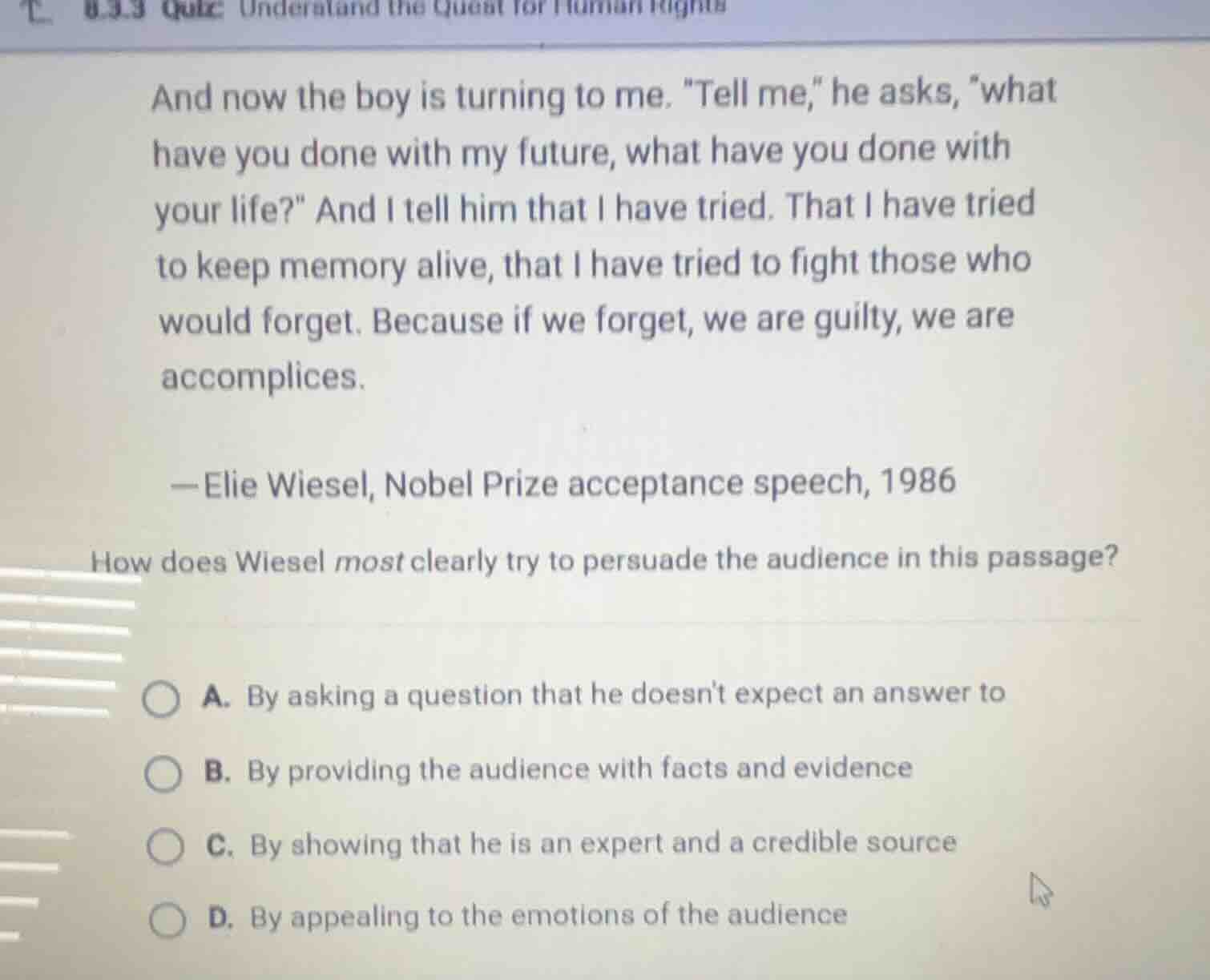
and now the boy is turning to me. \tell me,\ he asks, \what have you done with my future, what have you done with your life?\ and i tell him that i have tried. that i have tried to keep memory alive, that i have tried to fight those who would forget. because if we forget, we are guilty, we are accomplices.
—elie wiesel, nobel prize acceptance speech, 1986
how does wiesel most clearly try to persuade the audience in this passage?
a. by asking a question that he doesnt expect an answer to
b. by providing the audience with facts and evidence
c. by showing that he is an expert and a credible source
d. by appealing to the emotions of the audience
To determine how Wiesel persuades the audience, we analyze each option:
- Option A: The boy's question is part of the narrative, but the main persuasion isn't from a rhetorical question he doesn't expect an answer to. The focus is on the emotional appeal of memory and guilt.
- Option B: There are no factual details or evidence presented here; it's a personal reflection and emotional appeal.
- Option C: Wiesel isn't establishing expertise here; he's sharing his efforts and appealing to emotions about memory and guilt.
- Option D: Wiesel appeals to the audience's emotions by talking about the boy's future, the guilt of forgetting, and being accomplices. This taps into the audience's sense of morality and empathy.

Snap & solve any problem in the app
Get step-by-step solutions on Sovi AI
Photo-based solutions with guided steps
Explore more problems and detailed explanations
D. By appealing to the emotions of the audience