QUESTION IMAGE
Question
number
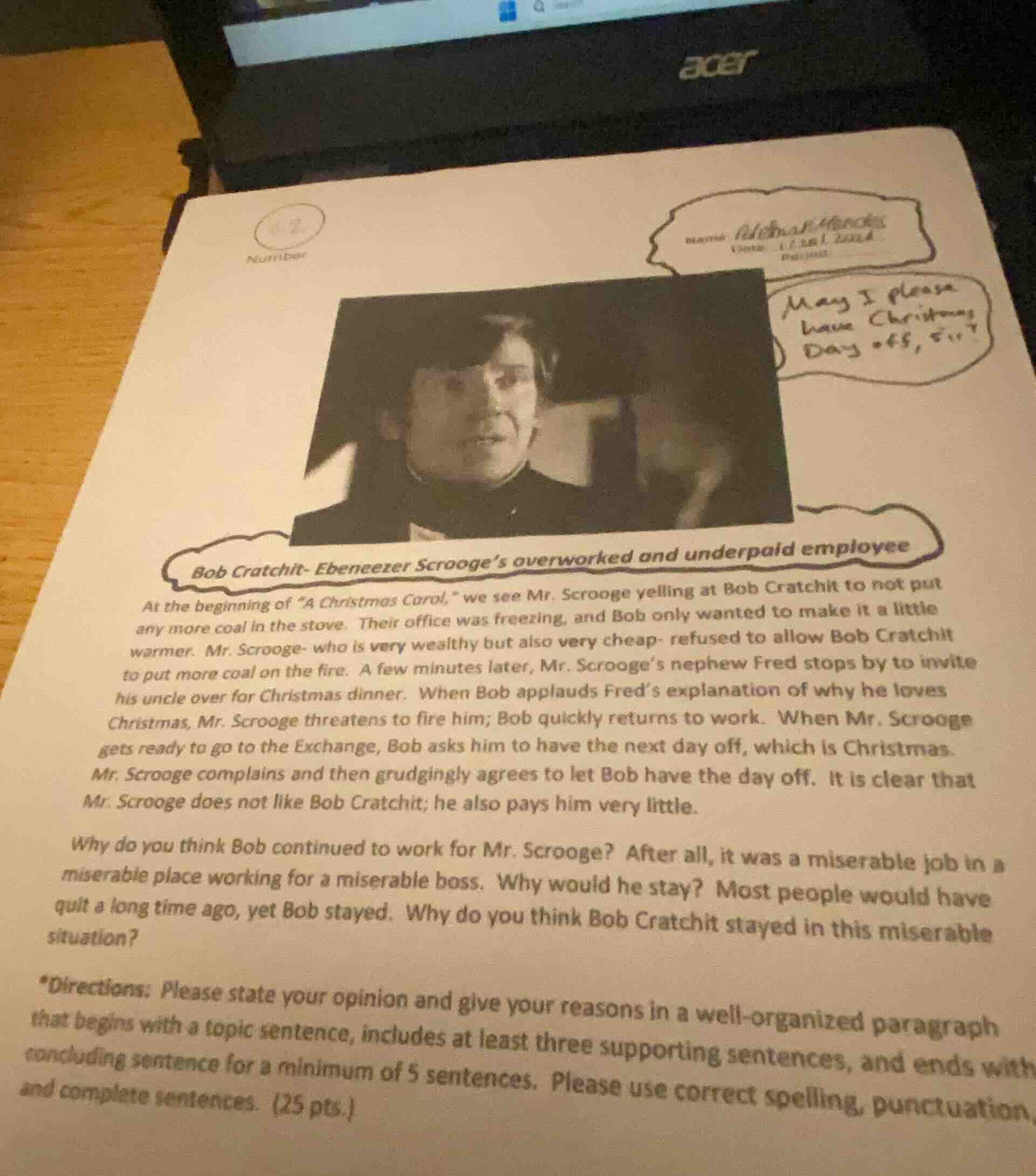
bob cratchit- ebeneezer scrooge’s overworked and underpaid employee
at the beginning of “a christmas carol,” we see mr. scrooge yelling at bob cratchit to not put any more coal in the stove. their office was freezing, and bob only wanted to make it a little warmer. mr. scrooge- who is very wealthy but also very cheap- refused to allow bob cratchit to put more coal on the fire. a few minutes later, mr. scrooge’s nephew fred stops by to invite his uncle over for christmas dinner. when bob applauds fred’s explanation of why he loves christmas, mr. scrooge threatens to fire him; bob quickly returns to work. when mr. scrooge gets ready to go to the exchange, bob asks him to have the next day off, which is christmas. mr. scrooge complains and then grudgingly agrees to let bob have the day off. it is clear that mr. scrooge does not like bob cratchit; he also pays him very little.
why do you think bob continued to work for mr. scrooge? after all, it was a miserable job in a miserable place working for a miserable boss. why would he stay? most people would have quit a long time ago, yet bob stayed. why do you think bob cratchit stayed in this miserable situation?
*directions: please state your opinion and give your reasons in a well - organized paragraph that begins with a topic sentence, includes at least three supporting sentences, and ends with a concluding sentence for a minimum of 5 sentences. please use correct spelling, punctuation, and complete sentences. (25 pts.)
Bob Cratchit stays with Ebenezer Scrooge primarily out of urgent financial need for his large, vulnerable family. First, in the 19th-century Victorian setting of A Christmas Carol, stable jobs were scarce, especially for working-class men, so securing any regular income was critical to avoid poverty and homelessness. Second, Bob has a young, disabled son, Tiny Tim, who requires ongoing care and medical support that only a steady salary could fund; leaving Scrooge without a guaranteed alternative job would put his son's health and his family's survival at risk. Third, Bob is a deeply loyal, patient man who holds onto quiet hope that Scrooge might eventually change his cruel ways, and he values the small security of having a consistent position even with its hardships. Finally, societal expectations of the era pressured workers to endure harsh employers rather than risk being labeled unemployable for leaving a role.

Snap & solve any problem in the app
Get step-by-step solutions on Sovi AI
Photo-based solutions with guided steps
Explore more problems and detailed explanations
Bob Cratchit remains in Ebenezer Scrooge’s employ because he has no viable alternative to support his vulnerable family, faces limited job options in 19th-century Victorian society, and holds quiet hope for Scrooge’s redemption. First, Bob’s large family, including his sick young son Tiny Tim, depends entirely on his meager salary for food, shelter, and medical care; without this income, his family would likely face starvation or homelessness. Second, stable working-class jobs were extremely scarce in Victorian London, so leaving Scrooge would mean risking long-term unemployment with no safety net to fall back on. Third, Bob is a inherently patient and loyal person who clings to the faint possibility that Scrooge might abandon his cruel, miserly habits over time. Fourth, societal norms of the era discouraged workers from leaving their positions, as quitting could brand them as untrustworthy and make it even harder to find future employment. In the end, Bob’s love for his family and lack of better options force him to endure the miserable conditions of working for Scrooge.