QUESTION IMAGE
Question
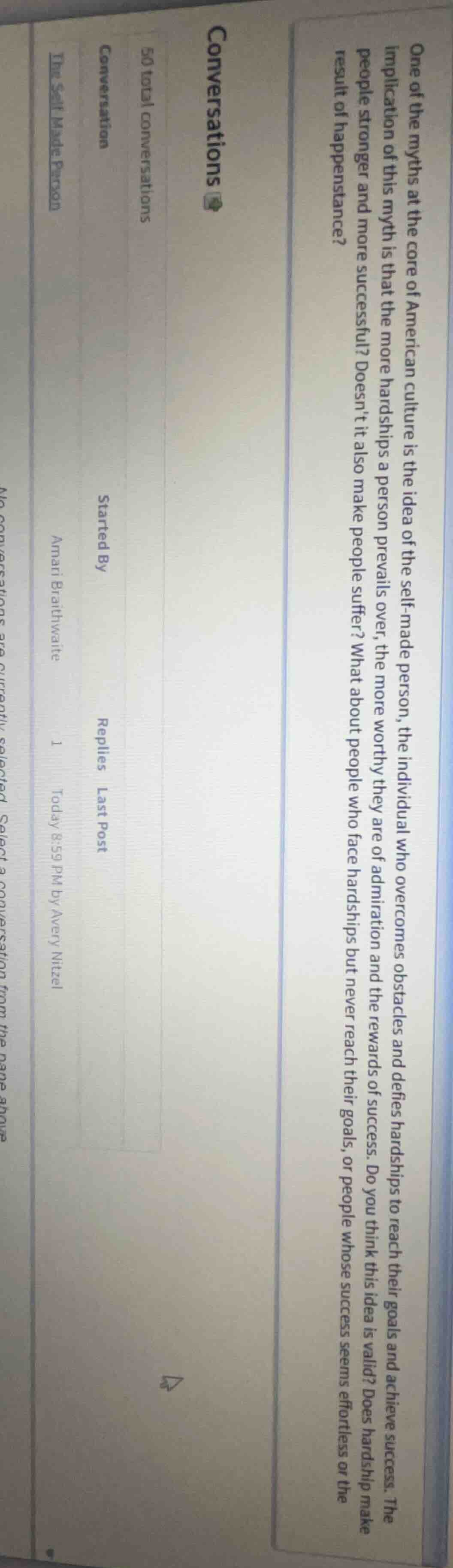
one of the myths at the core of american culture is the idea of the self - made person, the individual who overcomes obstacles and defies hardships to reach their goals and achieve success. the implication of this myth is that the more hardships a person prevails over, the more worthy they are of admiration and the rewards of success. do you think this idea is valid? does hardship make people stronger and more successful? doesnt it also make people suffer? what about people who face hardships but never reach their goals, or people whose success seems effortless or the result of happenstance?
This idea has limited validity. Hardships can build resilience and skills that support success for some, but they also often create systemic and personal barriers (like limited access to resources, trauma, or burnout) that make success harder, not easier. People who do not reach goals despite hardship often face unrecognized structural obstacles, not a lack of effort. Those with "effortless" success often benefit from unearned privileges (like wealth, connections, or systemic advantages) that are hidden by the self-made myth. This myth causes harm by blaming individuals for failure, ignoring structural inequities, and pressuring people to endure unnecessary suffering to be seen as "worthy."

Snap & solve any problem in the app
Get step-by-step solutions on Sovi AI
Photo-based solutions with guided steps
Explore more problems and detailed explanations
- The idea that more hardships equal more worth/validity is not fully valid. Hardships can build resilience for some, but they also create significant barriers to success for many, including systemic inequities and personal trauma.
- Yes, this myth causes harm: it blames people for not succeeding despite hardship, ignores unearned privileges behind "effortless" success, and forces people to endure suffering to be seen as "worthy" of admiration.
- People who face hardships but do not reach their goals often face unrecognized structural obstacles, not a lack of effort or worth; those with seemingly effortless success often benefit from hidden privileges like wealth, connections, or systemic advantages.