QUESTION IMAGE
Question
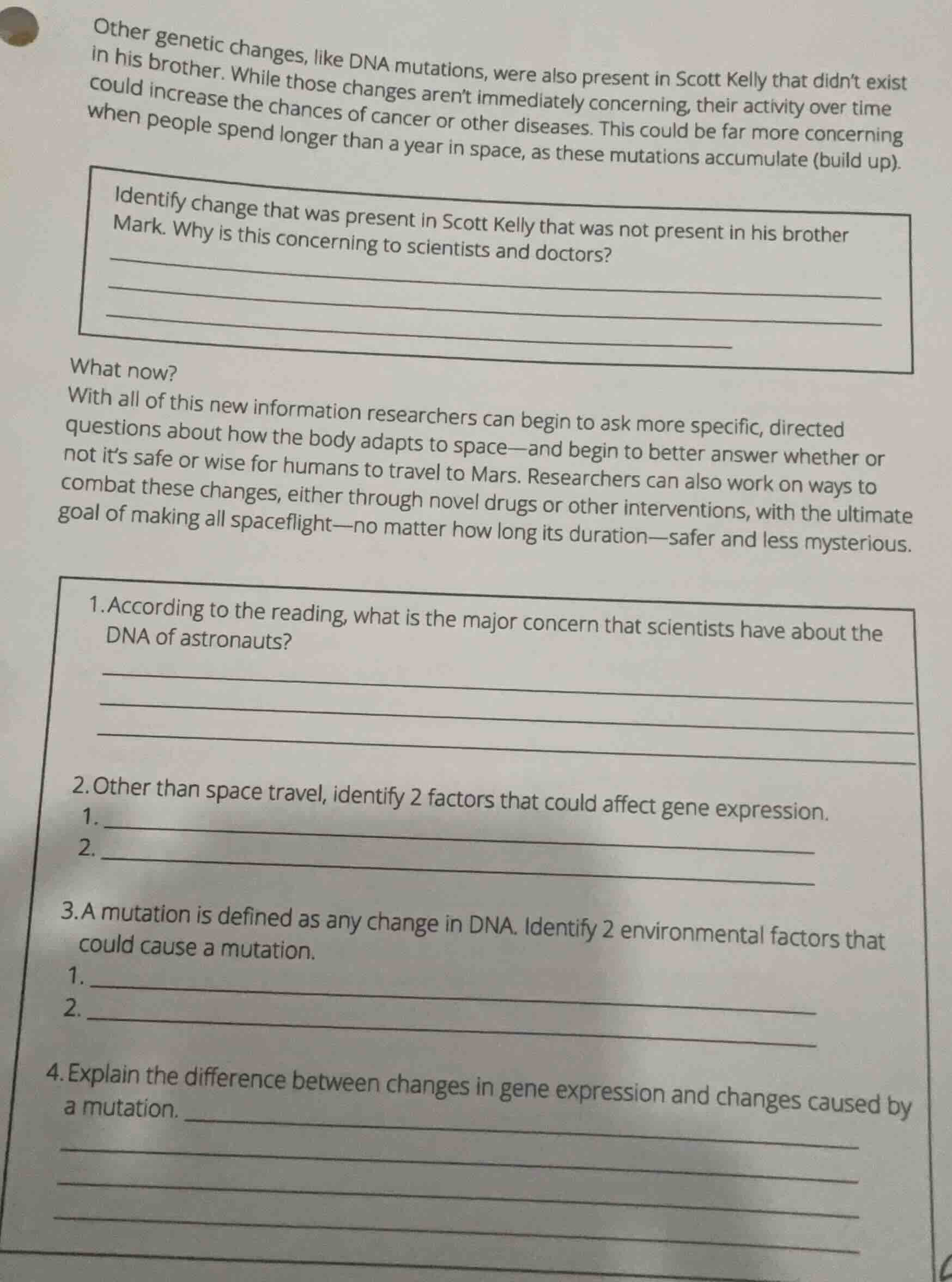
other genetic changes, like dna mutations, were also present in scott kelly that didnt exist in his brother. while those changes arent immediately concerning, their activity over time could increase the chances of cancer or other diseases. this could be far more concerning when people spend longer than a year in space, as these mutations accumulate (build up). identify change that was present in scott kelly that was not present in his brother mark. why is this concerning to scientists and doctors? what now? with all of this new information researchers can begin to ask more specific, directed questions about how the body adapts to space—and begin to better answer whether or not its safe or wise for humans to travel to mars. researchers can also work on ways to combat these changes, either through novel drugs or other interventions, with the ultimate goal of making all spaceflight—no matter how long its duration—safer and less mysterious. 1. according to the reading, what is the major concern that scientists have about the dna of astronauts? 2. other than space travel, identify 2 factors that could affect gene expression. 1. 2. 3. a mutation is defined as any change in dna. identify 2 environmental factors that could cause a mutation. 1. 2. 4. explain the difference between changes in gene expression and changes caused by a mutation.
First Question (Scott Kelly vs Mark Kelly):
The unique change in Scott Kelly is DNA mutations. Scientists are concerned because over time, these mutations can accumulate, raising the risk of cancer or other diseases, especially for long-duration space missions (longer than a year).
Question 1 (Astronaut DNA Concern):
The major concern is that accumulated DNA mutations from long space stays increase astronauts' risk of developing cancer or other diseases, and this threatens the safety of long-duration missions like Mars travel.
Question 2 (Non-Space Gene Expression Factors):
Two common factors are diet (nutrient intake affects how genes are activated) and exposure to stress (physical or psychological stress alters gene expression patterns).
Question 3 (Environmental Mutation Causes):
Two environmental factors are exposure to ionizing radiation (e.g., UV rays from the sun) and chemical exposure (e.g., industrial toxins or certain pesticides).
Question 4 (Gene Expression vs Mutation):
Gene expression changes are temporary, reversible alterations in how genes are turned on/off (no change to the DNA sequence itself). Mutations are permanent, heritable changes to the actual DNA code, which can alter gene function long-term.

Snap & solve any problem in the app
Get step-by-step solutions on Sovi AI
Photo-based solutions with guided steps
Explore more problems and detailed explanations
- (Scott Kelly/Mark Kelly): Scott Kelly had unique DNA mutations. This is concerning because over time, these mutations can accumulate, increasing the risk of cancer or other diseases, especially for missions longer than a year in space.
- (Astronaut DNA Concern): Scientists' major concern is that accumulated DNA mutations from long-duration space travel will increase astronauts' risk of developing cancer or other diseases, which endangers the safety of long missions like a trip to Mars.
- (Non-Space Gene Expression Factors):
- Diet
- Psychological/physical stress
- (Environmental Mutation Causes):
- Ionizing radiation (e.g., UV rays)
- Toxic chemical exposure (e.g., pesticides)
- (Gene Expression vs Mutation): Changes in gene expression are reversible, temporary shifts in whether a gene is active (no change to the DNA sequence itself), while mutations are permanent, heritable changes to the actual DNA code that alter the gene's structure.