QUESTION IMAGE
Question
page 267
- daily life 1820 - 1850: working at mid - century
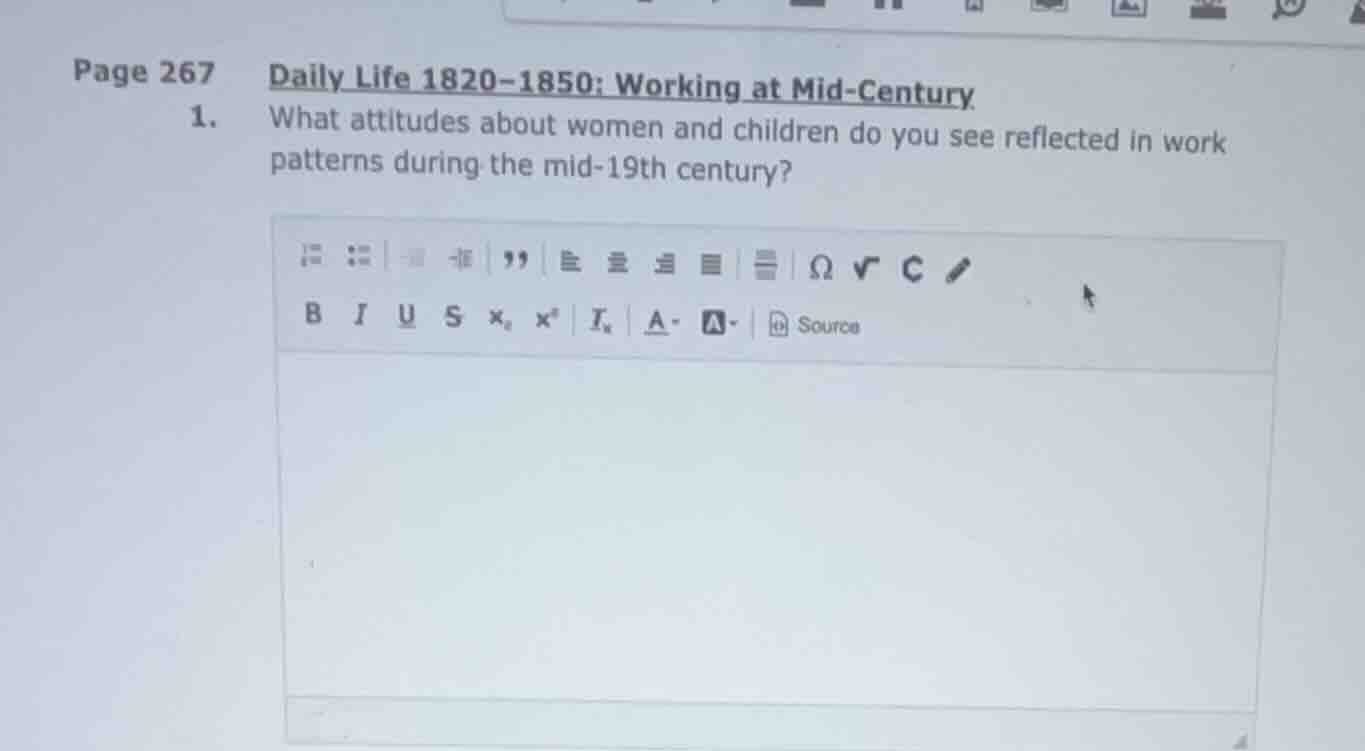
what attitudes about women and children do you see reflected in work patterns during the mid - 19th century?
Brief Explanations
- Women: The ideal of the "cult of domesticity" was dominant, framing women as suited for unpaid household labor rather than formal wage work. When women did work (e.g., in textile mills, as domestic servants), they were confined to low-wage, gender-segregated roles, reflecting the attitude that their labor was less valuable than men's, and their primary place was the home.
- Children: Child labor was widespread in factories, mines, and agriculture, reflecting the attitude that children were economic assets whose labor was critical to family survival. There was little societal concern for their education or safety, as they were seen as capable of performing unskilled, low-cost work to contribute to household income.

Snap & solve any problem in the app
Get step-by-step solutions on Sovi AI
Photo-based solutions with guided steps
Explore more problems and detailed explanations
- For women: Dominant attitudes centered on the "cult of domesticity," which positioned women as belonging in unpaid household roles rather than formal employment. When women did work outside the home, they were limited to low-wage, gender-segregated jobs, viewed as less valuable laborers than men.
- For children: Children were seen as economic assets, with widespread child labor in factories, mines, and agriculture reflecting the attitude that their labor was necessary for family survival, with little regard for their education or safety.